
Last updated November 20, 2026
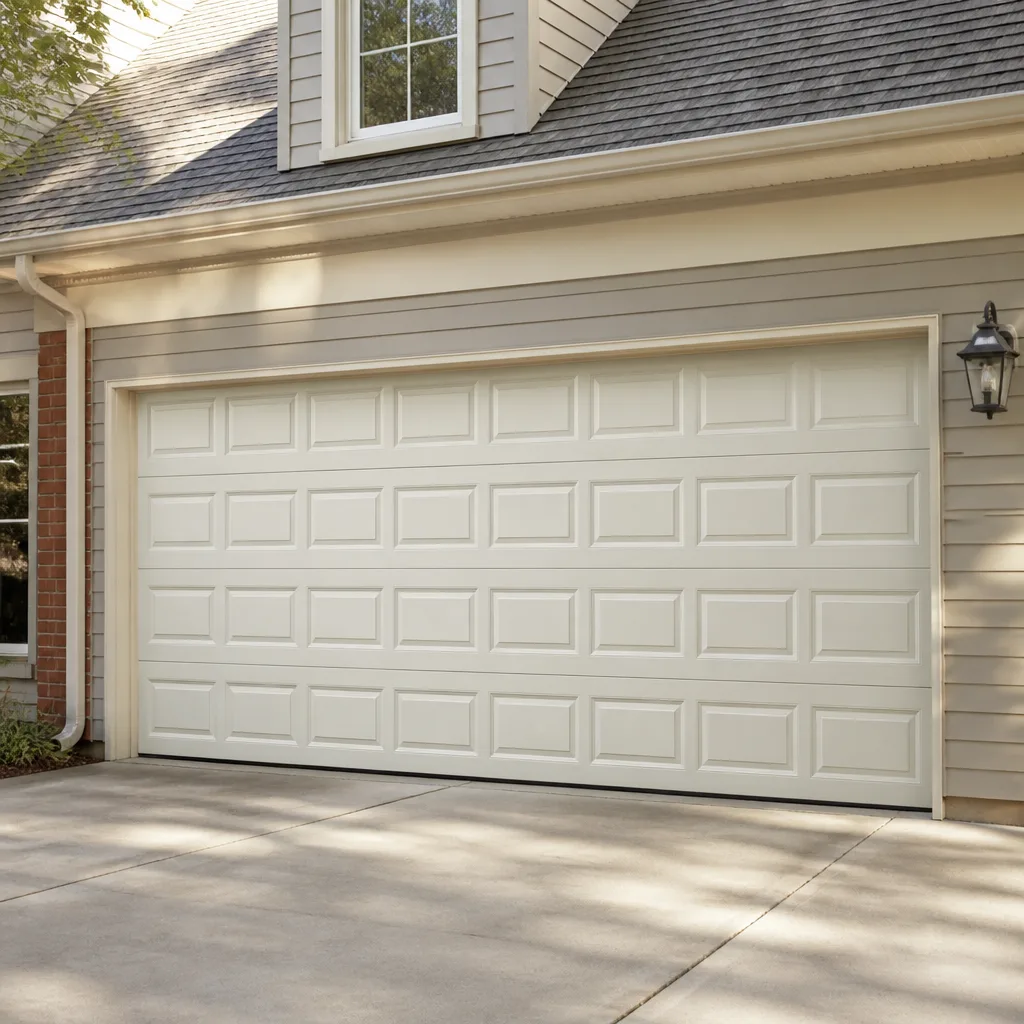 Raised-panel steel
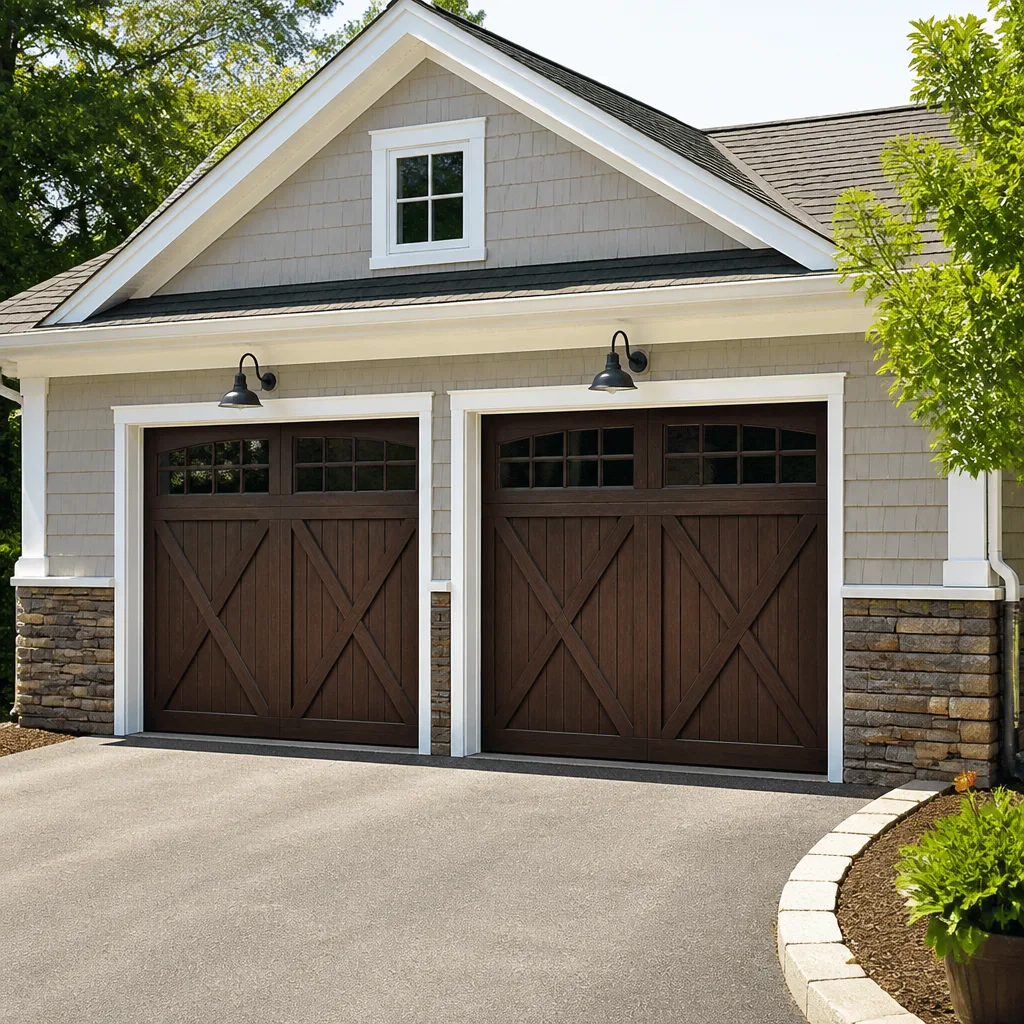 Carriage house
 Modern flush
 Full-view glass
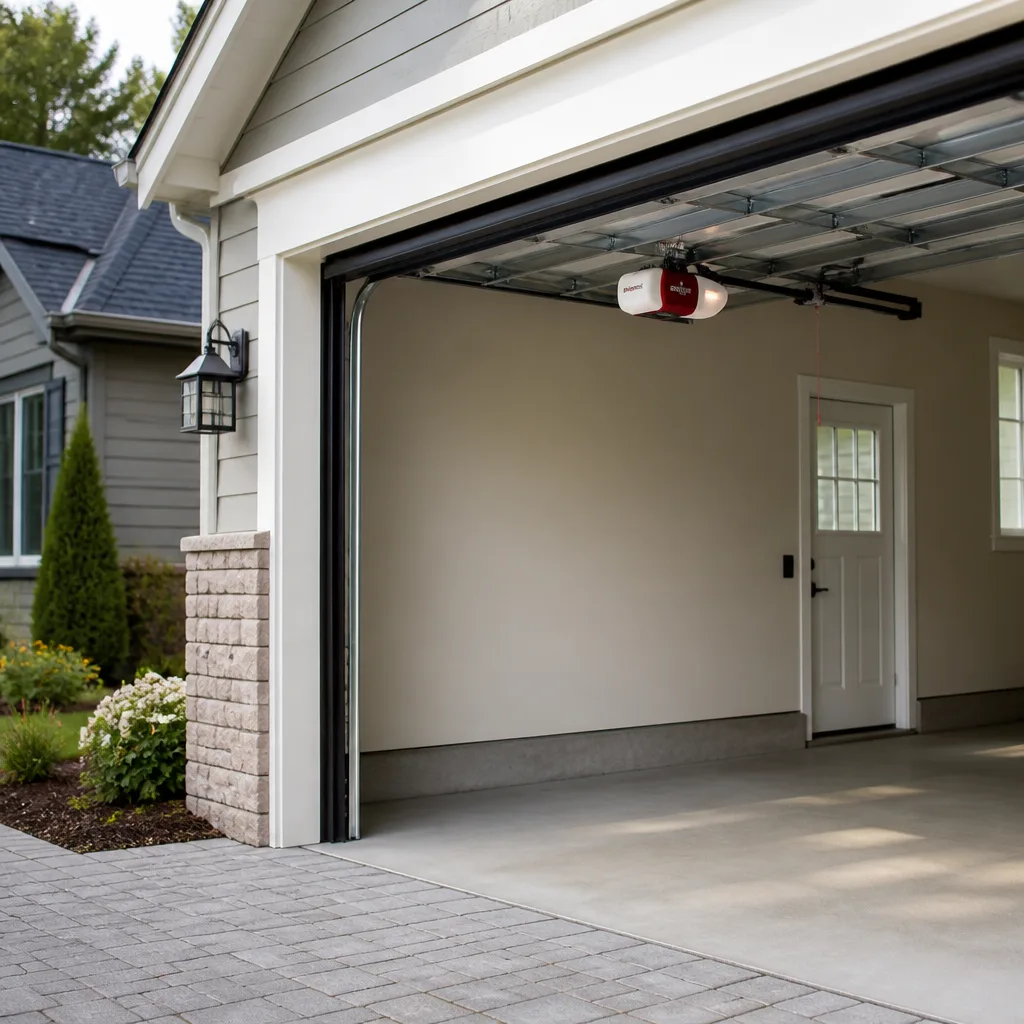 LiftMaster openers
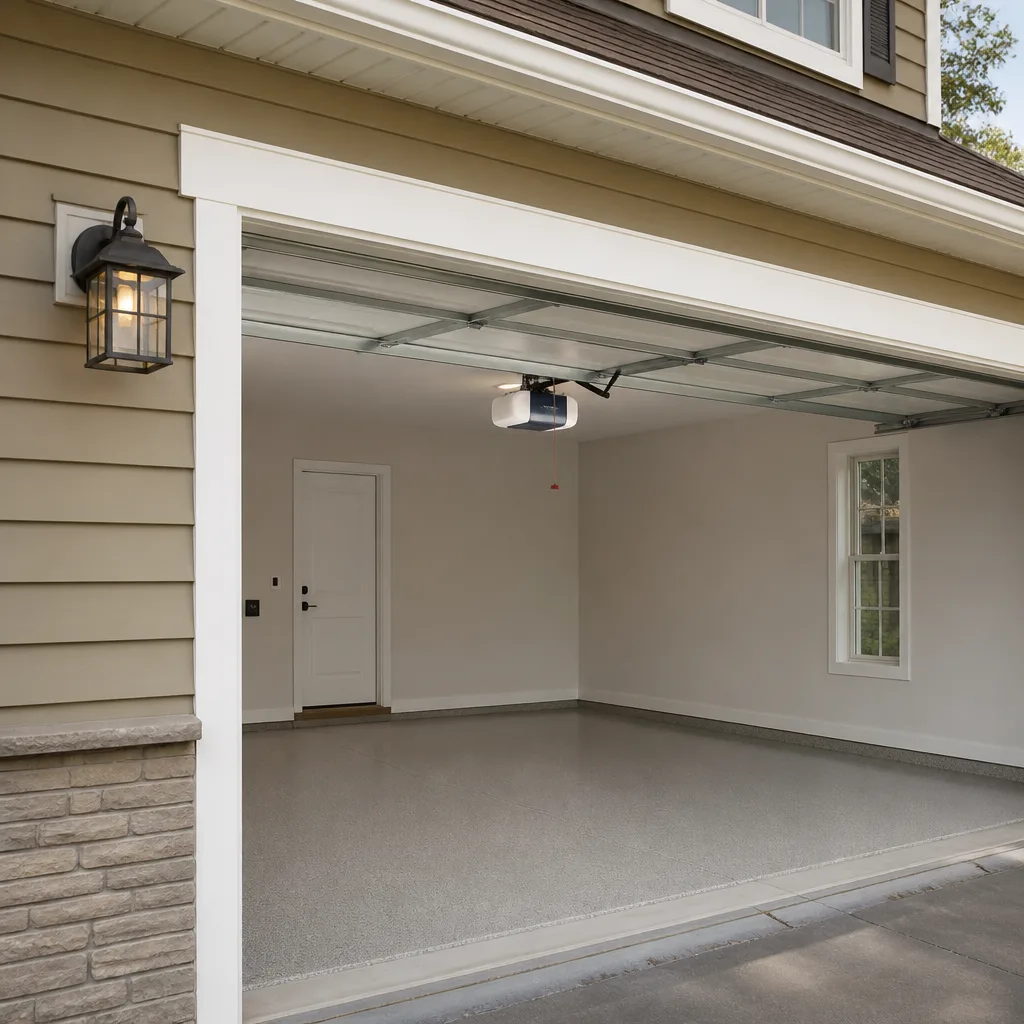 Chamberlain openers
Full 25-point door and opener safety check with every visit - springs, cables, rollers, tracks, and your LiftMaster or Chamberlain opener included
You get a price before we start. It does not change when the pro arrives.
Get your free estimateDIY vs Professional Garage Door: The Milford Homeowner’s Decision Guide
Most articles about garage door DIY get the question wrong. They treat it as a skill test, as if the only thing standing between you and a repaired door is confidence. It isn’t. A torsion spring stores a serious amount of energy – enough to break a wrist or take out an eye if it releases wrong – and that single fact is the whole reason the line between DIY and professional exists. Plenty of garage door work is genuinely safe to do yourself. A few jobs aren’t, no matter how handy you are. This guide draws that line honestly for Milford homeowners: which tasks you can take on, which ones you should hand over, what the math actually looks like, and how to talk to a technician if you’ve already started a repair you can’t finish.
Quick Answer
The garage door tasks worth doing yourself are the low-tension ones: weatherstripping, bottom seals, sensor alignment, lubrication, and remote reprogramming. The tasks you should never DIY are torsion spring replacement, cable re-threading, and track realignment under load, because all three involve stored mechanical energy that can injure you badly when it releases. Everything else sits in a gray zone where the cost saving is small and the judgment call is yours.
Styles & brands we work with
- Raised-panel steel
- Carriage house
- Modern flush
- Full-view glass
- LiftMaster openers
- Chamberlain openers
Table of Contents
- Why the DIY Question Is Really About Energy, Not Skill
- The Short List: Tasks You Should Never DIY
- The Longer List: Tasks You Can Safely Handle Yourself
- The Cost Math: What You Save vs. What You Risk
- Tool Requirements for Safe DIY Work
- What to Do If You’ve Already Started a Repair
- What Makes Garage Door Work Different in Milford, CT
- How to Choose a Garage Door Professional in Milford
Why the DIY Question Is Really About Energy, Not Skill
Garage doors look like simple machines. They’re not. A torsion spring is a tightly wound coil of steel under constant load, and the door balances against it every time it opens. That balance is what lets a door weighing well over a hundred pounds move with one hand on a remote. The spring is doing most of the work, and it’s storing most of the danger.
We say “danger” without drama, because this isn’t a scare tactic, it’s physics. A wound torsion spring holds potential energy whether the door is open, closed, or sitting there untouched. When that energy is released suddenly – during a replacement attempt, or because a worn spring snaps – it releases whether or not anyone is standing in the wrong place. That’s the real line between DIY and professional: not whether you’re skilled enough to turn a wrench, but whether the task involves stored energy you can’t see or measure with your hands.
Once you frame it that way, the whole list sorts itself. Low-energy tasks like weatherstripping and sensor alignment carry almost no stored risk, so they’re fair game. High-energy tasks like spring work and cable tension carry a lot of stored risk, so they’re not. The skill level matters less than which side of that energy line a task sits on.
Milford homeowners tend to be practical about this once it’s explained plainly. Nobody wants to be talked out of a project they can actually do. The useful answer isn’t “leave it all to the pros,” it’s knowing exactly which jobs to keep and which jobs to hand off. For the ones that belong to a professional, we handle them through garage door repair in Milford, and we’ll cover those scenarios in detail below.
The Short List: Tasks You Should Never DIY
The list of “never DIY” garage door tasks is short. That’s the point. It’s a handful of jobs, and each one has a specific mechanical reason. If you remember nothing else from this guide, remember these three, and remember why.
1. Torsion spring replacement. This is the highest-risk component in any garage door system, and a dedicated service for a reason. A torsion spring is wound to a specific tension, and re-winding it means turning a steel coil that’s actively trying to unwind. The mechanical reason is simple: you’re fighting stored torque, and if your grip slips or a winding bar gives, the spring releases that energy instantly against whatever’s nearby. There is no safe way to tension a torsion spring without the correct bars, a way to control the load, and the experience to know when something feels wrong before it lets go. Don’t attempt it.
2. Cable re-threading. The cables on your door hold the spring tension under control. When a cable comes off its drum or snaps, the spring is now unregulated, and re-threading means getting that tension back under the drum correctly. The mechanical reason: a cable under load can snap back with serious force, and wrapping it wrong leaves the door unbalanced and dangerous to operate. This isn’t a threading job you can eyeball. It’s a load transfer.
3. Track realignment under load. Straightening or resetting a bent track while a tensioned door rests against it puts you in line with the door’s full weight and the spring’s stored force. The mechanical reason: a track under load can shift suddenly, and a door that comes down a misaligned track isn’t something you want to be standing under. Realigning track safely means taking the tension off first, which is a spring job by itself.
Extension springs carry the same warning. Whether your Milford home has Wayne Dalton torsion hardware or a Raynor door with extension springs, the energy rule is identical: if the task involves the spring or the cables that control it, it’s a professional’s job. Spring replacement is a safety job, and we treat it as one through our garage door spring repair service rather than lumping it into general repair.
The Longer List: Tasks You Can Safely Handle Yourself
Here’s the good news most “hire a pro” guides skip. Most garage door upkeep is well within reach of a careful homeowner with the right seal and a free afternoon. These tasks carry no stored spring energy, and getting them right extends the life of your door.
- Weatherstripping. The foam or vinyl strip around the door opening seals out drafts and water. It slides into a retainer or glues into place, and replacing it is a straightforward job with a putty knife and a straight edge.
- Bottom seal (bottom weather seal). The rubber strip at the very bottom of the door keeps out water, dirt, and cold. If it’s cracked or torn, you pull it from its channel and push a new one in. No tension, no danger.
- Safety sensor alignment. If the door won’t close, the most common cause is a misaligned pair of safety sensors. Check that both eyes are facing each other, clean the lenses, and nudge the brackets until the indicator light goes steady. This fixes a huge share of “my door won’t close” calls.
- Lubrication. A few drops of proper garage door lubricant on the hinges, rollers, and track keeps the door quiet and smooth. Wipe the track clean first; don’t grease it, just a light film where metal meets metal.
- Remote reprogramming. If a remote or keypad stops working, reprogramming is a button sequence on the opener unit and the remote. Your owner’s manual or the manufacturer’s printed instructions walk you through it in a couple of minutes.
- Visual inspection. Look at the springs for gaps or rust, run a finger along the cables for fraying (gloved), and watch the door travel for wobble. You’re looking, not fixing – but a good eye catches problems early.
These are the six jobs worth learning. They cost very little in parts and save a service call. What they also do is keep you familiar with your door, so you notice when something changes that you can’t explain – which is your cue to look at the two lists above and figure out which side it’s on.
The Cost Math: What You Save vs. What You Risk
Let’s be honest about the math, because this is where most DIY decisions get made. On the safe list, the savings are real and the risk is close to zero. On the dangerous list, the savings look tempting on paper but the downside isn’t. Here’s how the two columns compare.
| Task | DIY Reality | Cost of a Mistake |
|---|---|---|
| Weatherstripping / bottom seal | Low part cost, an hour or two, common tools | Minor – a leak or a re-do |
| Sensor alignment | Free, just an adjustment | Negligible |
| Lubrication | A few dollars of lubricant | Little – worst case a noisy door |
| Remote reprogramming | Free, using the manual | None |
| Roller replacement | Modest part cost, but requires relieving door tension | Door out of balance, track damage, injury risk |
| Torsion spring replacement | Parts look cheap; stored energy is not | Serious injury; bent door; damaged opener |
| Cable re-threading | Looks simple, isn’t | Snapping cable, unbalanced door, injury |
The pattern is clear. The safe tasks are the ones where a mistake costs you a little time. The risky tasks are the ones where a mistake costs you a door, an opener, or a body part. Roller replacement deserves an asterisk: it’s often grouped with “safe DIY” and it can be done carefully on some doors, but on a tensioned torsion system the door has to come out of balance to swap a roller, and getting it back is the tricky part. On a door with extension springs, it’s a different job entirely. If you’re not sure which system you have, that’s already a sign to hand it off.
We quote repair by written estimate after looking at the door, so there’s no mystery price to compare against. If a job is on the safe list, doing it yourself genuinely makes sense. If it’s on the short list, the saving on the part is never worth the risk of the injury. For the gray-zone jobs – anything that touches balance or tension – call and ask. A free estimate beats a gamble.
Tool Requirements for Safe DIY Work
One thing that separates the safe list from the risky list is the tool bench. Safe DIY needs tools most homeowners already own. The dangerous jobs need special tools you’d buy once, use once, and possibly get hurt with anyway. That’s a strong signal about which is which.
What you actually need for the safe list:
- A screwdriver set (Phillips and flathead)
- An adjustable wrench and a socket set
- A putty knife or scraper for old weatherstripping
- A utility knife for trimming seals
- A step ladder that reaches the opener unit
- Garage door lubricant – not household oil or WD-40, but the proper door lube
- Gloves and safety glasses, always
What’s a waste to buy for a one-time job:
- Winding bars – they’re the specialized tool for tensioning torsion springs, and if you’re buying them, stop and call instead
- Cable pullers and drum tools – same reasoning
- Anything labeled “spring tool” – the fact that it exists is the warning
- A pro-grade tension gauge for a door you’ll adjust once
The honest rule: if a tool only makes sense for a task on the short list, don’t buy it. Buy it and you’ll be tempted to use it on a job you shouldn’t be doing. Spend the money on a good pair of gloves and a can of the right lubricant instead. If you’re running into a tool or a job that doesn’t fit either list, that’s when you call and we can tell you which bucket it belongs in before you spend anything.
What to Do If You’ve Already Started a Repair
Plenty of people start a garage door repair, get halfway, and realize they’re in over their head. There’s no shame in that. The important thing is to stop before you make it worse, and to tell the technician exactly what happened so they can assess safely.
Step 1: Stop and secure. If you’ve touched the spring or cable and something looks or feels off, stop. Don’t force it. Keep people, pets, and kids clear of the door, and don’t run the opener to “test” it.
Step 2: Don’t try to finish what you started. If the door is unbalanced, a cable is loose, or a spring is exposed, the safest move is to leave the door where it is and call. Trying to re-wind or re-seat a cable to “get it back to normal” is exactly the attempt that causes injuries.
Step 3: Write down what you did. Before you call, jot down what you removed, what you loosened, which fasteners you took off, and how far the job got. This isn’t a confession; it’s useful information.
Step 4: Describe it plainly on the phone. Tell us what the door is doing now and what you attempted. Something like: “I replaced the bottom seal and while I was checking the rollers I noticed the cable looked loose on the left side.” That tells a technician where to start looking.
Step 5: Let them assess before you resume. Once a technician has eyes on the door, they can tell you what’s safe to finish yourself and what isn’t. In our experience, half-finished jobs are common and nothing to be embarrassed about – the goal is a safe, working door, not a perfect DIY record.
If the door is stuck open or closed and you can’t safely leave it, that’s an emergency call. Emergency garage door service is a standing part of what we do for exactly that reason. We answer 24/7, and fast dispatch from 7am to 7pm, Sunday through Friday, gets someone out to assess.
What Makes Garage Door Work Different in Milford, CT
Garage doors in Milford face what doors in a lot of New England towns face, and that shapes which DIY jobs are worth doing when. Winters are long and temperatures swing between freezing and thawing, which is hard on rubber seals, weatherstripping, and the bottom seal in particular. A seal that’s brittle from a cold snap cracks and lets in water, and that water refreezes and works at the door’s edges. Replacing weatherstripping and the bottom seal yourself is one of the highest-value DIY jobs here, and it’s best done before the cold settles in.
Milford’s mix of older homes and newer builds means you’ll find a range of door systems across neighborhoods like Woodmont, Devon, and the areas near the downtown green. Older doors may have extension springs; newer ones typically run torsion. That difference matters when you’re deciding what’s safe to touch, because extension springs change the safety picture and often sit alongside a different roller and track setup. If you’re not sure which system your Milford home has, that’s a question worth asking before you start any work that touches the balance of the door.
Humidity through the warmer months also affects track and hardware. Wood doors and older steel doors can swell slightly in damp weather, and that changes how the door runs and how seals seat. Lubrication goes a long way here, and it’s a safe DIY task that keeps the door moving without overworking the opener. The opener itself is worth understanding, because the brand on your ceiling tells a technician a lot. We work across Wayne Dalton, Craftsman, Raynor, and LiftMaster systems among the brands we service, and knowing which one you have helps us diagnose faster.
One more Milford note: the area’s older housing stock sometimes comes with garages that were added or altered over time, and the door on it may not match the opening perfectly. That’s a job for a technician to assess, not a homeowner’s weekend project, because it can involve track and balance issues that fall on the short list above.
How to Choose a Garage Door Professional in Milford
If you’ve decided a job belongs to a professional, the next question is which one. A few signals separate a garage door specialist from a generalist who’ll take the work. Use this list as a filter, and don’t feel awkward asking any of these questions on the phone.
- Ask if they’re garage-door-only. A company that does garage doors and garage door systems understands the specific hardware, brands, and risks. A handyman doing doors on the side may not.
- Ask which brands they work on. If they’re familiar with the brand on your door, they’ll diagnose faster and source the right parts the first time. We work on eight major brands including Wayne Dalton, Craftsman, Raynor, and LiftMaster.
- Ask how they price. The best answer is a written estimate before any work starts. That protects you from a surprise invoice and sets a clear expectation.
- Ask about springs specifically. A serious company treats spring repair as its own service, not a line item in generic repair. If spring work isn’t called out separately, ask why.
- Ask what happens if it’s an emergency. A confirmed emergency offering is different from a vague promise. You want to know the phone is actually answered when the door is stuck.
- Ask who you’ll be dealing with. A company that handles installation, repair, opener work, and emergency response from one team saves you from vetting a different contractor for each job.
We built Milford Garage Door Repair Co around those questions because they’re the right ones to ask. The local professional we connect you with is licensed and insured as the state requires, and the price is quoted and agreed before any work begins. If you’re not sure whether your job belongs on the safe list or the short list, that’s a good question for a phone call. It’s a free answer, and it might save you a trip to the emergency room.
Common Mistakes to Avoid
- Treating a torsion spring like a stretch job. Some homeowners see a spring and assume it can be re-tensioned by hand the way a bungee cord can. It can’t – winding a torsion spring is a controlled job that needs the right bars and experience with the load. Don’t improvise with a screwdriver or a pipe.
- Buying winding bars “just in case.” Owning the tool makes the dangerous job feel possible. If you’re shopping for winding bars, put the phone down and call instead. That purchase is a signal you’re about to do something on the short list.
- Testing the opener after a partial repair. Running the opener to “see if it works” when the door is unbalanced or a cable is loose can turn a fixable situation into a dangerous one. Secure the door first, then call.
- Ignoring a snapping or popping noise. In Milford’s cold snaps, a door that pops or snaps when it moves is telling you something in the spring or cable is under stress. That’s not a sound to live with – it’s a call.
- Lubricating the tracks with grease. Grease attracts grit and makes rollers slide instead of turn. A light film of proper garage door lubricant, not household oil or WD-40, is the right call. Over-lubricating is a common mistake that leads to a noisy door.
- Assuming a door that won’t close is a broken opener. Nine times out of ten, an unresponsive close is a misaligned safety sensor. Check the sensors before you price a new opener. That single check saves a lot of unnecessary replacement.
- Skipping the written estimate. If a company won’t put the price in writing before starting, that’s a reason to pause. In a market with as many door styles as Milford has, you want the number agreed in advance.
See the difference
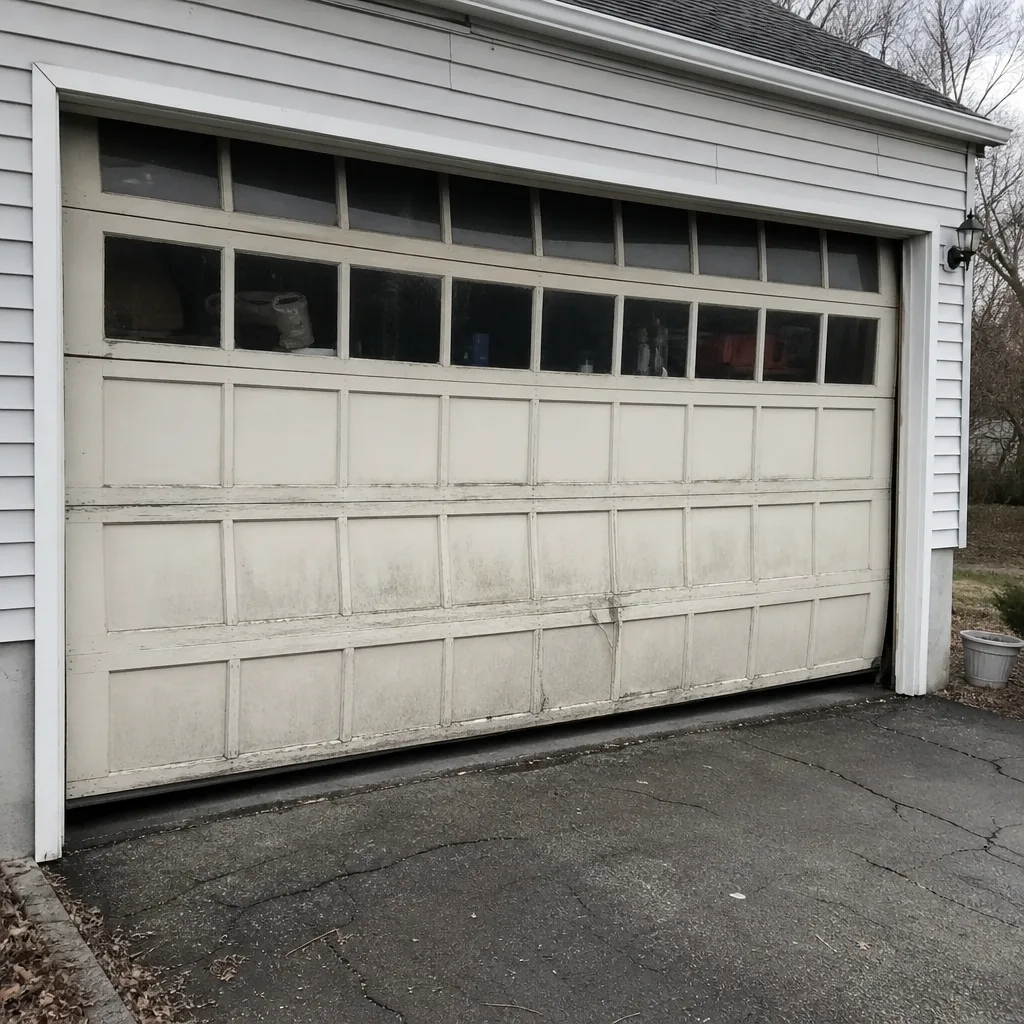 Before
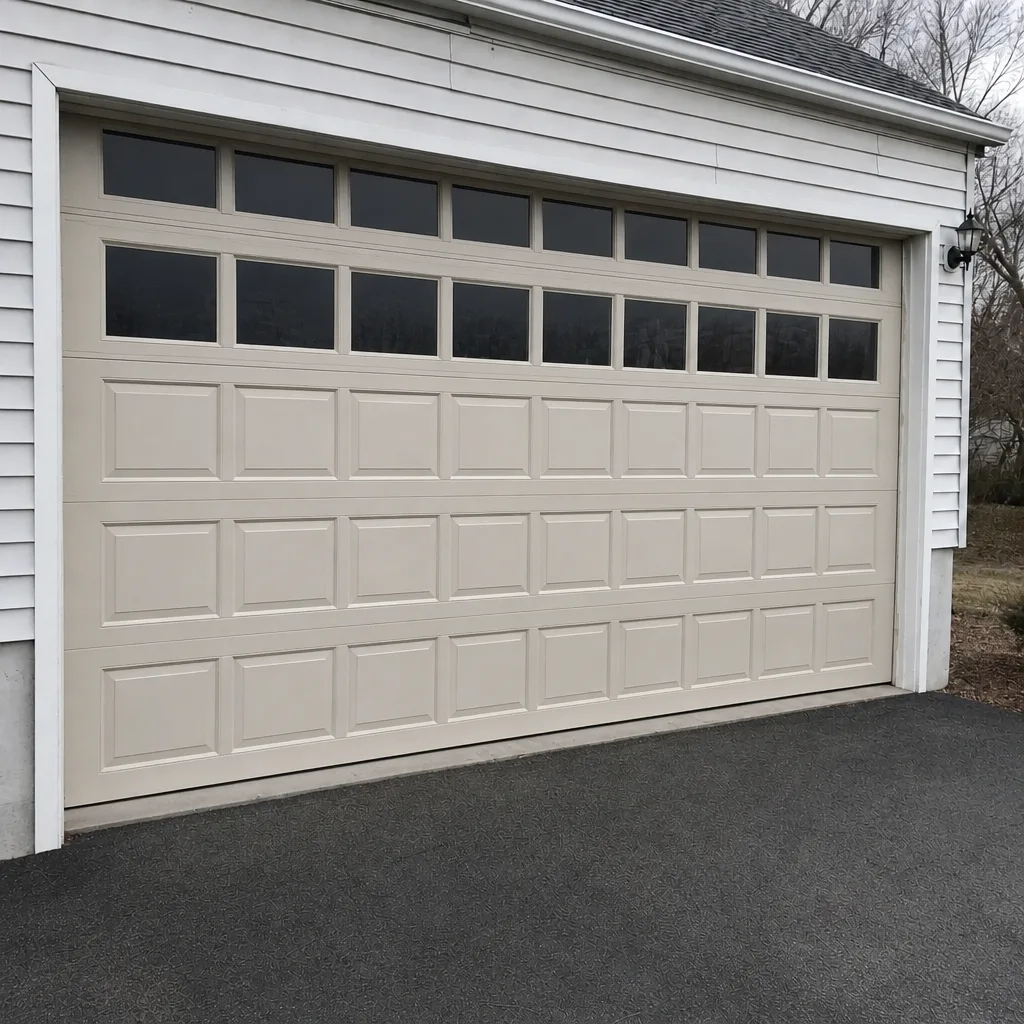 After
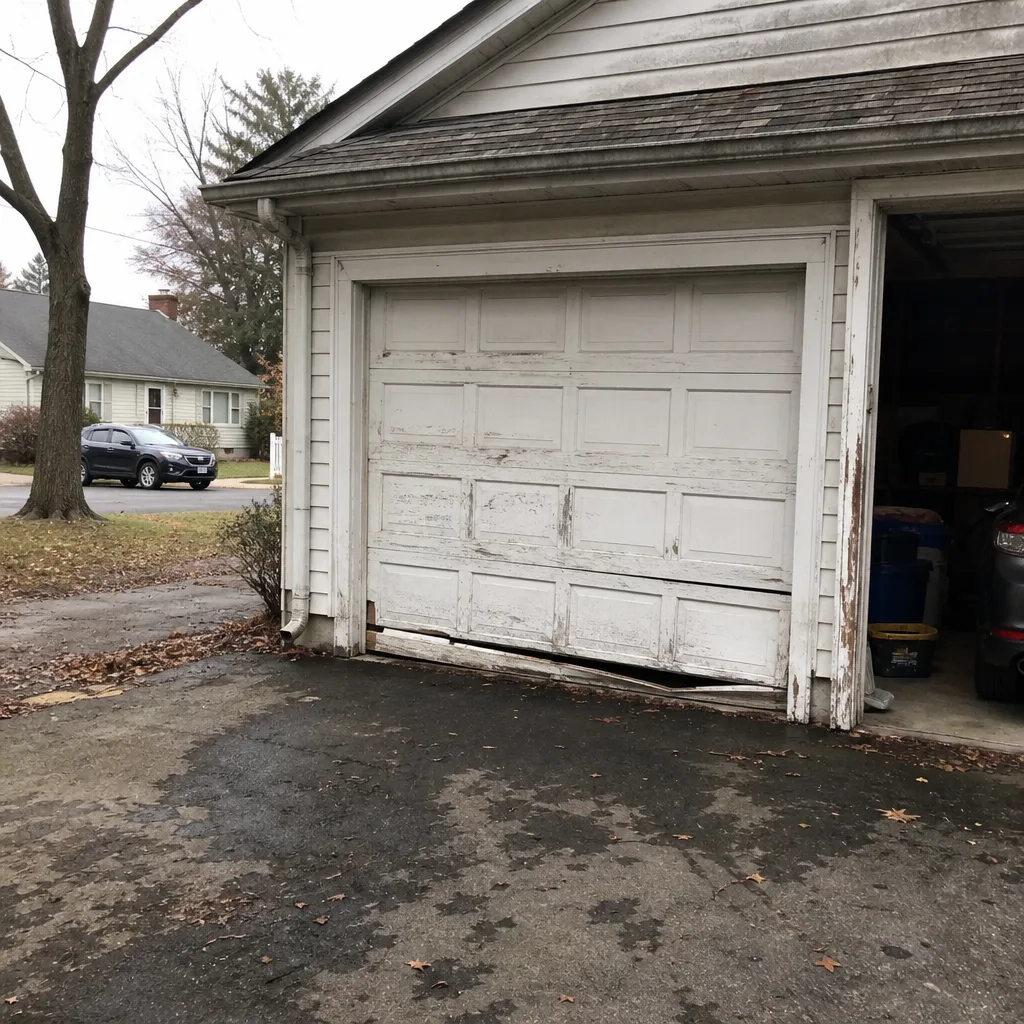 Before
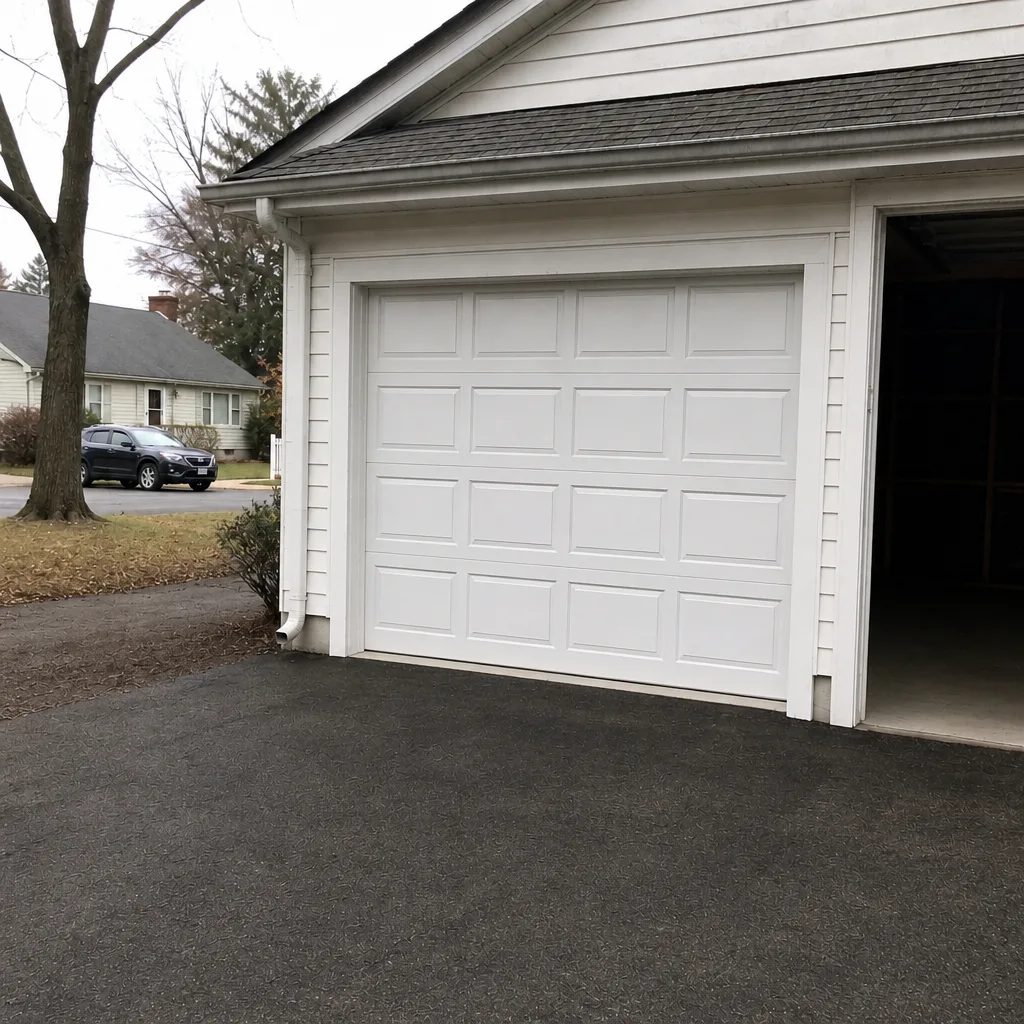 After
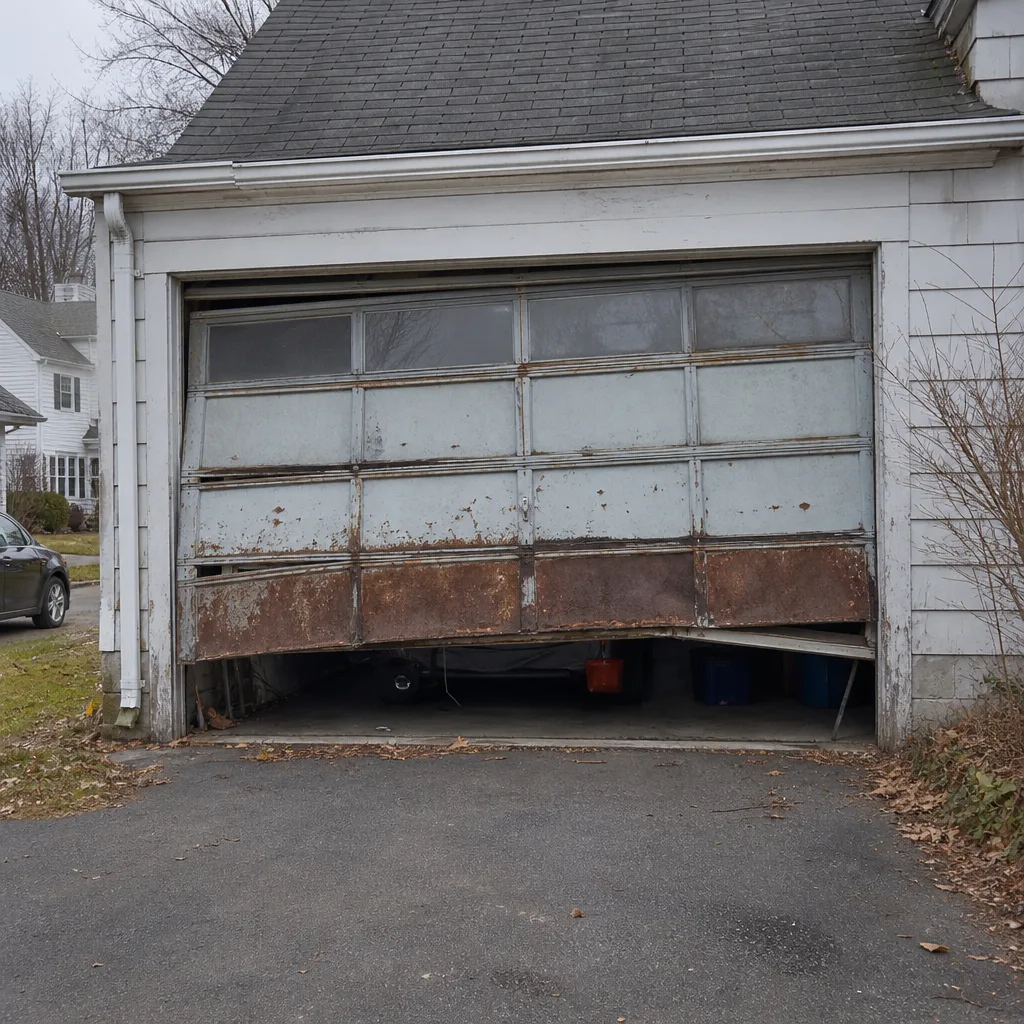 Before
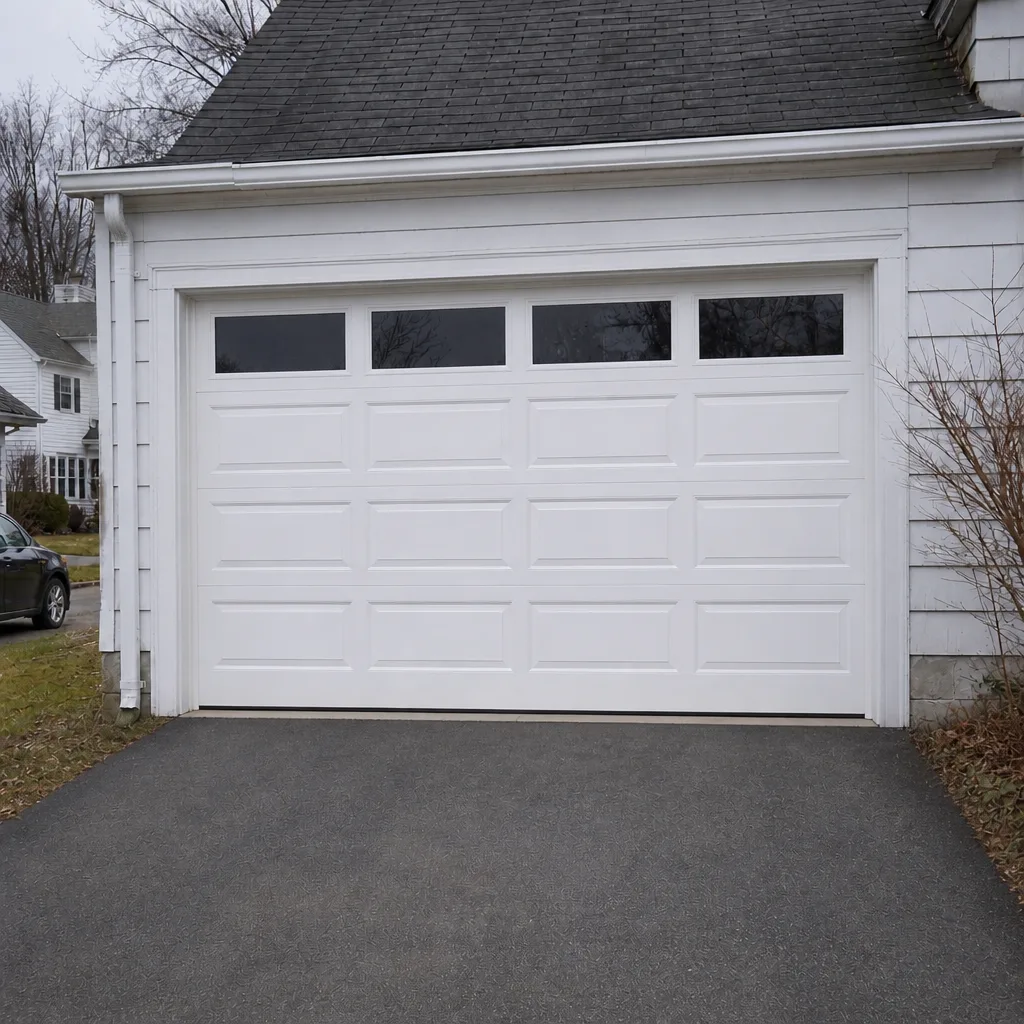 After
When to Call a Professional
Call a professional for anything that touches the spring, the cables, or track realignment under load. Call when a door has come off its track, when you hear a snap and the door won’t balance, when a cable looks loose or frayed, or when an opener repair turns out to involve the door’s balance rather than the unit itself. Call if you’ve started a repair you can’t finish safely, or if your door is the wrong fit for its opening. Call when an opener and a smart-home system won’t talk to each other, which is more common as more Milford homes add connected openers. And call if the door is stuck open or shut and you can’t safely secure it. Milford Garage Door Repair Co offers free estimates in Milford – call (866) 937-7098. We answer 24/7. Fast dispatch from 7am to 7pm, Sunday through Friday.
Frequently Asked Questions
No. A torsion spring stores enough energy to cause serious injury if it releases wrong, and replacing one means working directly against that stored force. Even experienced homeowners shouldn’t attempt it without the proper winding bars and training. Call (866) 937-7098 for a free estimate on spring replacement – we handle it as a dedicated safety job.
Weatherstripping, the bottom seal, safety sensor alignment, lubrication, and remote reprogramming are all safe to handle yourself because none of them involve stored spring tension. Roller replacement is a gray area – it can be done safely on some doors but requires relieving tension, so check your system first. If you’re unsure, a quick phone call sorts it out.
Not for the attempt itself – what matters is what condition the door is in when the technician arrives. Being upfront about what you removed, loosened, or adjusted helps them assess safely and skip guesswork, which usually keeps the work efficient. The price is quoted and agreed before any work starts, so you’ll know where you stand. Call (866) 937-7098 for a free estimate.
Spring repair is priced per job by a written estimate after a technician looks at the door, because the work depends on the door’s size, the spring type, and whether one or a matched pair needs replacing. We give the estimate free before any work begins, so there’s no mystery number. Call (866) 937-7098 for an exact quote.
Same-day service is available, and a door stuck open is the kind of call we prioritize. We answer 24/7, and fast dispatch from 7am to 7pm, Sunday through Friday, gets a technician out to secure or repair it. A call outside dispatch hours is booked into the next opening. Call (866) 937-7098.
Check the labels on the door panels and on the opener unit on the ceiling – most carry the manufacturer’s name. If you can’t find it, a technician can identify it on arrival. We work on eight major brands, including Wayne Dalton, Craftsman, Raynor, and LiftMaster, so the brand on your door is one we’re likely to recognize immediately. Call (866) 937-7098 if you’d like help identifying it.
The Bottom Line
The DIY vs professional question for garage doors comes down to stored energy, not skill. Weatherstripping, bottom seals, sensor alignment, lubrication, and remote reprogramming are safe to do yourself, and doing them protects your door against Milford’s cold snaps and damp seasons. Torsion springs, cable re-threading, and track realignment under load belong to a professional, because a mistake there can hurt you badly. The cost math confirms it: the safe jobs save time and money, and the risky ones save pennies against a major downside. Know which side your task sits on, and if you’ve started something you can’t finish, stop and call.
If you’re in Milford and not sure whether your job belongs on the safe list, call Milford Garage Door Repair Co at (866) 937-7098 for a free estimate. We answer 24/7. Fast dispatch from 7am to 7pm, Sunday through Friday. Our technicians have up to 8 years of experience, and the local professional we connect you with is licensed and insured as the state requires. The price is quoted and agreed before any work starts, so you know the number before anyone picks up a tool.
Written by the team at Milford Garage Door Repair Co.