
Last updated November 20, 2026
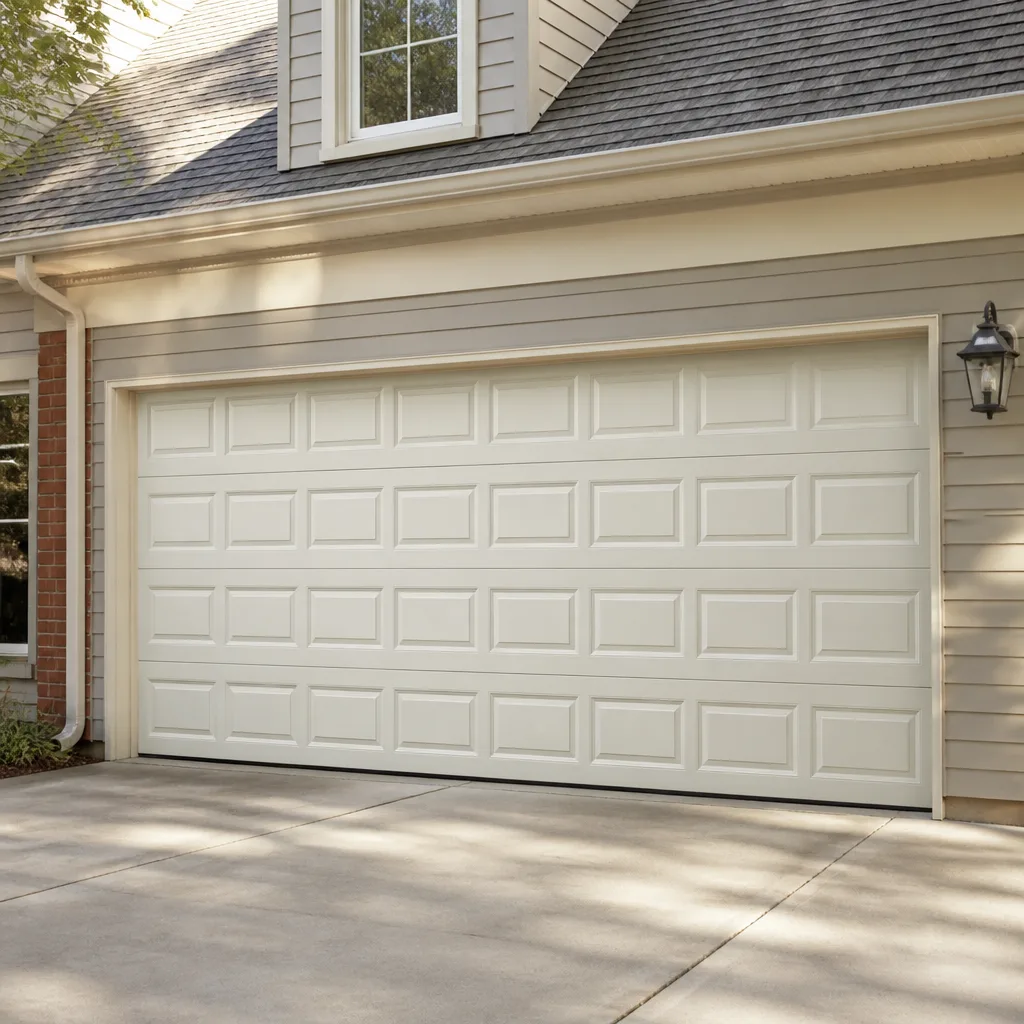 Raised-panel steel
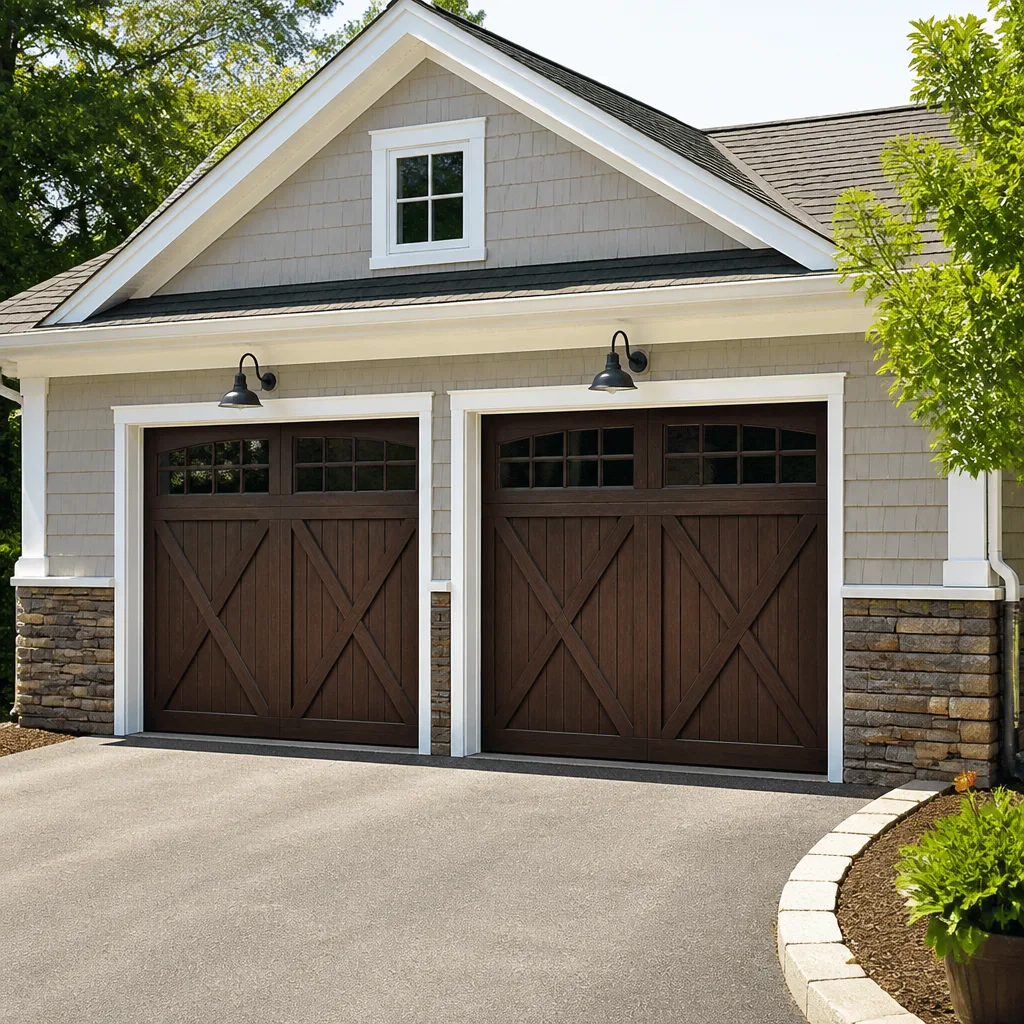 Carriage house
 Modern flush
 Full-view glass
 LiftMaster openers
 Chamberlain openers
Full 25-point door and opener safety check with every visit - springs, cables, rollers, tracks, and your LiftMaster or Chamberlain opener included
You get a price before we start. It does not change when the pro arrives.
Get your free estimateHow to Hire a Garage Door Contractor in Milford: A Step-by-Step Guide
Three of the top five results when you Google “garage door repair Milford CT” are call centers that dispatch subcontractors. That means the person who shows up at your house has never spoken to the phone rep you just talked to, carries no brand loyalty to the work they do, and may never come back if the repair fails. The homeowner who hires the first number that answers and the homeowner who asks five filtering questions both get a working door, but only one of them knows what they actually paid for. This guide walks through how to tell a local specialist from a dispatched subcontractor, how to verify a Connecticut HIC license in about a minute, and how to compare quotes that use wildly different line items. We wrote it for Milford homeowners who rely on their door daily and don’t want to be back on Google in a month.
Quick Answer
To hire a garage door contractor in Milford, verify the CT Home Improvement Contractor license on the CTDCP website, ask who actually performs the work and whether they’ve serviced your door brand before, get a written estimate with itemized parts and labor plus a stated warranty, and never accept same-day pressure to sign before you’ve seen the quote in writing. A good contractor will answer those questions without flinching. A call center usually can’t.
Styles & brands we work with
- Raised-panel steel
- Carriage house
- Modern flush
- Full-view glass
- LiftMaster openers
- Chamberlain openers
Table of Contents
- Why Hiring in Milford Is Harder Than It Looks
- Step 1: Verify the Connecticut HIC License
- Step 2: Ask Who Actually Does the Work
- Step 3: Check Brand Experience, Not Brand Affiliation
- Step 4: Compare Quotes Accurately
- Step 5: Spot the Red Flags Early
- Spring Work Deserves Its Own Conversation
- Repair or Replace? A Simple Decision Framework
Why Hiring in Milford Is Harder Than It Looks
Milford sits between the New Haven and Bridgeport markets, which means the search results you see are a mix of three very different businesses. There are local specialists who know Milford’s housing stock, the older homes near the green and the newer construction off Route 1 alike. There are regional companies with wider service areas that may or may not send a technician familiar with your specific brand. And there are national lead-generation call centers that show up first in search but have no physical presence or trained staff anywhere near Milford.
All three will answer the phone. Only one is accountable for the actual repair.
The distinction matters most when something goes wrong. A warranty is only as good as the company that stands behind it. If the technician was a subcontractor dispatched from a call center, there’s no relationship to hold accountable if the spring fails again or the opener still won’t close after the “fix.”
Beyond the business model, Milford’s housing mix adds a wrinkle. The city has a wide range of garage door vintages, from older wooden single-car doors on homes built decades ago to newer insulated steel doors with smart openers on recent construction. A contractor who works Milford regularly has seen the full range. Someone driving in from a call center in another state has not.
At Milford Garage Door Repair Co, we work exclusively on garage doors and garage door systems, which is a different discipline than general home repair. The questions below will help you figure out who you’re actually talking to before you book anything.
Step 1: Verify the Connecticut HIC License
A Connecticut Home Improvement Contractor (HIC) license is required for most residential home improvement work, including garage door installation and repair. The license is issued by the state through the Department of Consumer Protection (CTDCP). It exists so homeowners have a record of who did the work, a way to file a complaint if something goes wrong, and a guarantee that the contractor has met the state’s baseline requirements.
Verifying it takes less than two minutes:
- Go to the CTDCP website and find the license lookup tool.
- Search by the contractor’s business name or by their HIC license number.
- Confirm the license is active, not expired or suspended.
- Check the name on the license matches the company on your quote.
A legitimate contractor won’t hesitate to give you their license number. If they dodge the question, that’s your answer.
One thing worth knowing: HIC licensing applies to the company doing the work, not to a call center that refers the job out. If the person you spoke to on the phone can’t tell you the license number of the company that will actually be at your house, you’re not verifying the right entity. Ask specifically for the license of the business performing the service.
When you call around, ask each company for their HIC number before you even discuss the job. The ones who respond quickly and clearly are usually the ones worth continuing with.
Step 2: Ask Who Actually Does the Work
This is the single most important question in the hiring process, and almost nobody asks it. The question is: who will be performing the work at my house, and are they an employee of your company or a subcontractor you’re dispatching?
Why it matters:
- Accountability. If an employee does the work, the company is fully responsible for the outcome. If a subcontractor does it, accountability gets murky fast.
- Continuity. A local company that sends the same team repeatedly builds real brand familiarity and experience with your area’s housing stock.
- Warranty enforcement. If the repair fails, you need to know who you’re calling and whether they’ll actually come back.
- Diagnosis speed. A technician who has worked on Crosley, Clopay, and LiftMaster systems repeatedly diagnoses faster than someone encountering your setup for the first time.
There’s a script you can use. Ask: “Will the person who comes to my house be someone from your company, or a subcontractor you dispatch?” Ask: “Has that person worked on my brand of door and opener before?” Ask: “If the repair fails in 90 days, who comes back, and under what warranty?”
A company with genuine local presence and trained technicians answers these questions directly. A call center gives you a script and transfers you to “scheduling.”
One more test: call back and ask to speak with someone who can actually describe the work. If every call is answered by a dispatcher who’s never seen the equipment, you’re dealing with a relay, not a contractor.
Step 3: Check Brand Experience, Not Brand Affiliation
Garage door repair isn’t one skill set applied uniformly to all doors. The spring system on a Wayne Dalton door works differently from a Raynor setup. LiftMaster and Chamberlain openers share some design heritage but differ in their diagnostic codes and circuit boards. A technician who works on Craftsman openers week in and week out can find the problem in fifteen minutes. Someone unfamiliar with that line may spend an hour diagnosing or, worse, recommend replacing a unit that only needs a repair.
When you talk to a contractor, ask which brands they regularly service. Not which brands they claim to “specialize in” as a marketing line, but which brands they actually see in their regular work.
The brands worth asking about specifically:
- LiftMaster
- Chamberlain
- Genie
- Craftsman
- Clopay
- Amarr
- Wayne Dalton
- Raynor
We work on all eight. Not because we list them in a brochure, but because those are the doors and openers Milford homeowners actually have and call us about. When a homeowner calls about a Raynor door that’s not closing properly, we can diagnose it without sourcing parts from a third party or guessing at a substitute. Same with Craftsman opener repair, which is often a logic board or travel-limit issue rather than a dead motor.
The bottom line: ask which brands a contractor services regularly and how they handle parts for the less common ones. A good answer is specific and immediate. A vague answer is a warning sign.
Step 4: Compare Quotes Accurately
Two quotes for the same garage door repair can look completely different even when the price is similar, because contractors itemize in different ways. One lumps everything into “spring replacement, $X.” Another separates the spring, labor, disposal of the old parts, and the safety check. A third quotes a matched pair when you only needed one replaced, or vice versa.
Here’s how to compare fairly:
- Get everything in writing. No verbal estimates. A written quote with itemized line items, the warranty terms, and the total price is the baseline.
- Check what’s included. Are disposal and haul-away included? Is the safety check part of the job or an add-on? Is the price for one spring or a matched pair? These details matter when comparing totals.
- Ask about the warranty in writing. A good quote states the warranty duration and what it covers. A one-year warranty on parts and labor means something. A vague “guaranteed” means nothing.
- Confirm the price is final. A written estimate that says “subject to change based on what we find” is not a quote. Ask upfront whether the price covers the whole job as described or whether it can change once the technician is on site.
- Look at the scope of the diagnosis. A quote that addresses the symptom you described is fine. A quote that also diagnoses the underlying cause (i.e., “the spring failed because the door is unbalanced”) is more thorough.
We quote by written estimate before any work starts. The price we agree to is the price you see on the invoice. No surprises, no “we found something extra” upcharge once the technician is already at your house.
One more comparison point: does the quote include a written diagnosis of what’s wrong, or just a repair recommendation? A structured quote usually explains the root cause. If it doesn’t, ask the contractor to explain it before you accept.
Step 5: Spot the Red Flags Early
Most hiring mistakes happen in the first ten minutes of the first conversation. These are the signals worth paying attention to:
- Pressure to book immediately. A legitimate contractor gives you the quote and lets you think about it. A company that says “the price is only good if you book right now” is not quoting, they’re selling. Slow down. Get the quote in writing, then decide.
- Vague line items. “Garage door repair, TBD” is not a quote. Neither is “miscellaneous labor.” If the estimate doesn’t break down parts and labor, ask for an itemized version. A professional will produce one without argument.
- No written warranty. Ask what happens if the repair fails in 30 days. If there’s no clear answer and no warranty documentation, walk away.
- No license number on request. See Step 1. If they can’t provide the HIC number of the company doing the work, don’t book.
- Unfamiliarity with the brand. If the technician doesn’t know the difference between a Genie chain drive and a LiftMaster belt drive, or hasn’t heard of Clopay’s panel profiles, they’re not the right fit for your door.
- Upsell pressure toward full replacement. A badly worn door or a severely damaged frame genuinely may need replacement. But if you called about a broken spring and the first quote you get is for a full new door, get a second opinion before signing.
- No local address or local references. A business with a Milford presence can point to local work and be reached at a local phone number. A call center can’t.
- No one can explain the diagnosis. If the technician can’t describe what’s wrong in plain language before quoting a fix, they may not know what’s wrong.
None of these flags is fatal on its own. But three or four together means you’re looking at a business built for speed, not service.
Spring Work Deserves Its Own Conversation
A garage door spring is the most mechanically dangerous component in any residential garage. It stores enormous energy. When a torsion spring snaps, it releases that energy with enough force to cause serious injury or damage, which is why spring work is not a job to hand to a general handyman or a DIY project to pressure through on a free afternoon.
When you’re hiring for spring work, the questions shift:
- Does the contractor offer garage door spring repair as a dedicated service, or is it lumped into “garage door repair” along with everything else?
- Will the technician replace one spring or both if you have a matched pair, and does the quote explain why?
- Is the spring size and tension matched to the door’s weight, or is a generic spring being dropped in?
- What safety checks are performed after the new spring is installed?
Ask specifically whether the person working on your spring has done this specific job before. Spring installation requires winding steel under tension, and a mistake can be catastrophic. Safety glasses, gloves, and proper winding bars aren’t optional. If a technician doesn’t know the wire gauge and length required for your door, they’re not qualified to be working on the spring.
The same goes for garage door opener repair. Openers that fail on the safety-reverse test, or that won’t stop when they hit something, are a hazard. The repair should include checking the safety sensors and the force settings, not just swapping a remote battery.
If a spring is visibly broken (a clean gap in the coil) or the door is stuck open or shut and won’t move safely, stop operating it. Don’t pull the manual release and don’t try to force it. Call a technician. Spring work is a safety job. We treat it like one.
Repair or Replace? A Simple Decision Framework
At some point, every homeowner faces the repair-versus-replace question. The answer usually comes down to three factors.
Age and condition of the door itself. A 20-year-old wooden door with rot is probably a replacement candidate. A 15-year-old steel door with a working frame may just need panel repair or a new spring.
How often you’re calling for repairs. If you’ve had a technician out twice in a year for different issues, the total cost of repairs is starting to approach the cost of replacement. Ask for an honest accounting: what’s been spent on repairs, and what’s still likely to fail next?
Opener compatibility. A newer smart opener paired with an older door sometimes creates operating issues that are worth solving with a new door. Conversely, a solid door paired with a failing opener only needs the opener addressed. Opener repair today can often restore functionality on legacy units without a full replacement.
Here’s the decision tree we use:
- Is the door structurally sound (frame intact, panels not rotted or bowed)? If yes, repair is usually the better path.
- Is the problem a spring, opener, or single panel failure? Fix it. The door itself has plenty of life left.
- Is the door showing multiple failures across springs, panels, and track in the same year? A replacement quote is worth getting.
- Is the door’s design outdated, undersized for the vehicle you park in the garage, or non-insulated where it should be? Replacement may be worth considering on comfort and utility grounds, not just cost.
We don’t push replacement. If the door has meaningful life left, we say so. If it’s genuinely time, we quote a new installation and explain what we’d change. For the broader decision framework behind garage door repair, the rule of thumb is simple: repair when the door is structurally sound and the failure is localized. Replace when the failures are structural or across multiple systems.
Common Mistakes to Avoid
- Hiring the first number that answers. It’s usually a lead-generation service or a national call center. Ask who does the work before you book. The two-minute phone conversation you skip is the reason the repair fails later.
- Not asking for the HIC license number. Connecticut requires home improvement contractors to be licensed. A contractor who can’t produce a number in the CTDCP lookup system isn’t compliant with state rules, and you have no recourse if things go wrong.
- Accepting a verbal estimate. Say it back in writing. If they won’t put it on paper, there’s no quote. You’ll be negotiating the invoice line items after the work is done.
- Ignoring warranty terms. “Guaranteed” is a marketing word. “One-year warranty on parts and labor” is a contract. Get the latter in writing before you commit.
- Assuming brand affiliation means experience. A company can list ten brands on its homepage and still be seeing your specific model for the first time. Ask what they actually work on regularly. We work on your brand. The difference is in the familiarity, not the marketing.
- Letting a spring repair get DIY’d or handyman’d. The spring is the highest-tension part of the system. It is a safety job. Don’t attempt it yourself, and don’t hire someone without spring-specific experience.
- Not asking about same-day availability. If the door is stuck open, you need a real answer. A company that can’t give you a timeframe when you call probably won’t make a fast dispatch either. A company that can offer same-day service or a scheduled window the same call is the one worth booking.
See the difference
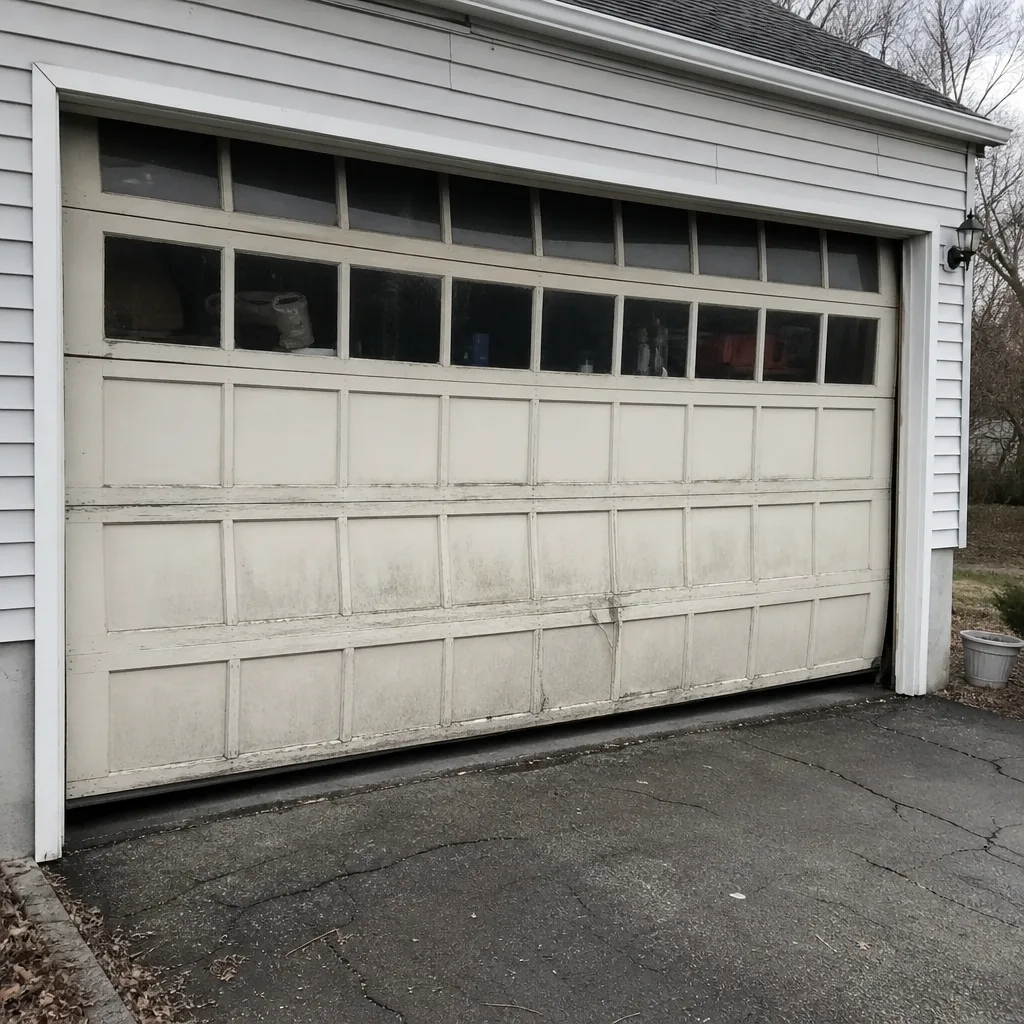 Before
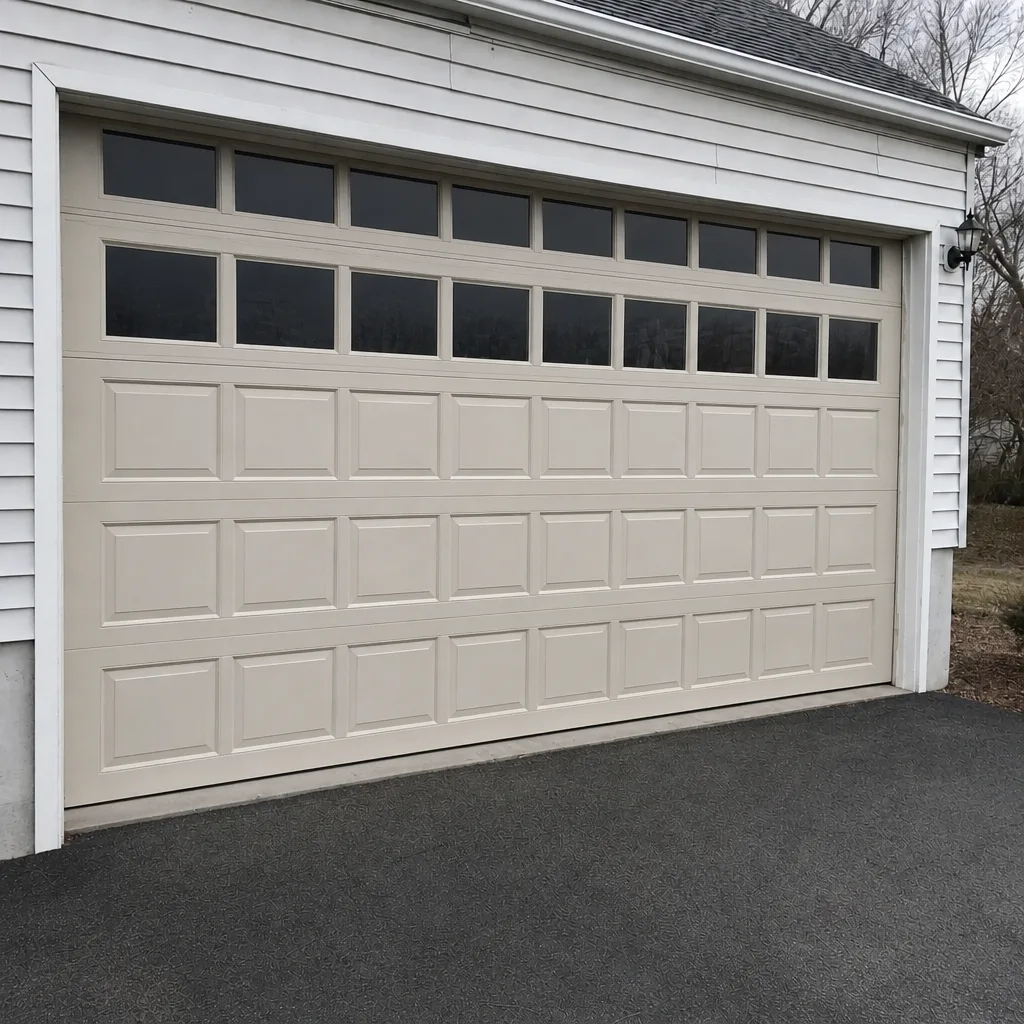 After
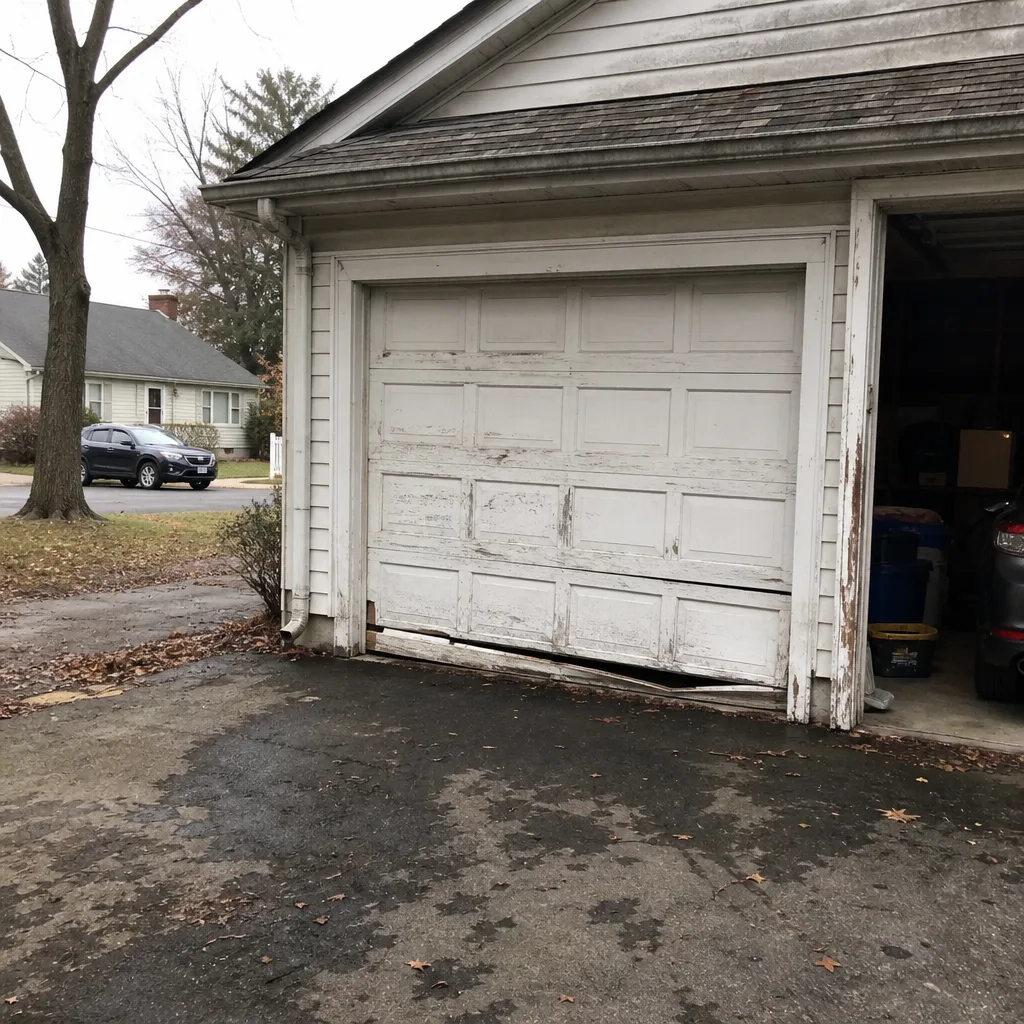 Before
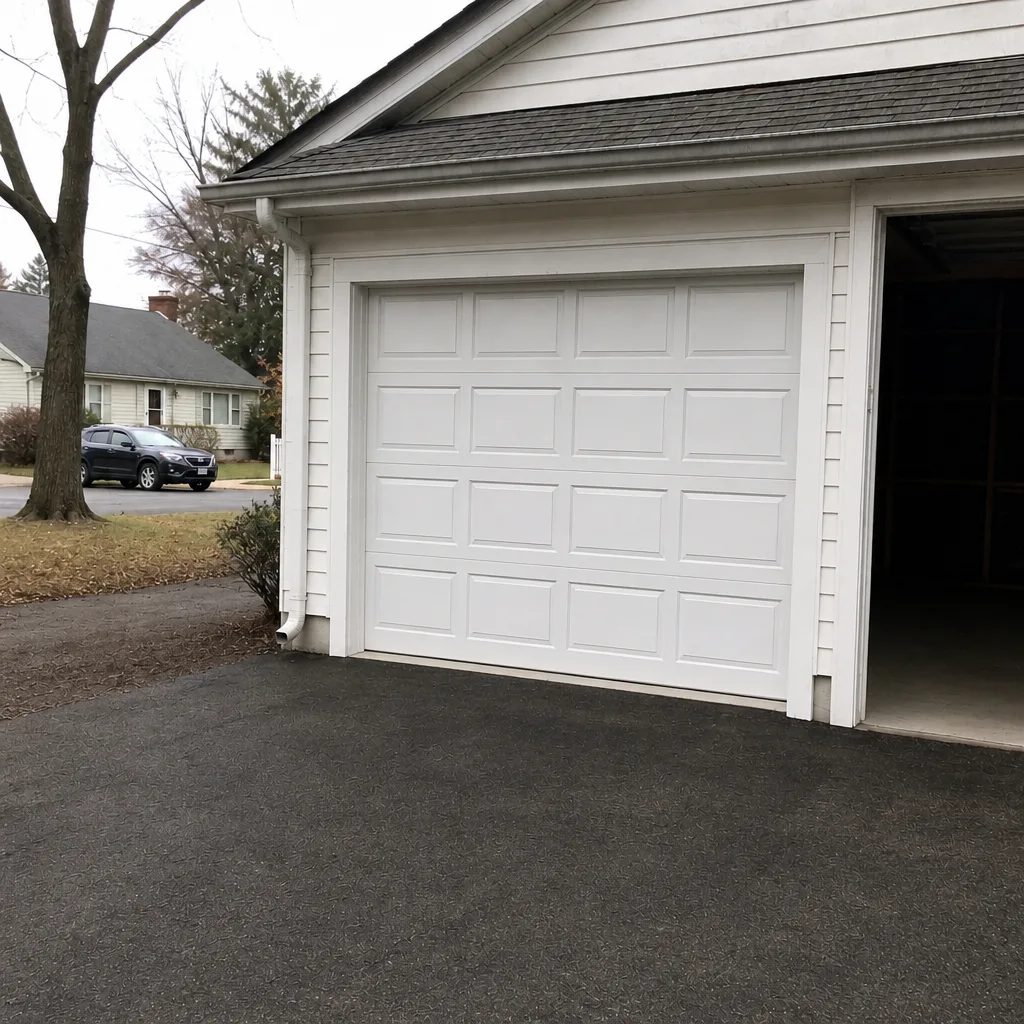 After
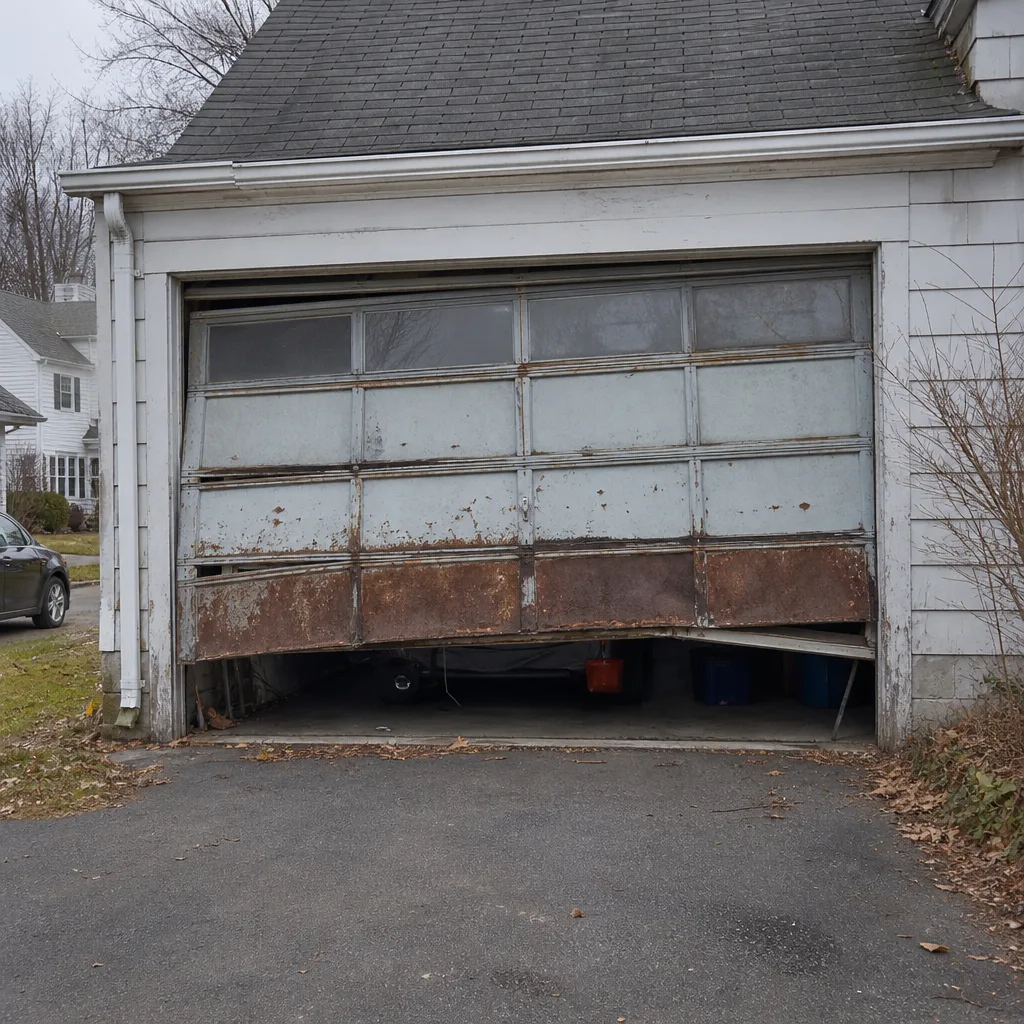 Before
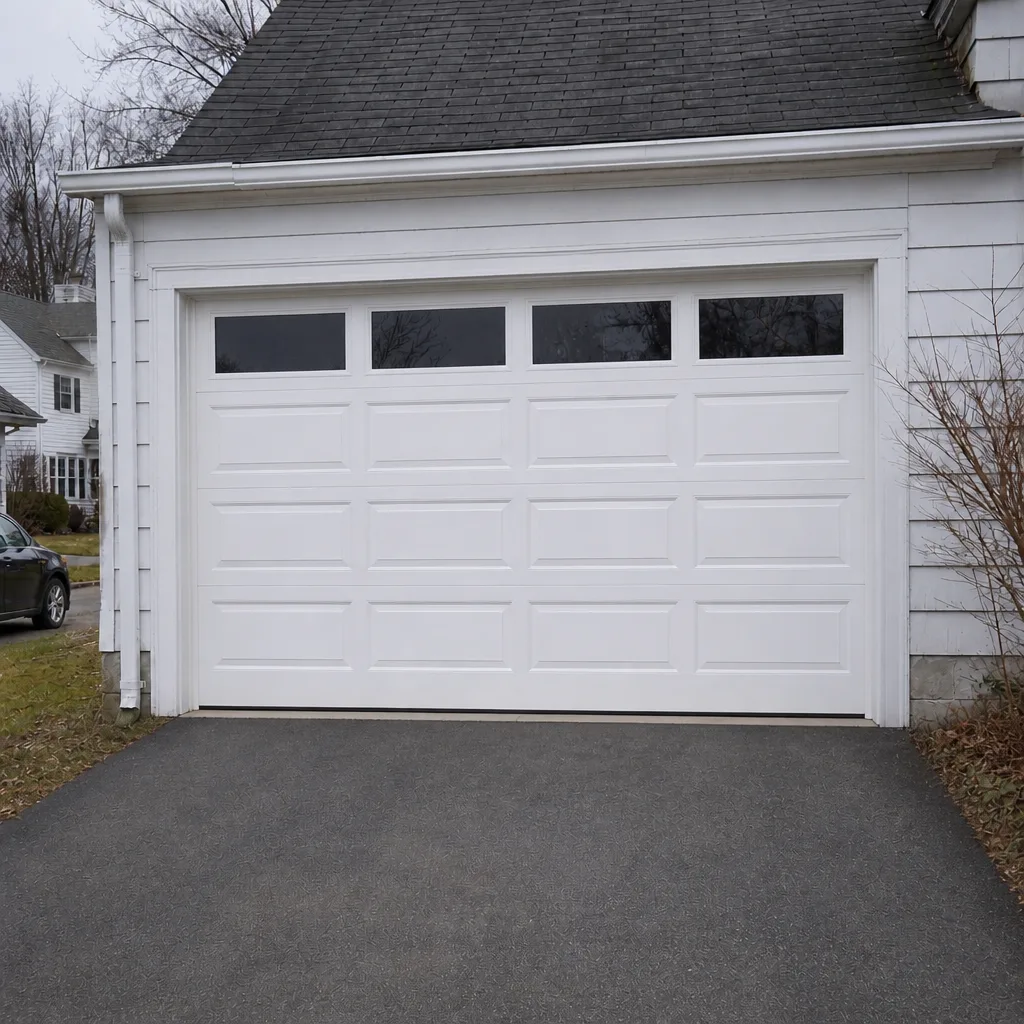 After
When to Call a Professional
The realistic answer is: whenever you’re not sure. A garage door is a high-tension mechanical system with springs, cables, tracks, rollers, hinges, and an opener controller all working together. Frustrating symptoms (door won’t close, one side drops, loud bang, opener runs but nothing moves) usually point to a specific component failure. Trying to diagnose them yourself against a rotating door or a spring that might be under tension is dangerous.
Call a technician when:
- You heard a loud snap or bang and the door is stuck.
- The door is visibly crooked, both sides not level.
- A spring or cable is broken or visibly detached.
- The opener runs but the door neither opens nor closes.
- The safety-reverse sensor isn’t stopping the door when it hits an obstacle.
Milford Garage Door Repair Co offers free estimates in Milford. Call (866) 937-7098. We answer 24/7, with fast dispatch from 7am to 7pm, Sunday through Friday.
Frequently Asked Questions
Go to the CTDCP website, use the license lookup tool, and search for the contractor’s business name or HIC license number. In Connecticut, home improvement contractors must hold a Home Improvement Contractor (HIC) license issued by the Department of Consumer Protection. Confirm the license is active and that the name on the license matches the company on your quote. We can provide our HIC license number on request. Call (866) 937-7098 for an exact quote on any garage door job.
Garage door spring repair typically runs $180 to $340 for one spring, and a matched pair is usually replaced together, so it costs about twice that. Prices vary by spring type (torsion or extension), door weight, and access. We quote by written estimate before any work starts, so the price you agree to is the price on the invoice. Call (866) 937-7098 for an exact quote. Estimates are free.
In most cases, yes. Same-day service is a standing offering, not a vague promise. We answer 24/7, and crews are dispatched Sunday through Friday, 7am to 7pm. If your door is stuck open or stuck shut, call and we’ll book you into the next available dispatch window. Call (866) 937-7098 for the fastest response.
We work on all of the major brands: LiftMaster, Chamberlain, Genie, Clopay, Amarr, Wayne Dalton, Craftsman, and Raynor. That matters because different brands diagnose differently. A LiftMaster opener’s travel limits, a Chamberlain logic board issue, a Raynor spring setup, and a Clopay panel profile all need a technician who’s actually seen them before. Our technicians have up to 8 years of experience across these systems. Call (866) 937-7098 for questions about your specific door and opener.
No. We quote by written estimate before any work starts. If the diagnosis reveals additional work that wasn’t part of the original quote, we talk it through with you and get written approval before proceeding. No surprise charges on the invoice. That’s the rule. Call (866) 937-7098 for a free estimate.
The local pro who performs the work is licensed and insured as their state requires. We connect Milford homeowners with experienced local technicians, and our own technicians have up to 8 years of experience across all the major garage door brands. For the license and insurance details of the technician performing your job, just ask when you call. We’ll provide the information. Call (866) 937-7098.
The Bottom Line
Hiring a garage door contractor in Milford comes down to five steps: verify the HIC license, ask who does the actual work, check brand experience rather than brand affiliation, compare itemized quotes on equal terms, and watch for red flags like same-day pressure and vague line items. The best contractor is the one who answers your questions directly and gives you a written estimate before you commit. If they hesitate on any of those basics, keep looking.
Milford Garage Door Repair Co works exclusively on garage doors and garage door systems. Repair, spring work, opener service, installation, and emergency response all come from one consistent team. Our technicians have up to 8 years of experience across LiftMaster, Chamberlain, Genie, Clopay, Amarr, Wayne Dalton, Craftsman, and Raynor systems. If you’ve read this far and you’re ready to book, we’re ready to help. Call (866) 937-7098 for a free estimate.
Written by the team at Milford Garage Door Repair Co.