
Last updated November 20, 2026
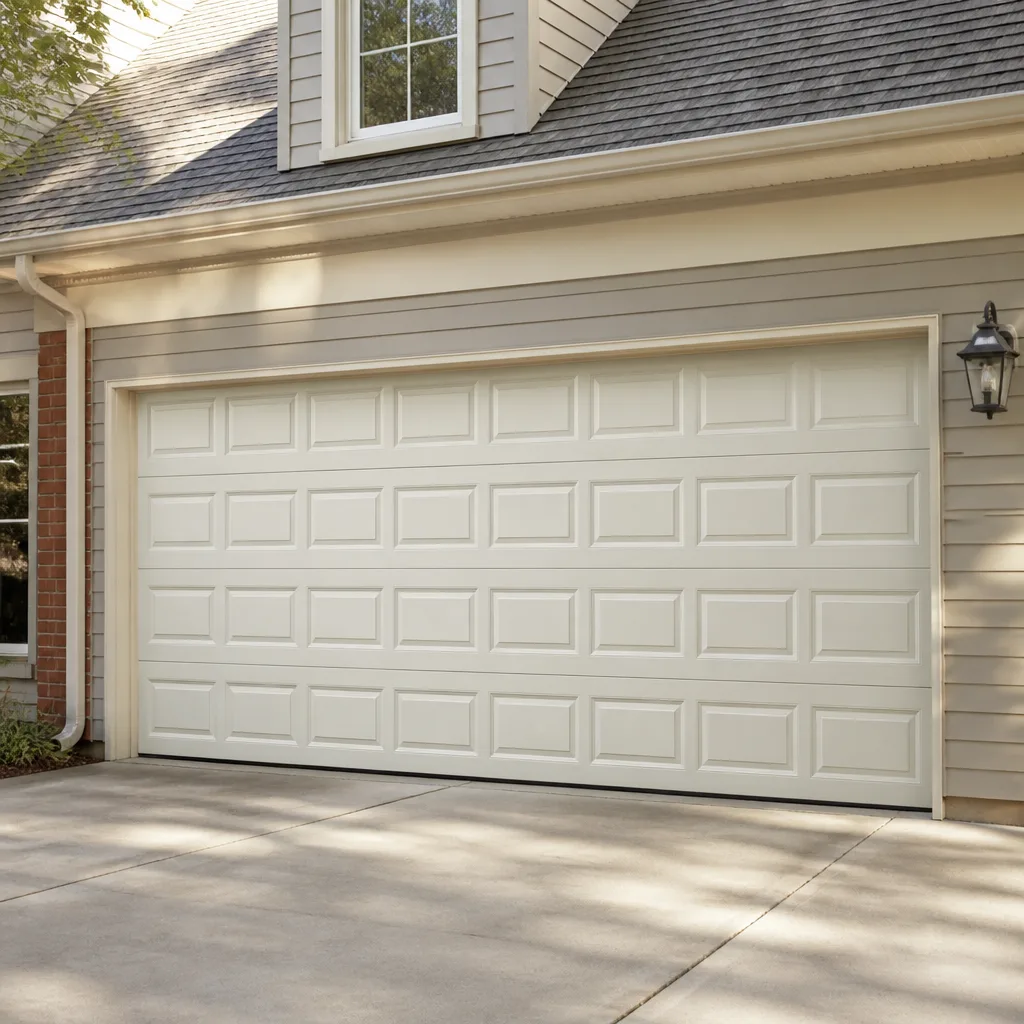 Raised-panel steel
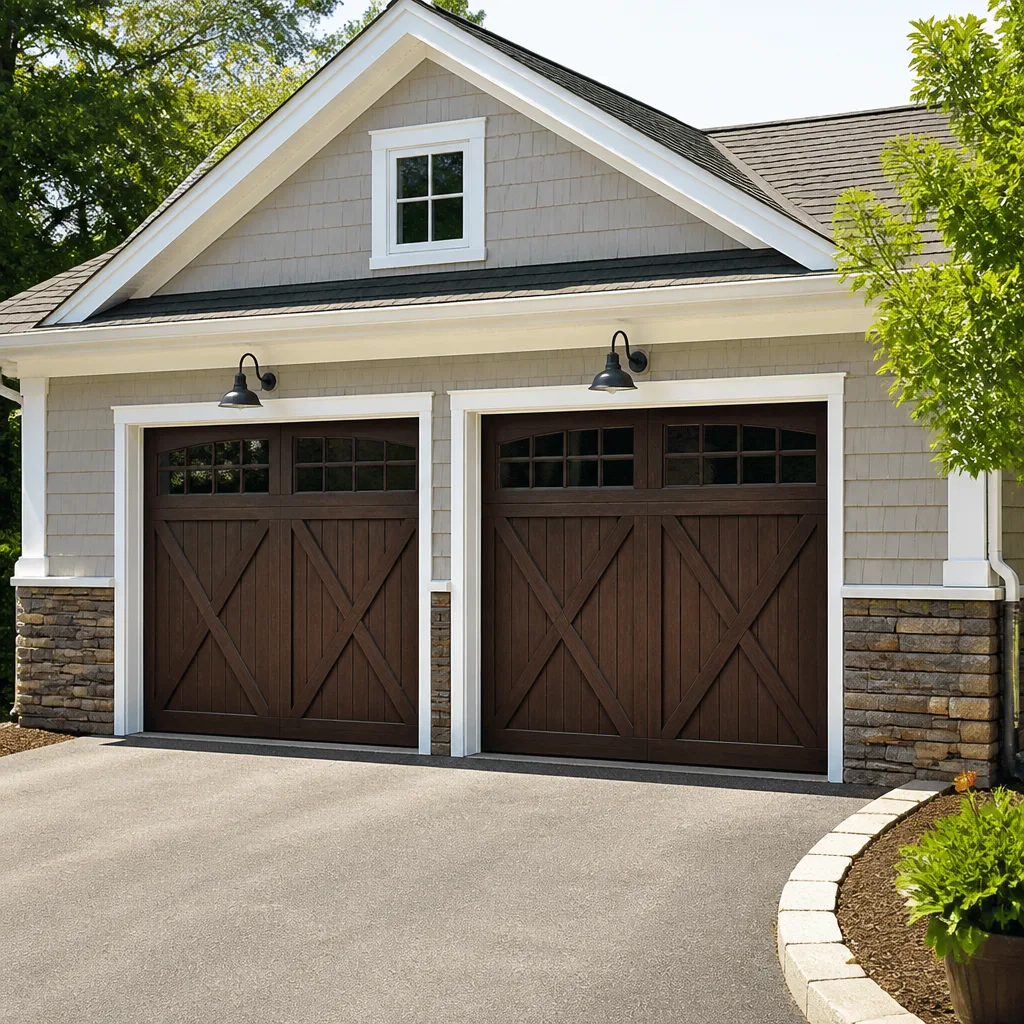 Carriage house
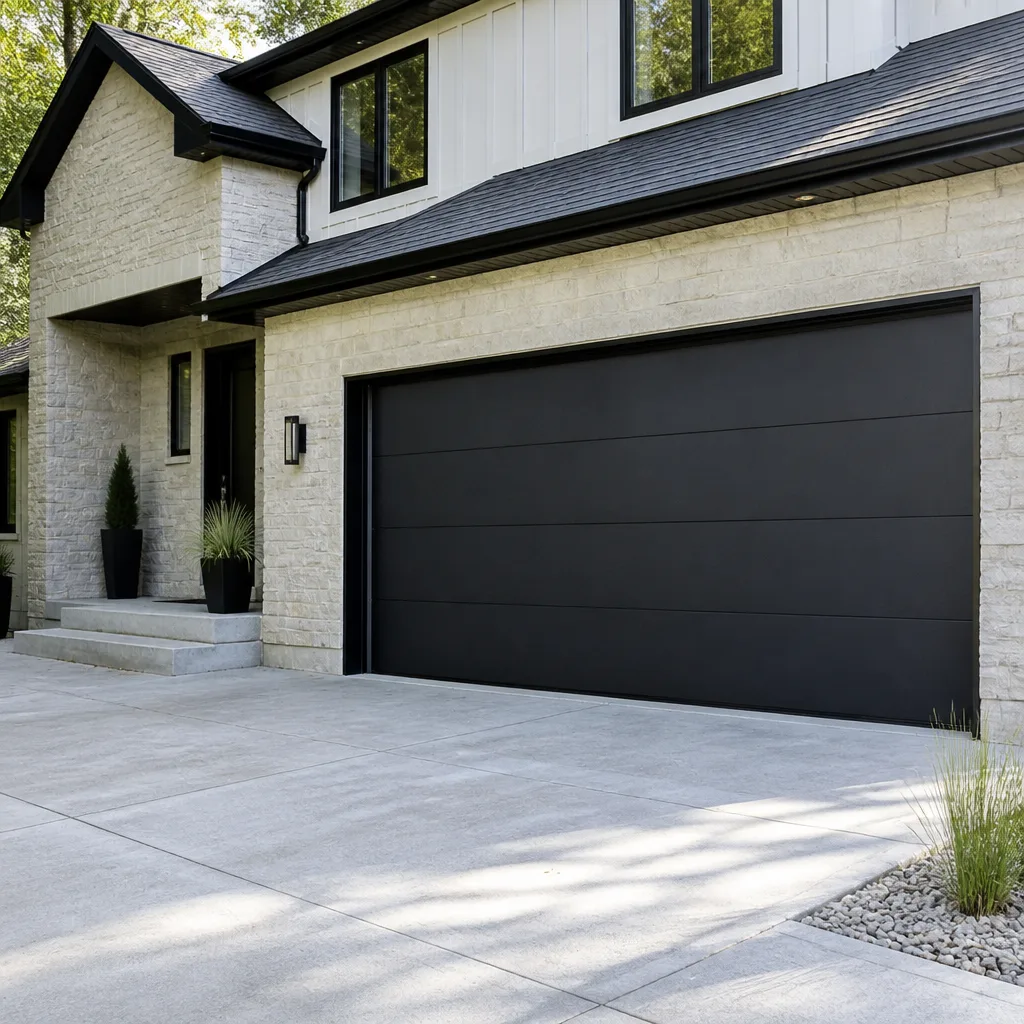 Modern flush
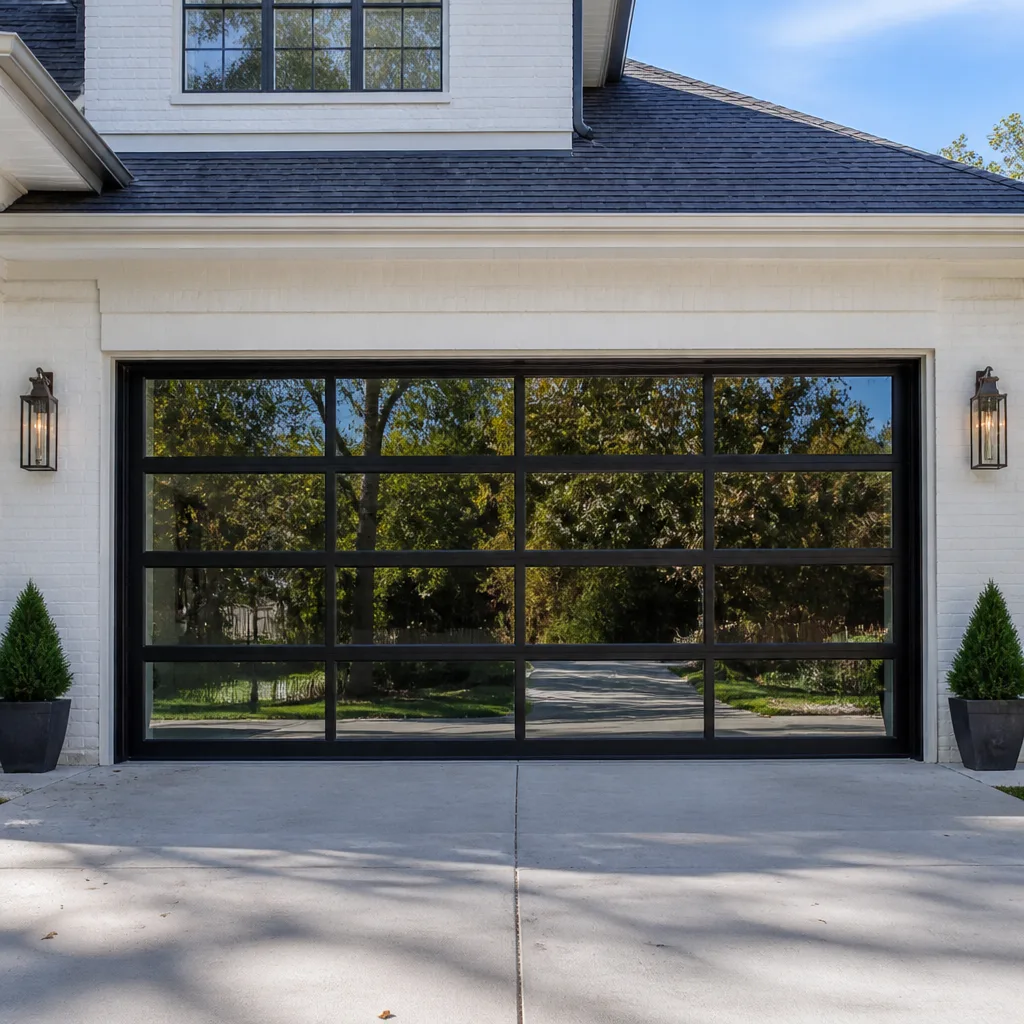 Full-view glass
 LiftMaster openers
 Chamberlain openers
Full 25-point door and opener safety check with every visit - springs, cables, rollers, tracks, and your LiftMaster or Chamberlain opener included
You get a price before we start. It does not change when the pro arrives.
Get your free estimateThe Complete Guide to Garage Doors in Milford
Your garage door is the largest moving mechanical system in your house. It also gets treated like a light switch: nobody thinks about it until it stops working. Here’s the counterintuitive part. The door itself almost never fails first. Springs, cables, rollers, and the opener wear out in a predictable order, and if you know that order you can replace parts on your schedule instead of at the worst possible moment. This guide covers the entire life of a Milford garage door, from choosing the right material for a New England freeze-thaw climate to deciding when repair makes sense and when replacement does. We’ll also explain why a single-wide door and a double-wide door in the same Milford neighborhood can age completely differently.
Quick Answer
A garage door in Milford usually needs its springs replaced every seven to twelve years, an opener replaced around the ten-to-fifteen-year mark, and a full door replacement somewhere between fifteen and thirty years depending on material and exposure. The biggest local variables are temperature swings and humidity, which fatigue springs faster than a stable climate would, and which punish cheap or poorly sealed wood doors. Most homeowners can extend the life of their door significantly by getting it serviced when something sounds wrong instead of waiting for it to break.
Styles & brands we work with
- Raised-panel steel
- Carriage house
- Modern flush
- Full-view glass
- LiftMaster openers
- Chamberlain openers
Table of Contents
- Why Your Garage Door Is a Machine, Not an Appliance
- How Milford’s Climate Affects Your Door
- Single-Car vs. Double-Car Door Physics
- Decision Tree: Repair, Replace, or Wait
- Which Door Materials Hold Up in Milford
- What Garage Door Work Costs in Milford
- Using This Guide as an Owner’s Manual
Why Your Garage Door Is a Machine, Not an Appliance
A garage door is not a sheet of metal on a track. It’s a counterbalanced lifting system with coiled tension stored in two springs, a torsion tube or extension cables, a set of rollers and hinges, and an opener pulling the whole thing. Every part depends on the others. When one starts to fail it takes the rest with it.
Here’s the order things usually wear out in:
- Rollers. Nylon rollers wear and steel rollers dry out. Both get noisy first. This is the cheapest fix and also the most ignored.
- Springs. Torsion springs cycle thousands of times before failing. Extension springs on older doors can go sooner, especially if the door isn’t properly balanced.
- Cables. Cables fray where they run around the drum. A frayed cable is a safety issue, not a nuisance.
- Opener. The motor and gear assembly outlive the door itself in many cases, but the logic board, capacitor, or drive gear can fail independently.
- Panels and frames. Rust, rot, and impact damage show up last on well-maintained doors and first on neglected ones.
The point of that order is that you can’t fix a spring problem by replacing the opener, and you can’t make a worn-out door quiet by greasing the tracks alone. We’ve seen plenty of Milford homeowners buy a new opener because the door was heavy – only to find that the real problem was a broken spring and the new opener was working twice as hard as it should. When we diagnose a door, we check every component in that list before we recommend anything.
If something’s already failing, our garage door repair team can walk through the diagnosis with you. We work on your brand, so we usually know what the fix is likely to involve before we arrive.
How Milford’s Climate Affects Your Door
Milford’s weather is a tougher test for garage doors than most homeowners assume. Cold winters with repeated thawing and refreezing, humid summers, and wide swings between mild and freezing stretch and shrink every component in the door. Springs, which are under constant tension regardless of temperature, expand and contract with each swing. That cumulative cycling is what makes spring failure one of the most common repair calls in Milford, and it’s why we treat garage door spring repair as its own service rather than lumping it into general repairs.
Here’s what Milford weather does to a door specifically:
- Freeze-thaw cycling opens gaps at the bottom seal. Water gets in, freezes, expands, and works the seal loose over several seasons.
- Humidity and rain attack bare-steel fasteners and the bottom edge of wood doors first, where moisture sits. That’s where rot starts on cheap wood doors, not in the middle of a panel.
- Temperature swings change the effective tension on springs. If your door opens a little harder on a cold morning than it did the week before, that’s the springs and the weather talking to each other, not a stuck track.
- Salt from road splash in winter is a common culprit on doors with steel bottom sections – not salt air, but road salt that gets thrown up by tires and sits in seams.
Doors on the shoreline side of town see the same freeze-thaw cycles plus a little more airborne moisture than doors further inland, and the difference shows up mostly in how fast fasteners rust and how quickly paint on cheap doors starts to lift. Steel doors with a proper factory finish handle this reasonably well. Cheap low-gloss finishes on builder-grade wood are the ones that lose the battle early.
Single-Car vs. Double-Car Door Physics
The spring setup that works on a single-car door off a quiet residential street will not work on a wider double-car door. It’s not the door width alone that matters – it’s the weight, the torque required to lift it, and the geometry of the track and torsion bar. This is where a lot of DIY kits and generic replacement parts go wrong.
Here’s the practical breakdown:
- Single-car (8′ – 9′ wide) doors usually run a single torsion spring or a light pair. They are easier to balance and more forgiving of a slightly heavier panel.
- Double-car (16′ wide) doors carry roughly twice the panel weight and need heavier springs, longer torsion bars, and stronger drums. Trying to use single-door springs on a double door will fatigue them almost immediately or break them outright.
- Extension-spring doors (common on older homes) generally need a matched pair replaced together. Replacing only one spring on a paired setup leaves the door unbalanced and stressed.
If you’ve recently replaced one spring on a two-spring door and it feels heavier than before, that’s the uneven pair doing its work. Springs are matched, not interchangeable, and a slightly different spring rate on one side turns every cycle into a small torsion load on the other. On a double door that difference compounds fast. The same principle applies when a homeowner upgrades a door panel without matching the springs to the new weight. A door that opens, closes, and looks fine to the eye can still be out of balance.
Decision Tree: Repair, Replace, or Wait
This is the single most useful decision a Milford homeowner can make about their door: knowing when to spend money and when not to. Here’s how we walk through it:
- One component failed, rest of the door is sound? Repair. A single broken spring, a worn roller, a failed capacitor in the opener, or a frayed cable are all repair situations. Replacing the whole door in these cases wastes money.
- Two or three components failed at once, door is 12+ years old? Repair is still usually the right answer, but get a written estimate for the repair vs. a replacement before committing. Age alone doesn’t justify a new door.
- Panels are rotted, warped, or badly rusted through? Replace. At that point you’re chasing problems from the inside out. We see this most on low-grade wood doors after fifteen-plus years of Milford summers.
- Door is safe, functional, and just a bit noisy or slow? Wait. Tune up the rollers and hinges. Noise is the cheapest problem to fix and often the only one you have.
- Door won’t stay balanced and the opener keeps straining? This is a diagnostic call. It could be a spring, a cable, or a misaligned track. Get it looked at before the opener fails as a secondary problem.
One thing we’d say plainly: don’t replace the door because the opener is loud, and don’t replace the opener because the door is heavy. Those two problems look alike and aren’t the same. Our garage door opener repair service exists for exactly the first problem. When we see a smart-home opener, a legacy chain drive, or a belt-drive LiftMaster that’s acting up, we look at whether the unit needs a fix or needs to be replaced. Half the time the honest answer is that a repair will keep it running for years.
Which Door Materials Hold Up in Milford
The material you choose sets how much maintenance Milford’s weather will ask of you. There’s no universally “best” door. There’s a right door for your exposure, your budget, and how much upkeep you’re willing to do.
- Steel: The workhorse choice for most Milford doors. Handles freeze-thaw cycles well, resists rot, and holds a factory finish for a long time. The weak points are dents and the bottom edge, which takes the most moisture. Choose steel if you want low maintenance and don’t mind a door that needs occasional panel touch-ups.
- Aluminum: Lighter than steel, resists rust, but dents more easily and doesn’t insulate well. Reasonable for a rarely used garage door. Less common on the front-facing door of a home.
- Wood: Beautiful and repairable, but it wants attention. On a Milford door, wood means re-sealing regularly and watching the bottom rail. Well-built wood doors from Amarr or Raynor can last decades if you keep up with the finish. Cheap builder-grade wood won’t.
- Composite or fiberglass: Good moisture resistance, won’t rot, and increasingly common. Holds up fine across freeze-thaw if the finish and seals are maintained.
- Insulated steel: What we’d recommend for any attached garage on a Milford home. The insulation helps with temperature control in the garage and reduces noise, and the multi-layer construction is more rigid than hollow steel.
What gets oversold at big-box stores? Wood look-alikes that claim the appearance of wood with none of the upkeep. Some genuinely deliver that. Others start peeling or fading within a few seasons because they aren’t built for New England freeze-thaw. Ask about the finish and warranty details, not just the panel design. If you’re serious about a new door, our Milford Garage Door Repair Co team handles full installations across all the major brands – Clopay, Wayne Dalton, Amarr, Raynor, and the rest – and we can walk you through what each one actually does in a Milford climate.
What Garage Door Work Costs in Milford
Pricing is where most homeowners get cautious, and rightly so. Below are the ranges we’d call typical for Milford-area garage door work. Every job gets a written estimate before any work begins, and that estimate is the price.
- Spring replacement (single spring): $180 – $340. A matched pair on a double-car door is usually replaced together, so plan on roughly double that range for a pair.
- Opener repair: $120 – $280 depending on the part. A gear assembly and a logic board are very different jobs.
- Opener replacement: $300 – $650 for the unit plus installation, depending on brand and features.
- Roller and hinge service: $90 – $200. The cheapest way to quiet a door down.
- Cable replacement: $120 – $240 per cable, often paired with spring work.
- Single-car door installation: $900 – $2,200 depending on material and insulation.
- Double-car door installation: $1,400 – $3,500 depending on material and insulation.
What moves a price up or down: material, door size, brand, whether insulation is included, whether the track and hardware are being reused, and how much prep the opening needs. What does not move the price: whether you called at 9 a.m. or 9 p.m. Estimators quote the job by what it needs. Once you have a written estimate, the number on that estimate is what you pay.
Using This Guide as an Owner’s Manual
Think of this guide the way you’d think of the owner’s manual that came with your car. You don’t read it every day. You go back to it when something changes. Here’s how to use it that way:
- At purchase – now: Match the door material to your Milford exposure and match the spring setup to the door weight. Don’t over-buy for appearance and under-buy for hardware.
- Every spring and fall: Check the bottom seal, look for rust at seams and fasteners, listen for changes in how the door sounds. Lubricate the hinges and rollers – the moving parts, not the tracks.
- Every 2 – 3 years: Have a technician check spring tension, cables, and balance. A door that lifts smoothly but strains the opener is telling you something.
- Years 7 – 12: Plan for a spring replacement. It’s a cycle-count fact, not a scare tactic. If the door has been opened heavily, expect the earlier end of that range.
- Years 10 – 15: Opener replacement window for most units. If your opener is failing and the door hardware is fine, replacing just the opener is the right call.
- Years 15+: Look for panel condition and check whether installation is the better path than another round of repairs.
Our technicians have up to 8 years of experience across LiftMaster, Chamberlain, Genie, Clopay, Amarr, Wayne Dalton, Craftsman, and Raynor systems, so when you call us partway through that timeline, we can pick up the diagnosis quickly. Emergency garage door service is one of our standing services. A door stuck open or stuck shut gets our attention the same day, because the daily routine that depends on it doesn’t pause. We answer 24/7. Fast dispatch from 7am to 7pm, Sunday through Friday. A call outside dispatch hours is booked into the next opening.
Common Mistakes to Avoid
- Replacing one spring on a two-spring door. Springs are matched, and a mismatch loads the door unevenly. Replace the pair unless a technician specifically tells you otherwise.
- Blaming the opener for a heavy door. A heavy door means a spring problem nearly every time. Replacing the opener first does nothing but spend money on the wrong part. We’ve seen this pattern plenty of times in Milford.
- Ignoring a broken spring for weeks. Running the opener while a spring is broken strains the motor, the cables, and the panels. It’s the fastest way to turn a $180 repair into a much bigger one.
- Buying a new door before getting a repair quote. A “worn-out” door is often a worn-out spring, cable, or roller set. Get a written estimate for the repair before you commit to replacement.
- Assuming all doors need the same spring. A double-car door needs a different spring than a single-car door. Generic replacement kits fail fast. So does using a spring from a hardware store matched by “looks about right”.
- Letting the bottom seal go. A cheap rubber seal that’s gone stiff is the entry point for water, and water is what starts rot and rust. Replace it before the wood or steel behind it is compromised.
- Greasing the tracks. Tracks aren’t supposed to be greased. Grease collects grit and causes the rollers to bind. Lubricate hinges, rollers, and springs – not the track itself.
See the difference
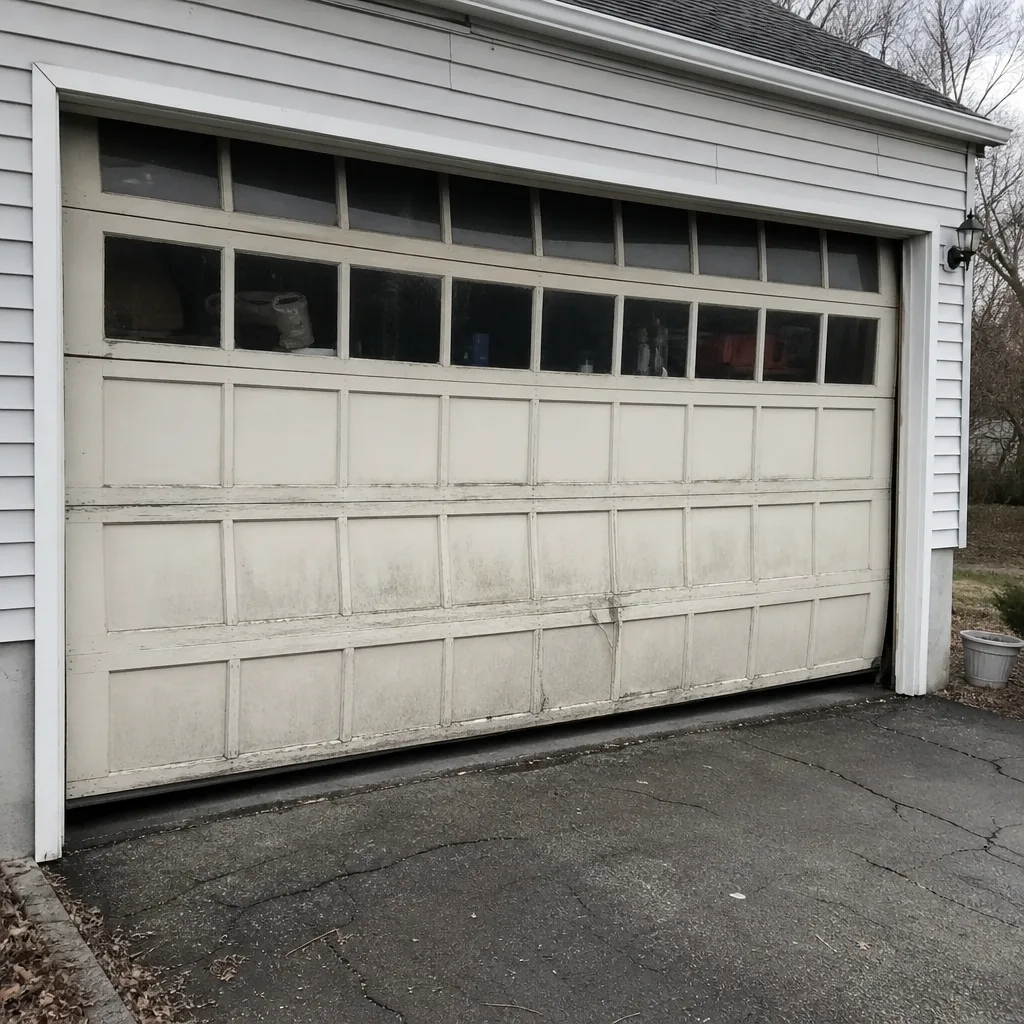 Before
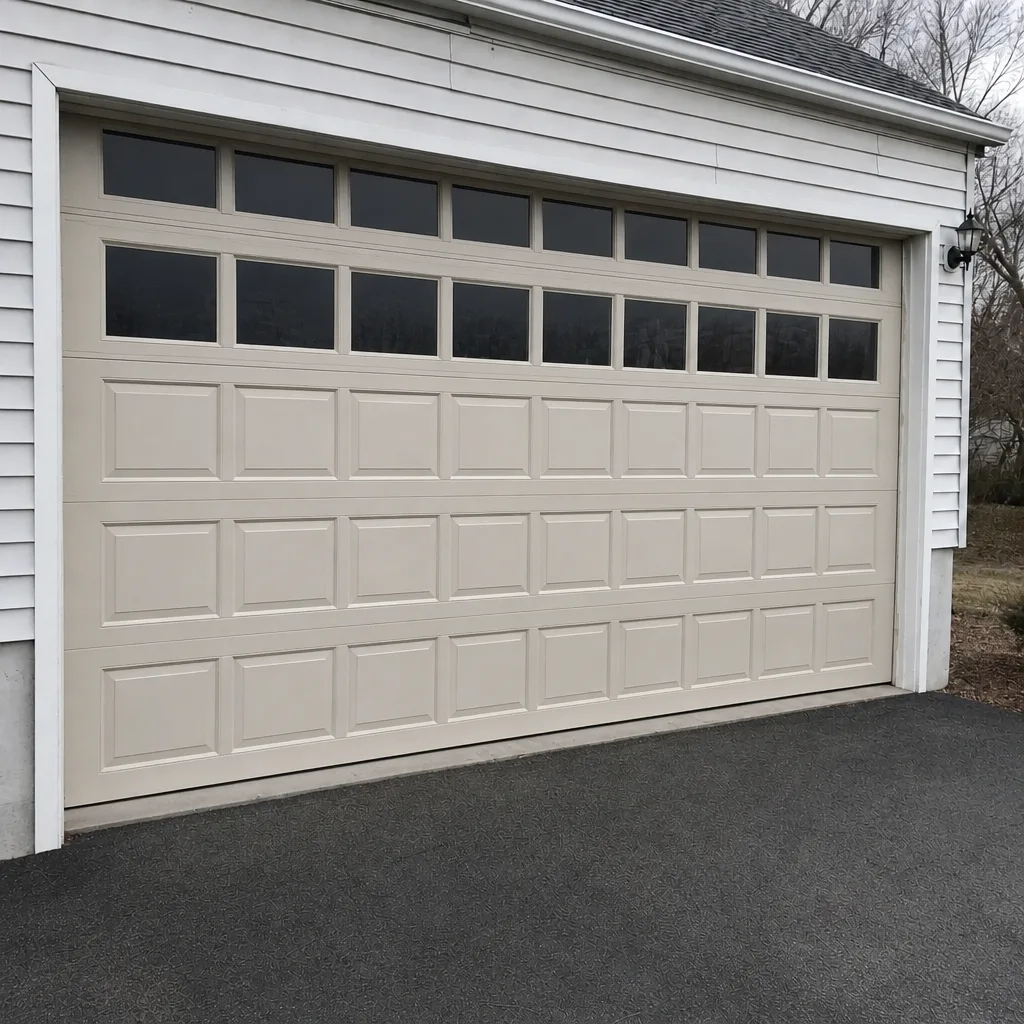 After
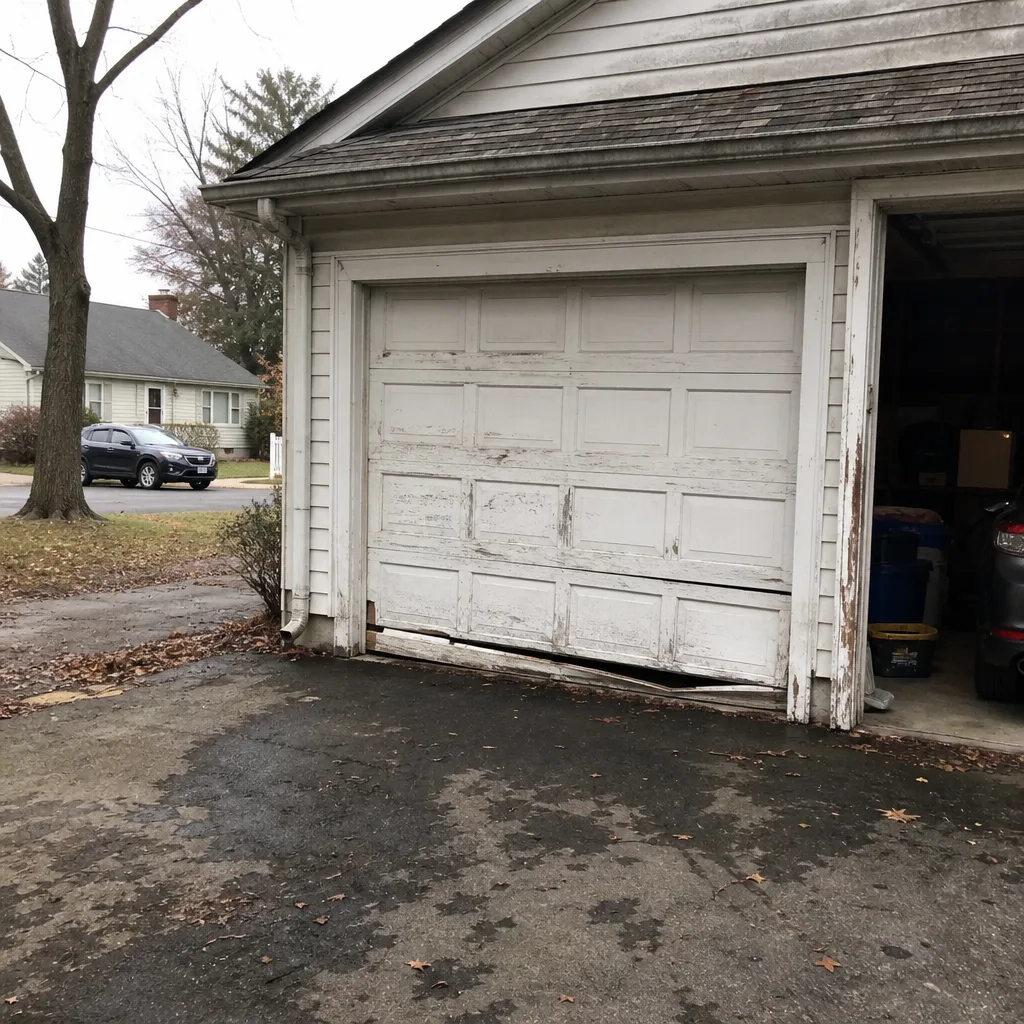 Before
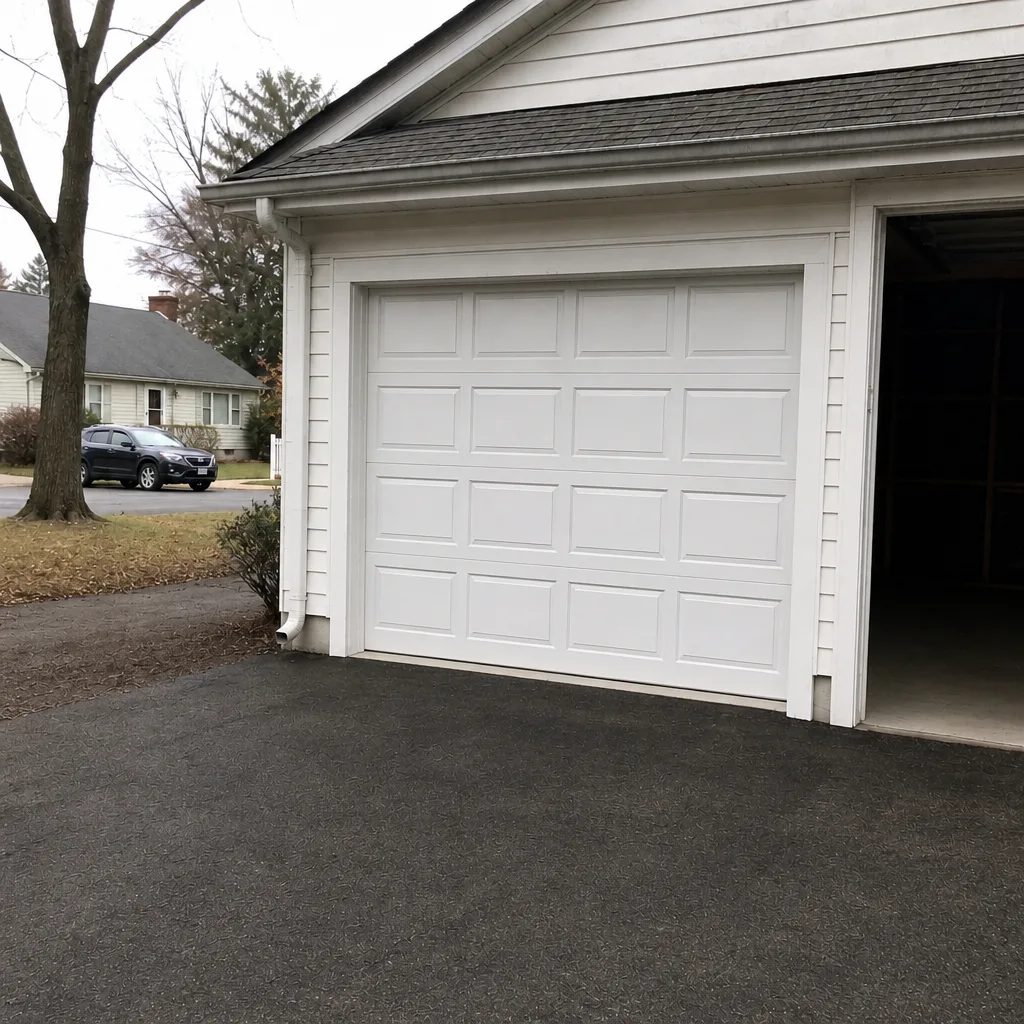 After
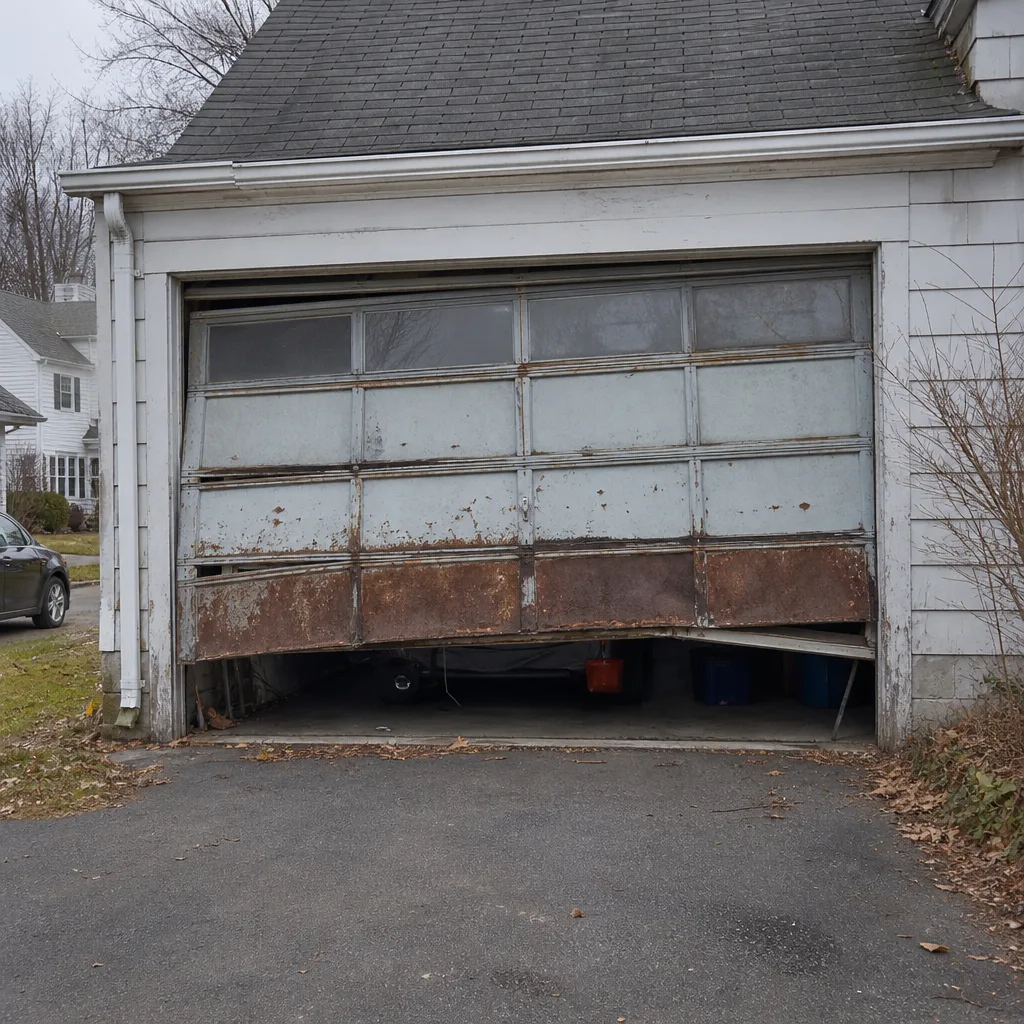 Before
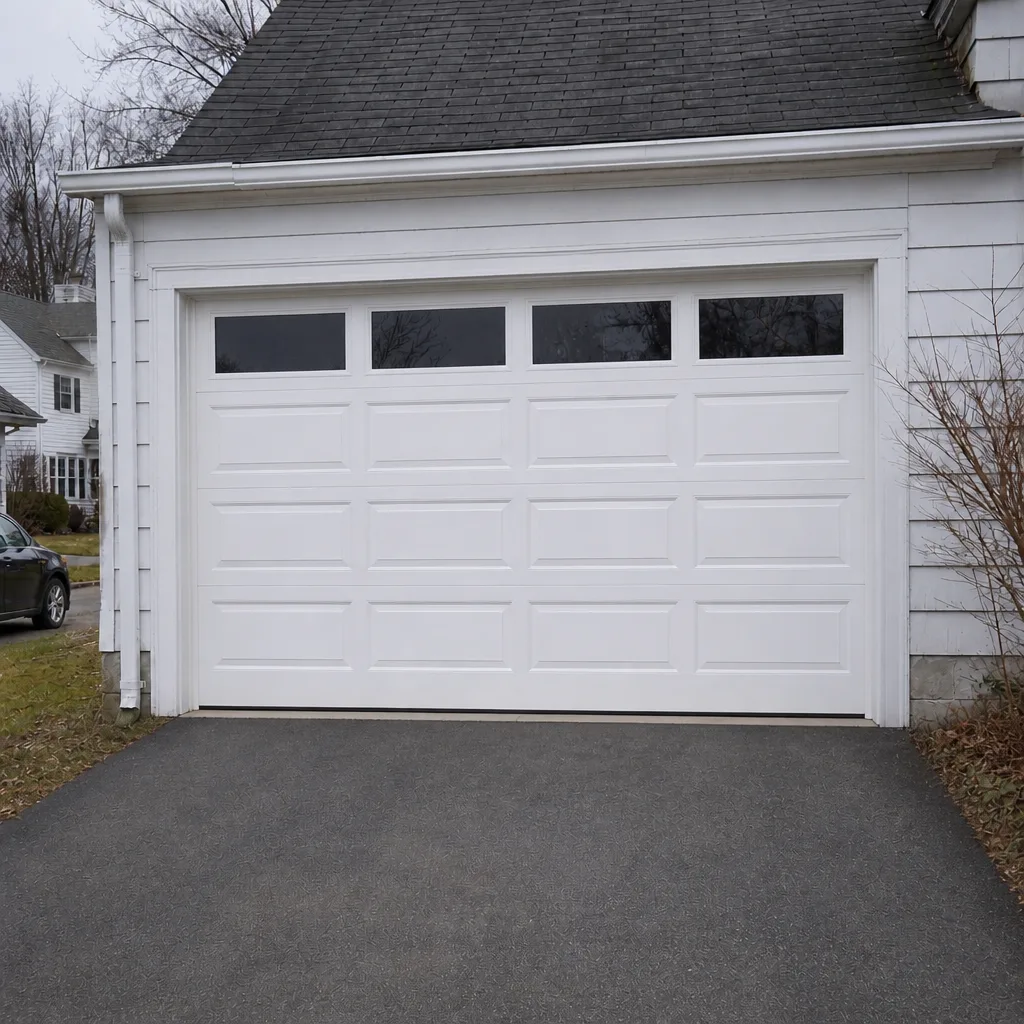 After
When to Call a Professional
Some garage door problems are clearly outside the DIY lane. A broken torsion spring, a snapped or frayed cable, and a door that’s fallen off one side of the track are all jobs that involve stored mechanical energy or significant weight. Those are the cases where calling a professional is the answer, not a preference. Garage door springs are under extreme tension even when the door is closed, and the tools and technique required are not something to learn by feel. Beyond those, call us if: the opener keeps reversing at the floor, the door won’t stay balanced on its own, the safety sensors won’t align, the door has become noticeably heavier to lift, or you’re hearing a loud pop that wasn’t there before. Milford Garage Door Repair Co offers free estimates in Milford – call (866) 937-7098. We answer 24/7. Fast dispatch from 7am to 7pm, Sunday through Friday.
Frequently Asked Questions
Every seven to twelve years for most Milford homes, and that’s a cycle-count expectation, not a rule that applies to every door. Homes that use their garage door heavily, or that have doors that aren’t perfectly balanced, will land closer to seven. Call (866) 937-7098 for an exact quote on your door – estimates are free.
No – we don’t recommend it. A torsion spring stores an enormous amount of mechanical energy even when it looks relaxed, and releasing that energy incorrectly can cause serious injury. This is a job for a trained technician with the right winding bars and technique. Our garage door spring repair service exists for exactly this reason.
Most single-component repairs run $120 – $340 depending on the part – springs, cables, rollers, and opener components each fall differently within that range. The exact number depends on your door’s make, size, and what needs replacing. Call (866) 937-7098 for an exact quote – estimates are free, and the written estimate is the price.
Yes. We service and repair systems from at least eight major manufacturers, including LiftMaster, Chamberlain, Genie, Clopay, Amarr, Wayne Dalton, Craftsman, and Raynor. That means we usually know the likely fix and have the right replacement part in mind before we arrive. Call (866) 937-7098 to confirm your model and get an estimate.
Very often, yes. Emergency garage door service is a standing offering, and a door that’s stuck open or stuck shut is treated as a same-day priority whenever we can. We answer 24/7. Fast dispatch from 7am to 7pm, Sunday through Friday. A call outside dispatch hours is booked into the next opening. Call (866) 937-7098 for an exact quote.
The written estimate sets the final price, full stop. We don’t quote a number on the phone and then invent a new one on site. If something changes once we look at the door – a hidden part failure, a cable we couldn’t see from the driveway – we stop and give you a new written estimate before any work begins. Call (866) 937-7098 for an estimate today; estimates are free.
The Bottom Line
A Milford garage door is a system, and treating it that way is what keeps it working. Know the wear order – rollers, springs, cables, opener, panels – and you’ll spend money on the right part at the right time. Respect Milford’s freeze-thaw and humidity as real wear factors, and understand that a single-car door and a double-car door need different hardware. When the door misbehaves, diagnose before you replace. When it’s genuinely dangerous (springs, cables, off-track damage), call us rather than wrestle it yourself. For anything else, get a free written estimate and let the estimate set the price.
Whether you’re facing a broken spring, an opener that’s losing its grip, or a full replacement decision, our team at Milford Garage Door Repair Co covers all of it – repair, garage door opener repair, garage door spring repair, and full installation, plus garage door repair for the everyday problems. One call, full fix. Call (866) 937-7098 for a free estimate. We answer 24/7. Fast dispatch from 7am to 7pm, Sunday through Friday.
Written by the team at Milford Garage Door Repair Co.