
Last updated November 20, 2026
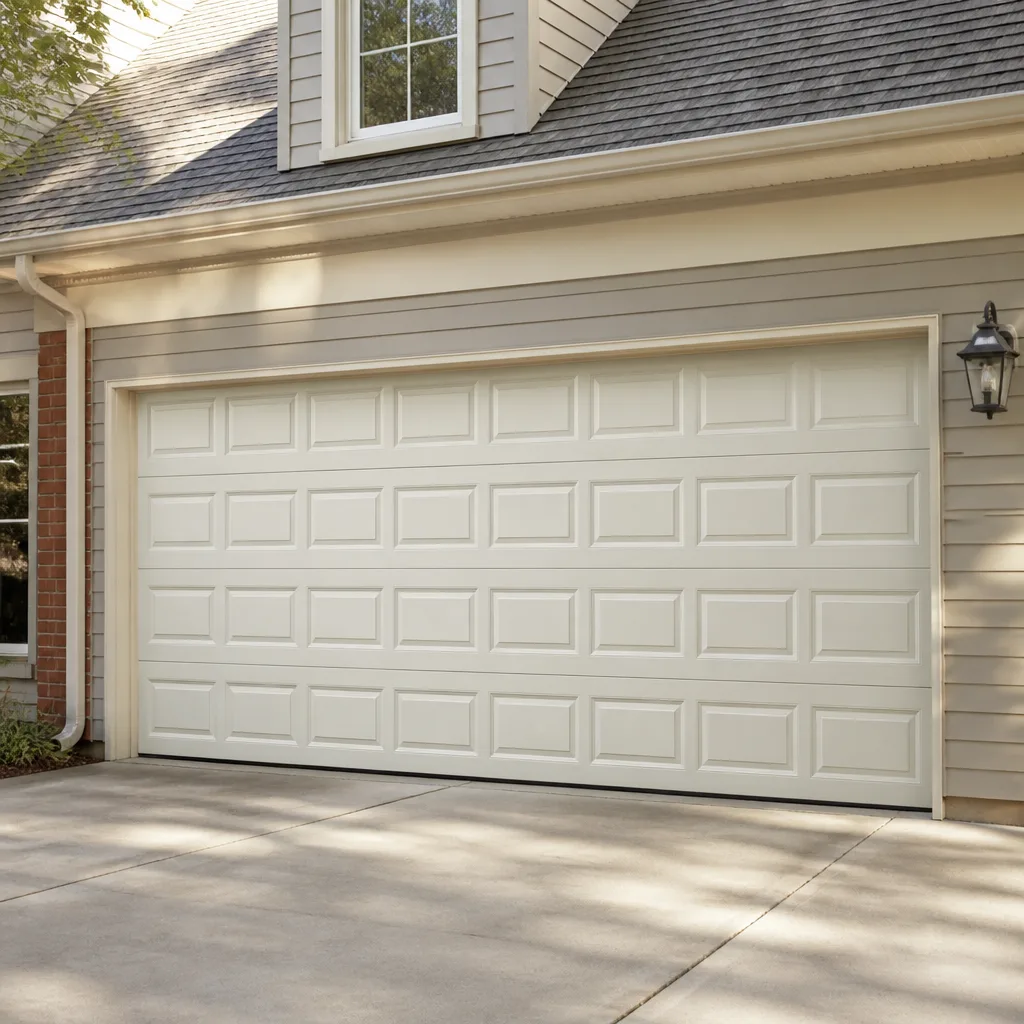 Raised-panel steel
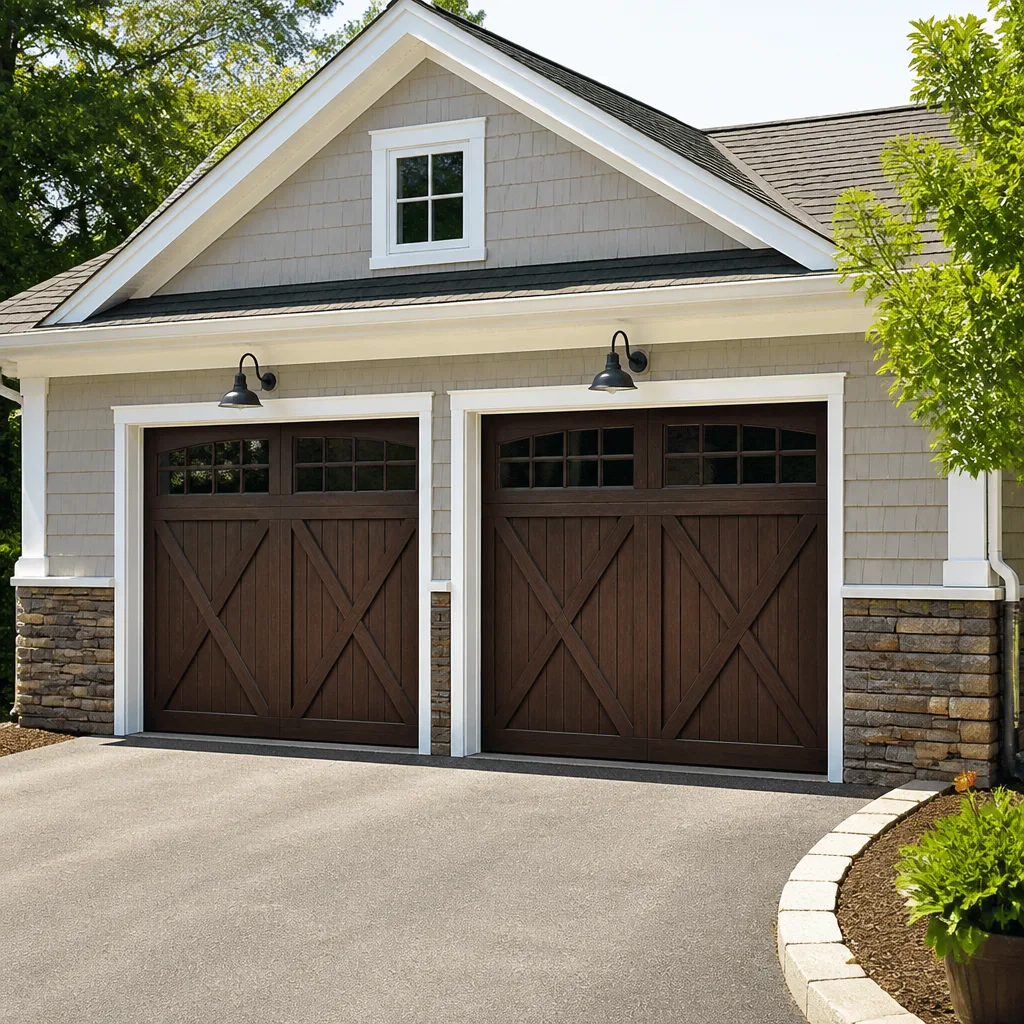 Carriage house
 Modern flush
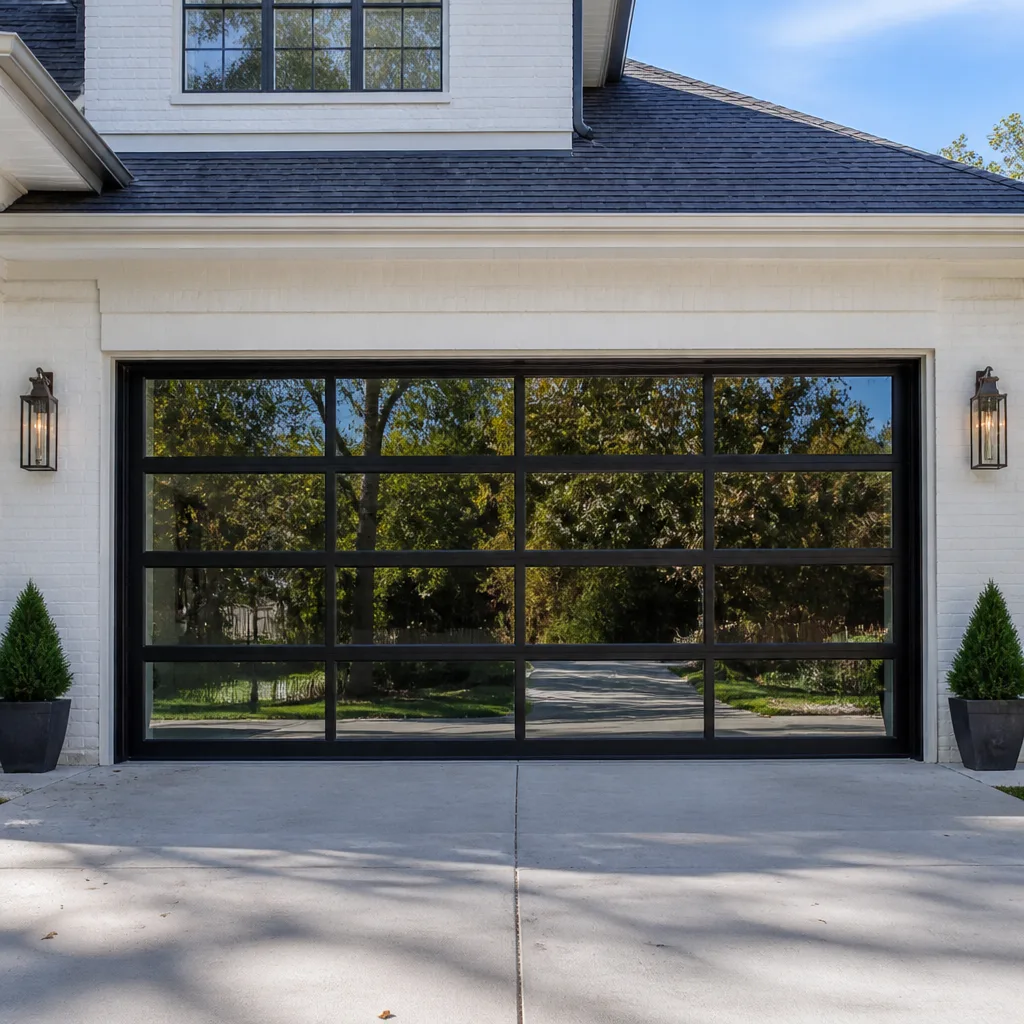 Full-view glass
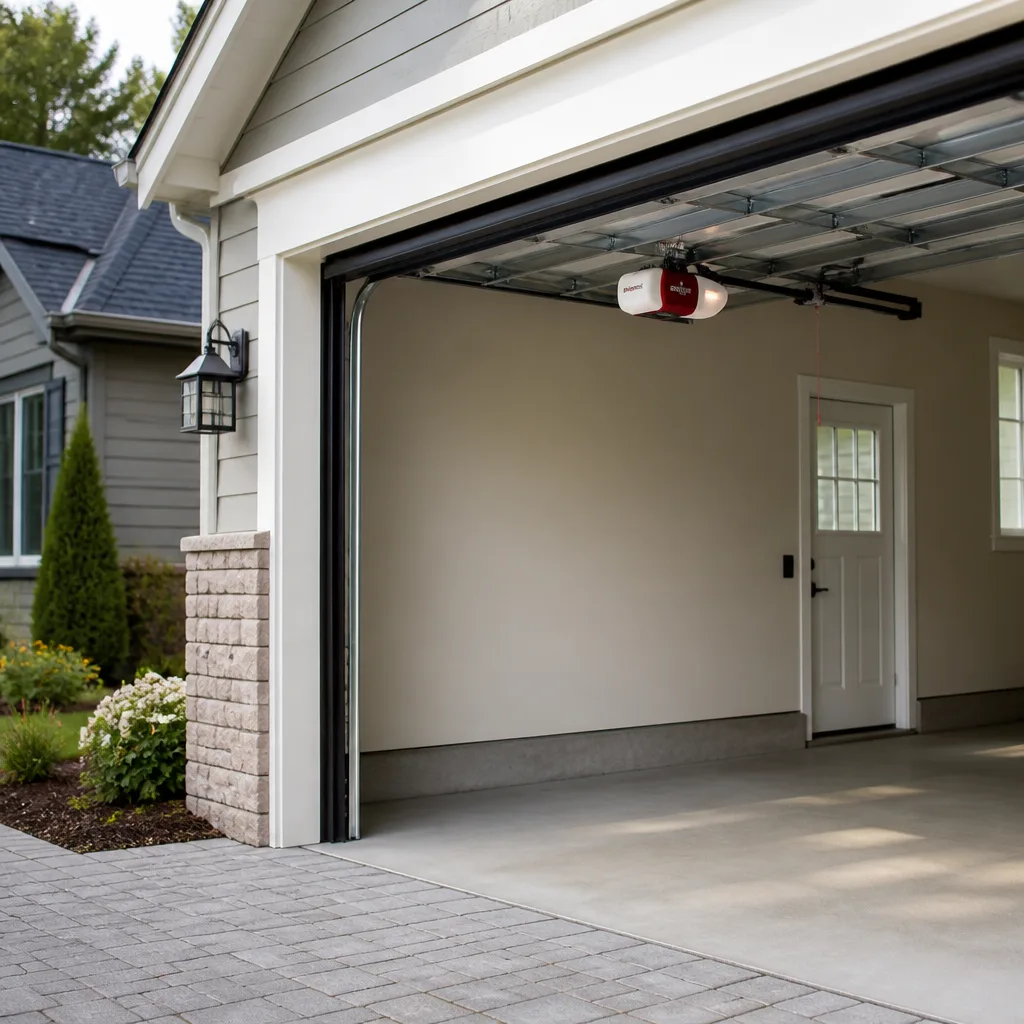 LiftMaster openers
 Chamberlain openers
Full 25-point door and opener safety check with every visit - springs, cables, rollers, tracks, and your LiftMaster or Chamberlain opener included
You get a price before we start. It does not change when the pro arrives.
Get your free estimateGarage Door Repair Maintenance Checklist for Milford Homeowners
Most garage door advice you’ll find online was written for a national audience, so it treats every garage the same. That’s a problem in Milford, where a coastal Connecticut winter throws temperature swings, road salt spray off I-95 runoff, and long stretches of high humidity at a door that was never designed to sit idle through any of it. The single biggest cause of an early spring failure here isn’t the age of the door. It’s skipping one short lubrication pass in the fall and letting rust set in over the cold months. This guide gives you a checklist built around what actually fails in Milford garages, month by month, plus the jobs you should handle yourself and the ones you should never touch.
Quick Answer
A working maintenance routine for a Milford garage door means lubricating springs, rollers, and hinges with a proper garage door lubricant every fall, checking weatherstripping and the door’s balance each season, tightening the bolts you can safely reach, and logging what you find so patterns show up early. Leave spring adjustment, cable work, and anything involving the torsion system to a trained technician. Most of what keeps a door running for years is ten minutes of attention four times a year.
Styles & brands we work with
- Raised-panel steel
- Carriage house
- Modern flush
- Full-view glass
- LiftMaster openers
- Chamberlain openers
Table of Contents
- Why a Generic Checklist Falls Short in Milford
- The Month-by-Month Milford Maintenance Calendar
- Exactly Which Lubricants to Use (and What Never to Use)
- Reading Weatherstripping Failure After a Coastal Winter
- Three Bolts You Can Check Yourself vs. Five Adjustments You Never Should
- Visual Inspection Cues Specific to Milford Homes
- How to Log Maintenance So Patterns Show Up
- When Small Wear Becomes a Repair Call
Why a Generic Checklist Falls Short in Milford
A garage door is a mechanical system with dozens of moving parts, and those parts respond to their environment. In Milford, that environment does a few specific things to a door that a checklist written for a dry climate never accounts for. Understanding the local stressors is the difference between maintenance that prevents breakdowns and maintenance that just goes through the motions.
Road salt is the first stressor. Winter runoff from I-95 and the treated streets around town carries salt spray that settles on the metal tracks, hinges, and bottom brackets of an exposed garage. Salt accelerates corrosion on bare steel, and once rust takes hold on a torsion spring coil or a roller stem, the part wears faster and fails sooner. Homes near the highway and on streets that see heavy plowing tend to show it first.
The second stressor is humidity. Coastal Connecticut summers push moisture into the air, and a garage is often the least ventilated space in the house. That humidity gets into the pivot points and the door’s bottom seal. A door that sits through a humid August without lubrication is a door where the rollers start to drag by October.
Then there’s the freeze-thaw cycle. Milford winters swing above and below freezing repeatedly, which works on weatherstripping, on the seal between door sections, and on the concrete the door closes against. A rubber seal that looked fine in November can be brittle and cracked by March. A national checklist that says “check your weatherstripping in spring” misses that the real damage happens in the transitions, not the season.
None of this means a Milford garage is doomed. It means the maintenance calendar here should follow Milford’s seasons, not a generic spring-and-fall rhythm. The rest of this guide lays that out.
The Month-by-Month Milford Maintenance Calendar
Here’s the calendar we’d hand a Milford homeowner. It spreads the work across the year so no single month asks too much, and it times each task to when it actually matters in this climate. Set a reminder for the first weekend of each month and the routine becomes automatic.
- January – Listen and watch. Cold weather makes a worn roller or a dry hinge announce itself with a squeak or a grind. Note any new sound. Don’t lubricate yet if you did the fall pass; just listen for changes.
- February – Check the bottom seal. Freeze-thaw is at its worst. Look along the bottom rubber for cracks, gaps, or sections that no longer meet the floor. A failing seal lets cold air and moisture in and signals the rest of the door’s seals need a look.
- March – Inspect for salt corrosion. After a winter of road salt, check the tracks, hinges, and bottom brackets for rust. Wipe down any visible corrosion and note whether it’s surface-level or has eaten into a moving part.
- April – Full lubrication pass. Spring is the ideal time for a complete lube of rollers, hinges, and the torsion spring coil with a proper garage door lubricant. This sets the door up for the humid months ahead.
- May – Test the balance. Disconnect the opener and lift the door halfway by hand. It should hold there. If it drops or rises on its own, the springs are out of balance and need a professional look.
- June – Check the opener and safety reverse. Test that the door reverses when it meets an obstruction. Clean the photo-eye lenses at the bottom of the tracks. Look at the opener’s manual for the test procedure specific to your model.
- July – Humidity watch. Mid-summer humidity works on pivot points. A light re-lube of the hinges and rollers keeps everything moving smoothly through the damp weeks.
- August – Tighten accessible bolts. A door vibrates with every cycle, and bracket and hinge bolts loosen over time. Snug the ones you can safely reach with a wrench. Don’t overtighten.
- September – Pre-winter weatherstrip check. Before the cold sets in, inspect the perimeter seal and bottom seal. Replace worn sections now so the door seals tight against winter drafts.
- October – The critical lubrication pass. This is the one that matters most. A full lube in October lets rust resistance carry the door through winter. Skipping it is the most common reason springs and rollers fail early.
- November – Test the door’s travel and reverse. As temperatures drop, confirm the door opens and closes fully and the safety reverse still works. Cold can stiffen the mechanism; catch it before a problem strands you.
- December – Schedule a professional tune-up if it’s been a while. If you haven’t had a technician look at the springs, cables, and opener in some time, winter is a sensible point to book one before the busiest repair season.
You don’t have to do all twelve. But the April and October lubrication passes and the pre-winter seal check carry most of the benefit. If you only do three things a year, do those.
Exactly Which Lubricants to Use (and What Never to Use)
Lubricant choice is where a lot of well-meaning maintenance goes wrong. The wrong product attracts dirt, gums up moving parts, or leaves the surfaces it was supposed to protect worse off. Here’s what to use where, and what to keep away from your door.
On torsion springs: use a purpose-made garage door spring lubricant or a light lithium grease designed for the application. A torsion spring is under enormous tension and the coil surfaces rub against each other as the door moves. A proper lubricant reduces that friction and slows corrosion. Apply a thin coat along the coil, not a thick glob.
On rollers: for metal rollers, a silicone-based lubricant or a garage door lubricant works well. For nylon rollers, a light silicone spray is usually enough. The goal is smooth rotation without attracting grit that grinds the roller stem.
On hinges: a garage door lubricant or white lithium grease on the hinge pivot points. A little goes a long way. Wipe away excess so dust doesn’t collect in it.
On tracks: here’s the one most people get wrong. The tracks should stay clean and dry. Don’t lubricate the tracks themselves; the rollers need to roll, and grease in the track attracts dirt that clogs the roller wheels. If the tracks look grimy, wipe them down with a damp cloth and let them dry.
What not to use: WD-40 is the big one. It’s a penetrating oil and a light solvent, not a lasting lubricant. It’ll quiet a squeak for a day and then leave the part drier than before, and on springs it can strip away the protection that keeps rust at bay. Avoid it on rollers, hinges, and springs. Also skip heavy motor oil or general-purpose grease, which collect dust and grit and turn your rollers into grinding wheels. And never apply anything to the cables; they’re a professional-only part of the system.
Match the lubricant to the brand and style of door where you can. If you’re working on a Clopay or an Amarr door and you’re not sure what a given part is made of, the homeowner manual that came with the door is the best first stop. If the manual is long gone, a technician familiar with that brand can tell you in a minute.
Reading Weatherstripping Failure After a Coastal Winter
Weatherstripping is the first thing a Milford winter attacks and the last thing most homeowners think to check. After a season of freeze-thaw cycles and humidity swings, the rubber and vinyl seals around a garage door tell you a lot about how the whole door is holding up.
Here’s what to look for after a coastal Connecticut winter:
- Brittle or cracked bottom seal. Run your hand along the bottom rubber. If it’s stiff, cracked, or flaking, the freeze-thaw has dried it out. A brittle seal leaks air, lets in moisture, and can let pests and cold drafts into the garage.
- Gaps between the door and the floor. Stand inside the garage, close the door, and look along the bottom for any light showing through. Gaps mean the seal has compressed or the door isn’t closing flush, both of which need attention.
- Separation at the door sections. The seal between sections can pull away after a winter of expansion and contraction. Look along the horizontal seams for gaps or peeling.
- Perimeter weatherstrip pulling loose. The seal around the door frame can detach at the corners, especially if the frame has absorbed moisture. Look for sections hanging loose or curled away.
- Discoloration or mold on the seal. Milford’s humidity can leave a dark film on the weatherstripping. If it’s mold rather than dirt, that’s a sign the seal is trapping moisture and should be replaced.
Most weatherstripping can be replaced as a straightforward part swap, and it’s one of the highest-value maintenance jobs on a garage door. A seal that fails lets cold air, moisture, and pests into the garage and makes the door work harder to do its job. If your door also runs on an older opener, worn seals and a struggling opener often show up together, and a look at garage door opener repair can tell you which one is the actual problem.
Three Bolts You Can Check Yourself vs. Five Adjustments You Never Should
A garage door is a tension system. Some of it a careful homeowner can handle with a wrench and a few minutes. Some of it will put you in the hospital if you try. Knowing the line between the two is the most important maintenance skill there is.
The three you can check yourself:
- Hinge bolts. The bolts holding the hinges to the door sections work loose over time from vibration. Snug them with the right wrench, don’t overtighten, and check them again in a few months.
- Bracket bolts on the door face. The brackets on the door face, away from the springs, can loosen. A snug bolt keeps the door tracking straight.
- Opener mounting bolts. The bolts holding the opener to the ceiling and the rail to the wall bracket can loosen. Check they’re firm. Don’t climb or reach anywhere unsafe to get to them; if they’re hard to reach, leave them for a technician.
The five you should never attempt:
- Adjusting or removing torsion springs. These are under extreme tension and are the most dangerous part of any garage door. Never touch them. A trained technician uses proper winding bars and knows how to release tension safely. garage door spring repair is a specialized service for exactly this reason, and it’s not a job for a homeowner, a general handyman, or a YouTube tutorial.
- Touching the cables. The cables are under tension too, and a cable that slips or snaps under load can cause serious injury. Leave them alone.
- Loosening the spring’s set screws. The set screws that hold the torsion spring to the shaft are part of the tension system. Don’t adjust them.
- Adjusting the opener’s force or travel limits without the manual. Opener force settings that are too high can cause the door to crush or bind before it reverses. Only adjust these following the manufacturer’s procedure for your specific model.
- Bending the tracks back into alignment. A bent track needs to be straightened carefully and often replaced. Force it back and you can leave the door off its rollers or damage the panels.
The rule of thumb: if the part is under tension or carries the door’s weight, it’s a professional’s job. If it’s a bolt holding a hinge or a bracket, it’s fair game. When in doubt, ask a technician. The cost of a look is far less than the cost of a mistake, and a serious injury isn’t worth the saved money.
Visual Inspection Cues Specific to Milford Homes
Milford homes have a few garage configurations you’ll see again and again: older detached garages near the water, attached garages on postwar houses, and newer builds with insulated doors and smart openers. Each tends to fail in its own way. Here’s what to watch for on each, and what the visual cues mean.
On older detached garages, the wood frame absorbs moisture through the humid months. Look for weatherstripping pulling away at the corners, a warped bottom seal, and rust on the bottom brackets and hinges. The concrete floor under the door often heaves with freeze-thaw, which can throw off the door’s travel and keep it from closing flush.
On attached garages, the door shares a wall with the house, so a bad seal means cold air and moisture leak into the home. Look for gaps along the bottom seal and around the perimeter. The opener on an attached garage often gets used far more than on a detached one, so listen for a struggling opener and check the safety reverse monthly.
On newer insulated doors (common in Clopay, Amarr, and Wayne Dalton installations), the cues are subtler. Look for dents in panels, a failing bottom seal, and an opener that hesitates or reverses without an obstruction. A newer door’s springs can still wear, especially if the door is heavy and the opener is doing more work than it should.
Across all of them, a few universal cues are worth a call: a door that’s visibly crooked, a gap of a few inches between door panels, a door that reverses partway through its cycle, or a spring with a visible gap in the coil. Any of these is a sign the door needs professional eyes, not a maintenance pass.
How to Log Maintenance So Patterns Show Up
A maintenance log sounds like overkill until the day something goes wrong and a technician can tell in five minutes what’s going on. Here’s a simple log that pays for itself the first time it matters.
Keep a notebook or a note in your phone with five fields for each entry:
- Date. When you did the check or the service.
- Task. What you did. “Lubricated springs, rollers, and hinges.” “Replaced bottom seal.” “Tested safety reverse.”
- Observation. What you saw or heard. “Squeak on opening.” “Slight drag on left side.” “Bottom seal cracked.”
- Action. What you did about it. “Snugged two hinge bolts.” “Called for spring look.”
- Next check. When the next task is due.
The value is in patterns. If your log shows a squeak in the same spot every November, a technician can focus on the part that’s actually wearing instead of guessing. If the log shows you’ve replaced the bottom seal three winters in a row, that’s a sign the seal is being damaged by a door that isn’t tracking right, not the seal itself. If you keep finding rust on the hinges near the highway, that tells you to lube more often than once a year.
Bring the log to any professional service call. A technician familiar with your door’s brand can read the pattern quickly and often saves you a diagnostic step. It’s also a record that helps you decide when to repair and when to look at a full replacement. That kind of planning, done across a few visits, is what keeps a garage door running well for years. It’s the same single-source approach we take to garage door repair: the whole door, not just the part that’s acting up.
When Small Wear Becomes a Repair Call
Maintenance prevents most breakdowns, but not all of them. A door that’s been maintained has fewer failures, and the failures it does have are usually cheaper to fix. Here’s how to tell when a maintenance item has become a repair job.
These are the signs a homeowner can act on:
- A door that won’t stay level or won’t hold when lifted halfway. That’s a balance problem, usually the springs. It’s a spring repair call, not a lubrication task.
- A grinding or popping sound on open, or a door that hesitates. A struggling opener, a stiff roller, or a bent track can all cause it. A technician can isolate the cause in a visit; you shouldn’t try to fix the opener’s force settings on your own.
- A visible gap in the spring coil. A broken spring won’t lift the door and needs replacement, usually a matched pair on a two-spring system.
- A door that reverses without an obstruction, or won’t reverse when it should. That’s a safety problem. Stop using the door and get it looked at.
- A door that’s visibly crooked or off its tracks. Don’t force it back on. Call for help.
For the jobs that need a technician, a brand-familiar team speeds up the diagnosis. A Clopay or Wayne Dalton door has parts and springs that a technician who’s worked on them can identify quickly, which means fewer guesses about what to order and a repair that holds. We work on Milford Garage Door Repair Co for exactly this reason: the same team that diagnoses a door can repair its opener, replace its springs, and check its cables without you having to vet a second contractor.
Common Mistakes to Avoid
- Spraying WD-40 on the springs or hinges. It quiets a squeak for a day and then leaves the part drier, and on springs it can strip away the protection that holds rust back. Use a purpose-made garage door lubricant instead.
- Greasing the tracks. The tracks should stay clean and dry. Grease in the tracks collects grit that clog, and it’s one of the most common self-inflicted problems in Milford where salt and grit already find their way in.
- Skipping the October lubrication pass. A door that goes into winter with dry springs and hinges is a door where rust has a season to work. This one miss causes more premature spring failures than almost anything else in Milford.
- Overtightening bolts while checking for looseness. A hinge bolt snugged too hard can strip or crack the door section. Snug, not torqued hard.
- Assuming the door is fine because it went up this morning. A spring that’s lost tension or a roller that’s about to seize often works until the day it doesn’t. The monthly checks are what catch it before it fails on a cold morning.
- Trying a spring adjustment because a video made it look easy. A torsion spring can cause serious injury when you don’t know how to work it. Leave springs and cables to a trained technician.
- Not keeping a record. Without a log, a technician has to start from scratch, and patterns that would have shown up in a few entries go unseen.
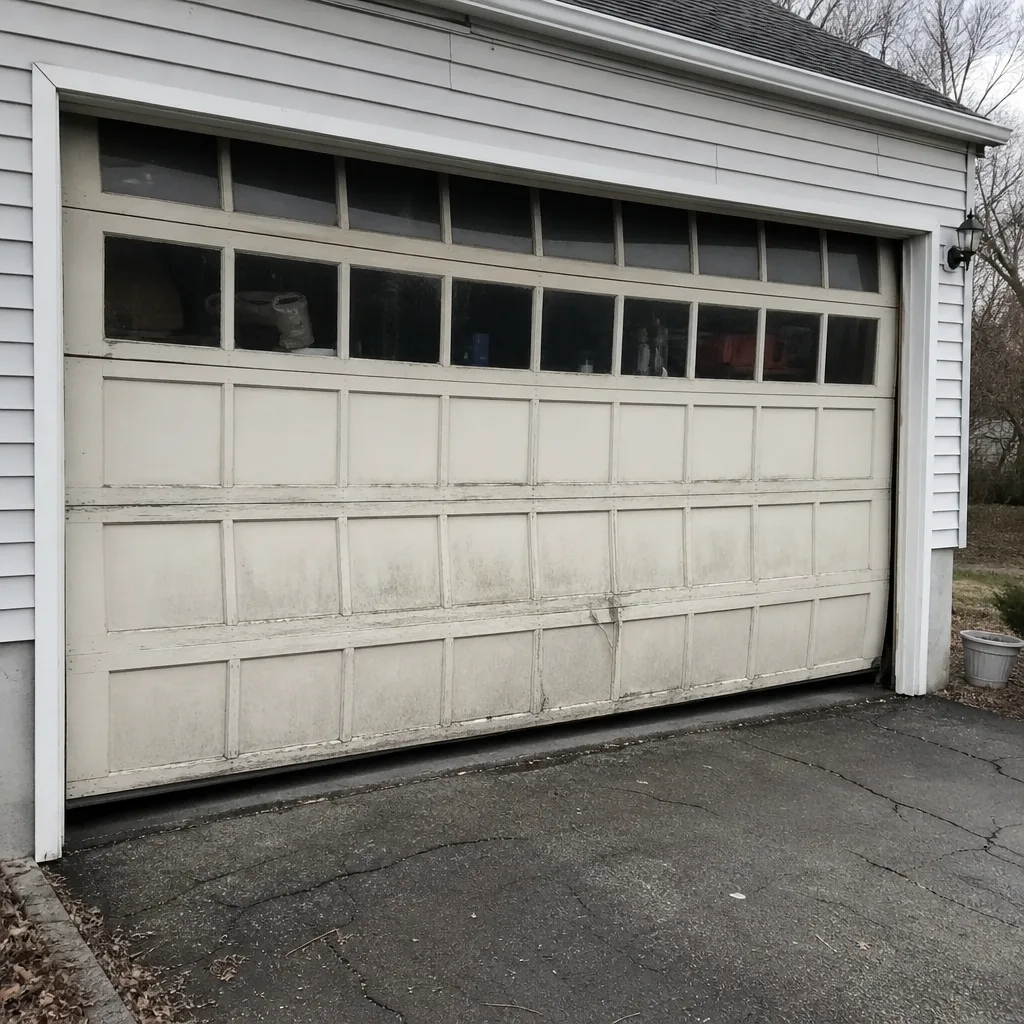
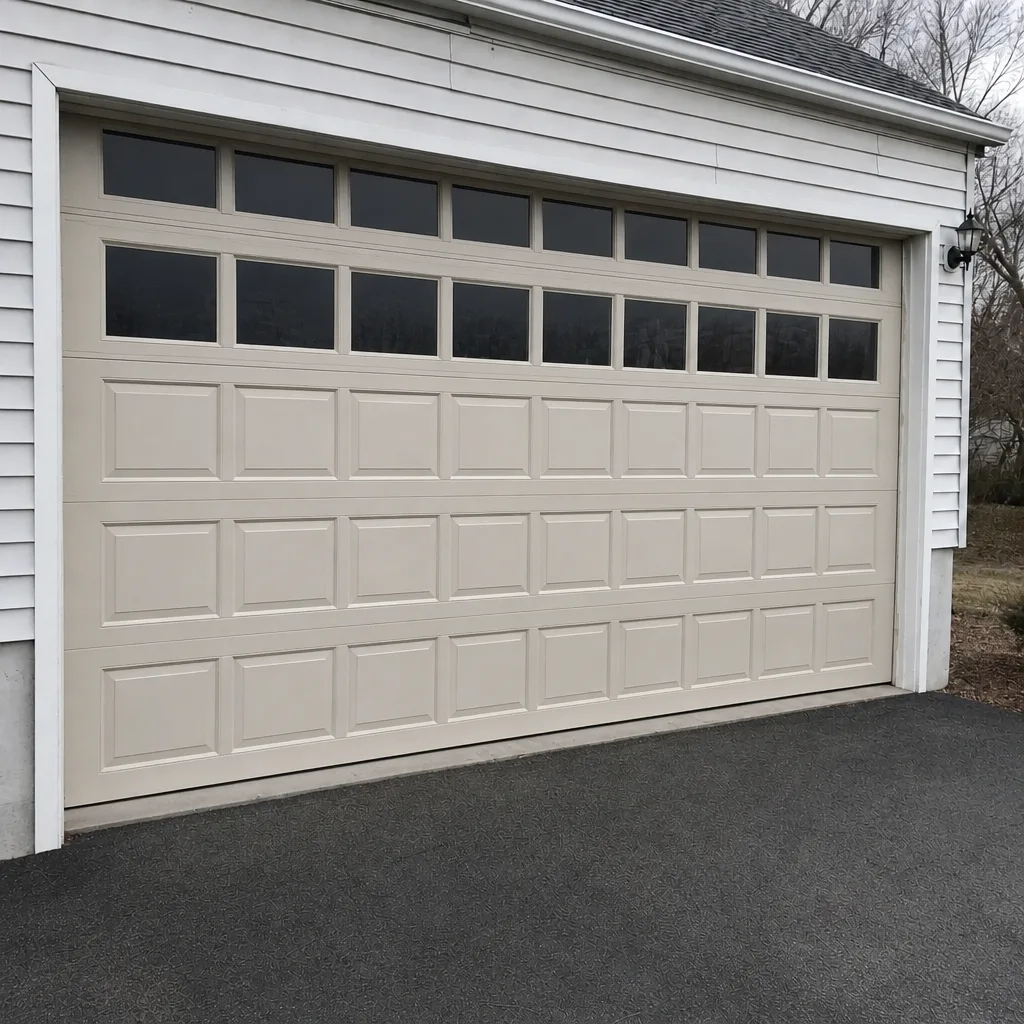
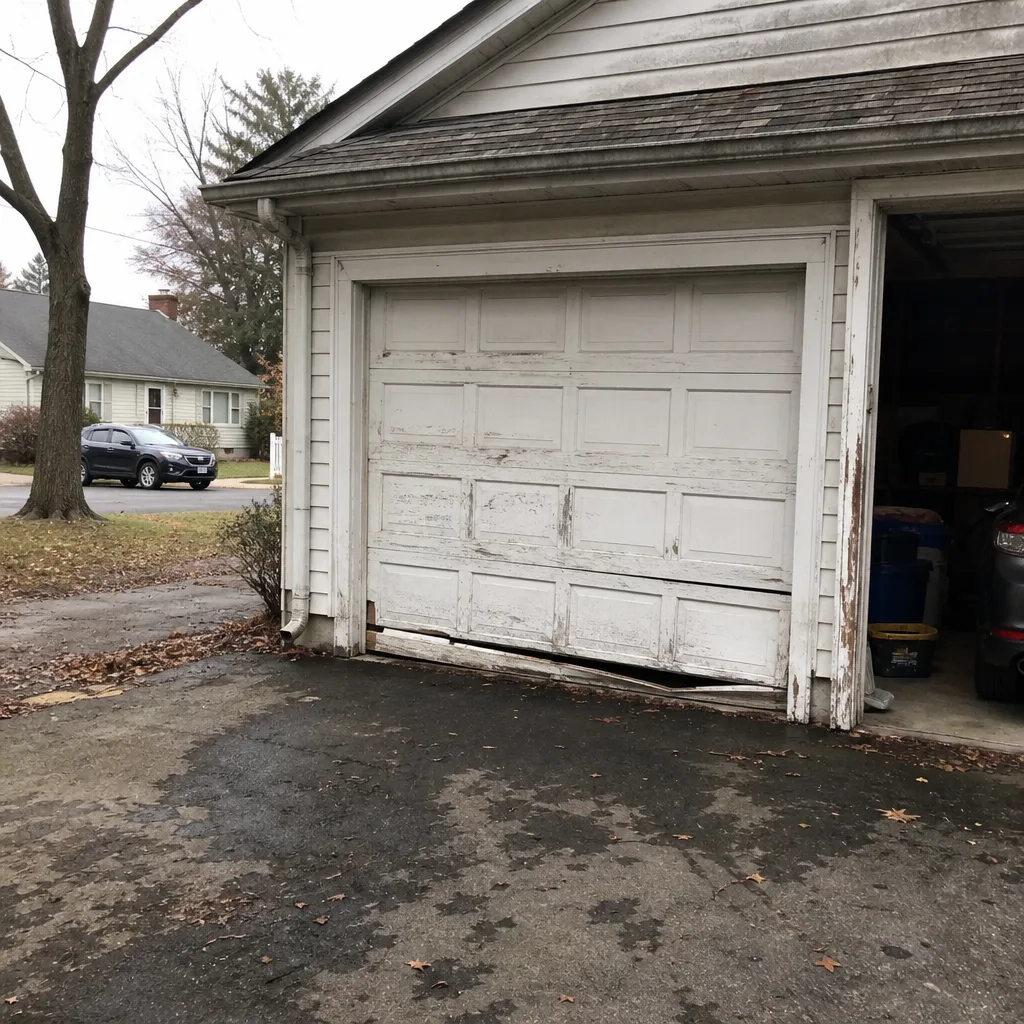
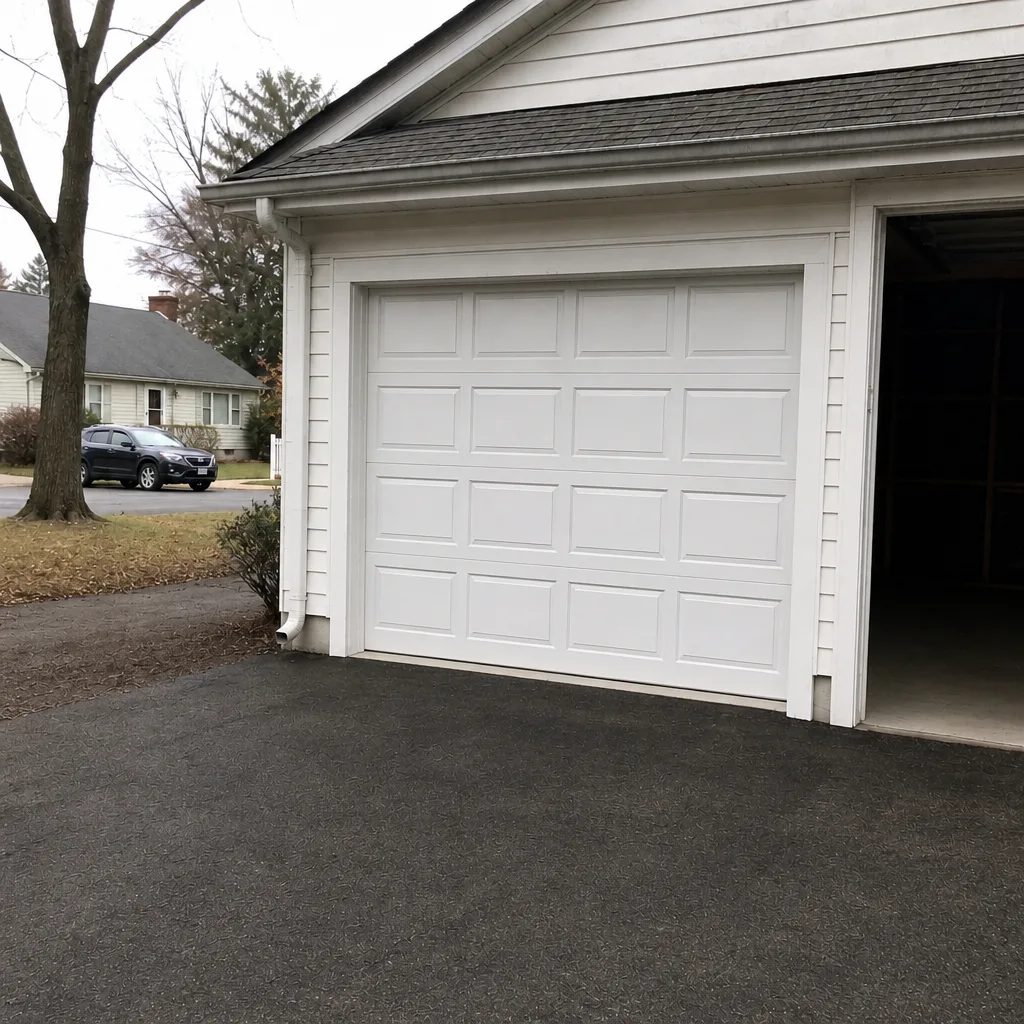
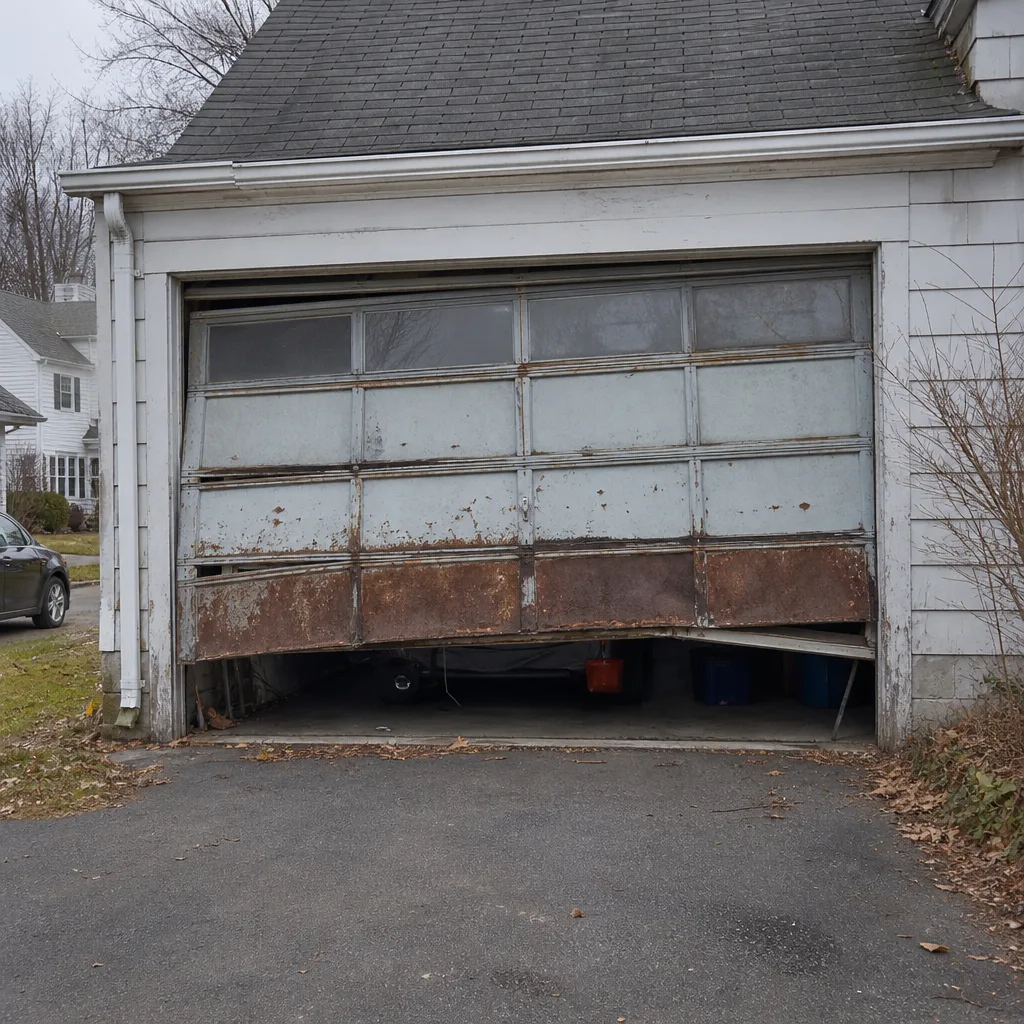
See the difference
 Before
 After
 Before
 After
 Before
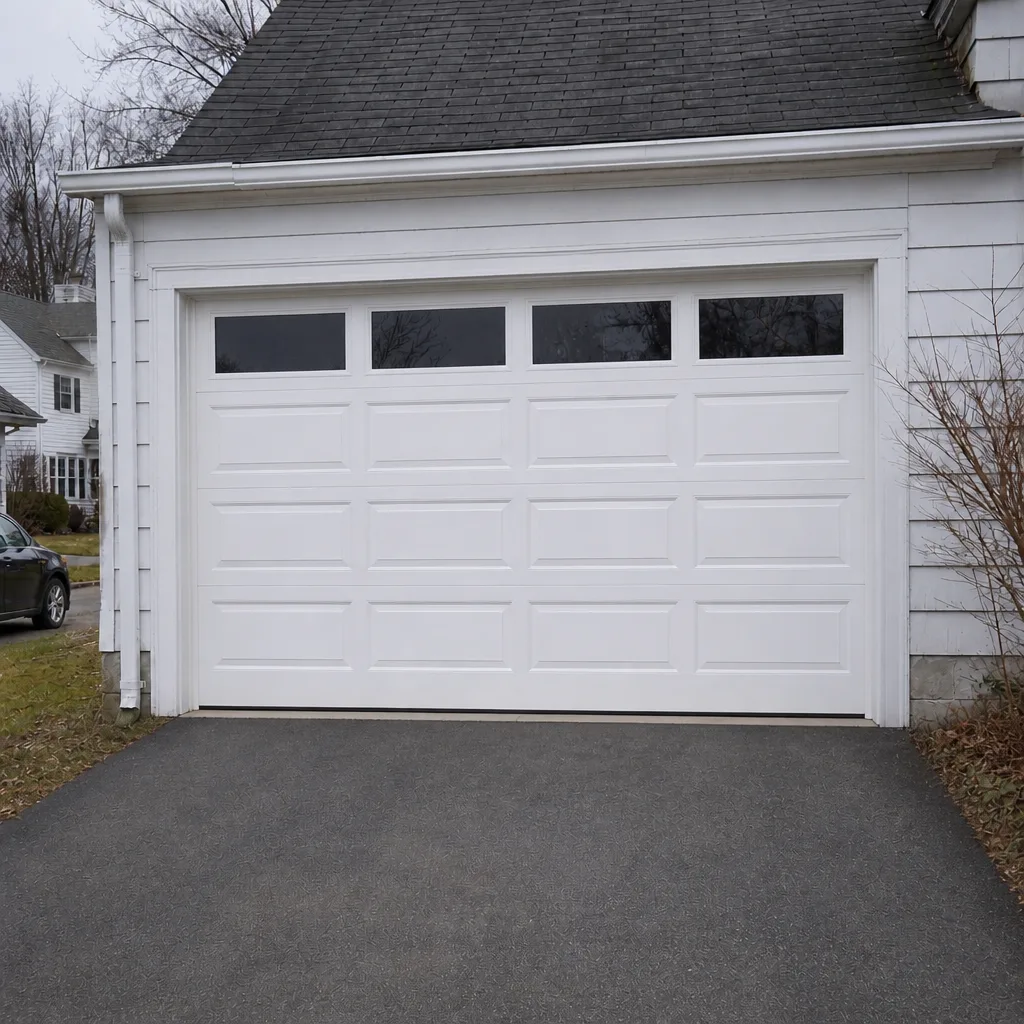 After
When to Call a Professional
Call a technician if you see a visible gap in a spring coil, a door that’s off its tracks or visibly crooked, a door that won’t hold when lifted halfway, a grinding or popping sound on opening, a safety reverse that fails its test, or a weatherseal that’s been replaced repeatedly without solving the draft. Also call if you’re not sure about a part; a quick look is far cheaper than a mistake. Springs and cables are always a professional job, no exceptions. Milford Garage Door Repair Co offers free estimates in Milford, and our technicians have up to 8 years of experience working across the major door and opener brands, including Clopay, Amarr, Wayne Dalton, and Craftsman. Call (866) 937-7098. We answer 24/7, with fast dispatch from 7am to 7pm, Sunday through Friday.
Frequently Asked Questions
Twice a year at a minimum, with the fall pass being the one that matters most. A door that sees a lot of salt spray near the highway or a lot of humidity in a detached garage benefits from an extra pass in mid-summer. Use a purpose-made garage door lubricant on springs, rollers, and hinges, and keep the tracks clean and dry. Call (866) 937-7098 for an exact quote if you’d like a technician to handle it; estimates are free.
Skipping the October lubrication pass. It’s a ten-minute task, and it’s the one that lets rust set into springs and hinges all winter. Most premature spring failures we see here trace back to dry parts going into the cold months. If a spring has already failed, that’s a spring repair call, and the price is set by a written estimate before any work starts.
No. Torsion springs are under extreme tension and can cause serious injury. Never attempt to adjust, loosen, or remove a spring yourself, and don’t let a general handyman do it either. Call a trained technician for anything involving the spring or the cables.
If the bottom seal is stiff, cracked, or flaking, if you can see daylight along the bottom or perimeter when the door is closed, or if the seal is pulling away at the corners, it needs replacing. A failing seal lets cold air, moisture, and pests in and makes the door work harder. A technician can assess it during a maintenance visit.
It reduces the odds of the most common failures and catches wear before it becomes a breakdown. A maintained door has fewer emergency calls and its repairs are usually simpler. It doesn’t make a door invincible; springs still wear, openers still fail. But the difference between a door that gets a ten-minute check four times a year and one that doesn’t is real. Call (866) 937-7098 for a free estimate on any repair that’s already needed.
In most cases, yes. Our technicians work across the major brands, including LiftMaster, Chamberlain, Genie, Clopay, Amarr, Wayne Dalton, Craftsman, and Raynor, so diagnosis is faster and the right part gets ordered the first time. If you’re not sure, tell us the brand and model when you call. We answer 24/7, with fast dispatch from 7am to 7pm, Sunday through Friday.
The Bottom Line
A garage door in Milford faces road salt, humidity, and a freeze-thaw cycle that most national checklists ignore, and the maintenance routine that keeps it running should reflect that. Lubricate springs, rollers, and hinges with a proper garage door lubricant twice a year and time the important pass to October. Keep the tracks clean and dry. Check the weatherstripping after every winter and replace it when it’s brittle. Snug the hinge and bracket bolts, and leave springs and cables to a trained technician. Keep a simple log so patterns show up when something goes wrong. Do that and you’ll catch most problems before they strand you. When a repair is needed, call (866) 937-7098 for a free estimate. We answer 24/7, with fast dispatch from 7am to 7pm, Sunday through Friday.
Written by the team at Milford Garage Door Repair Co.