
Last updated November 20, 2026
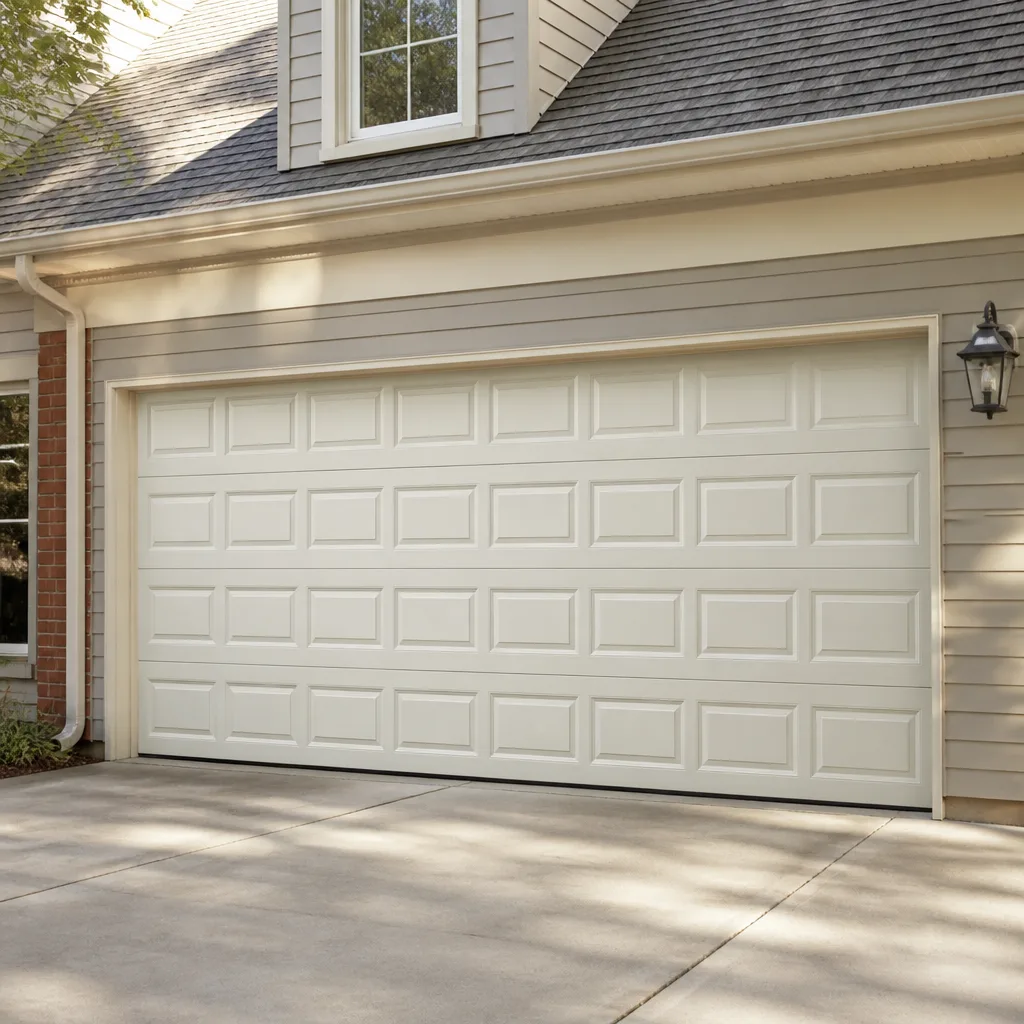 Raised-panel steel
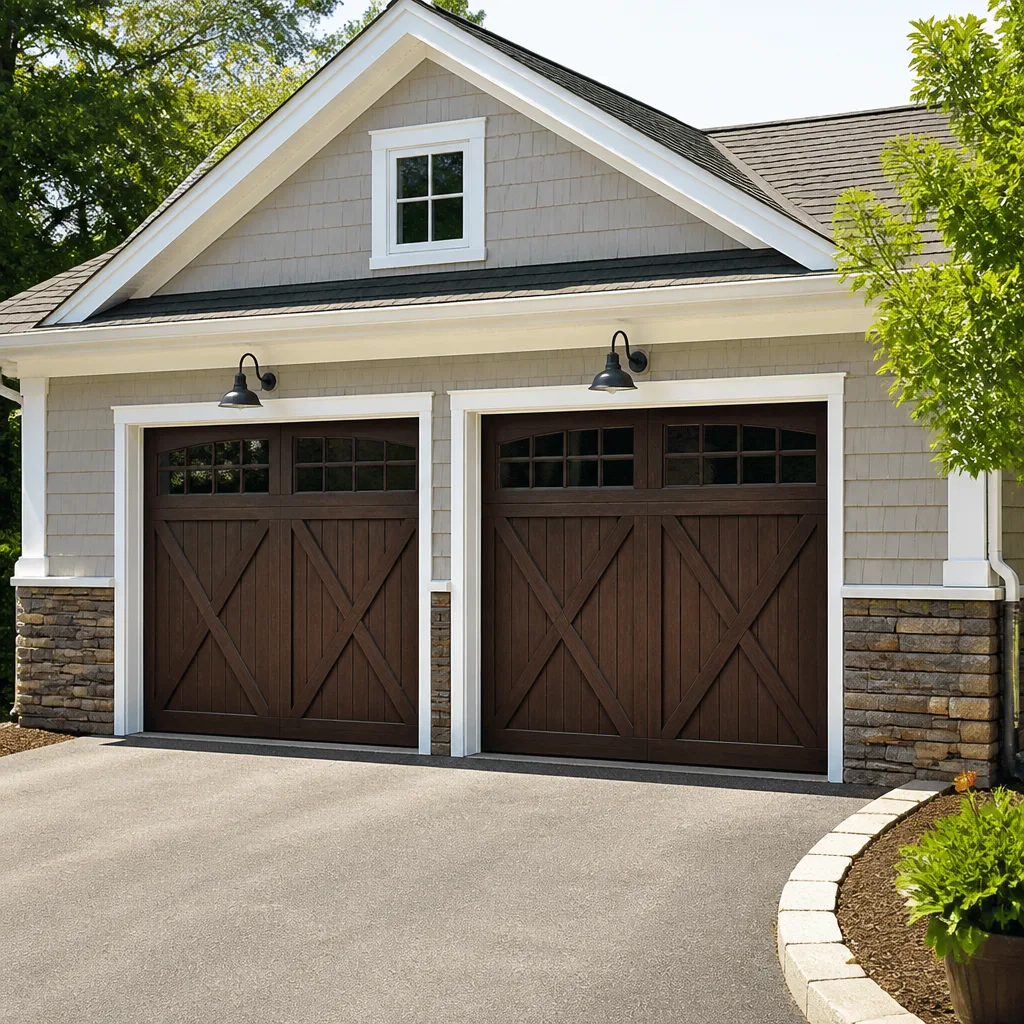 Carriage house
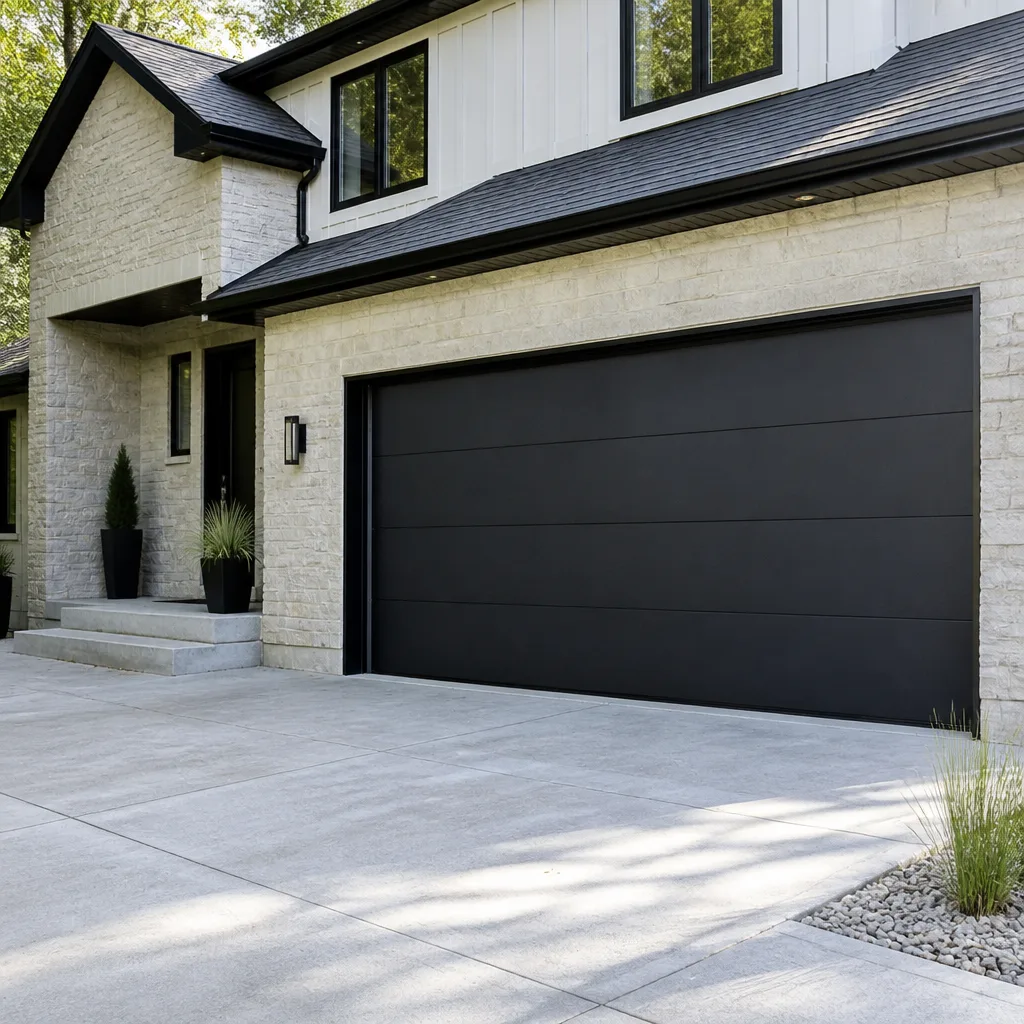 Modern flush
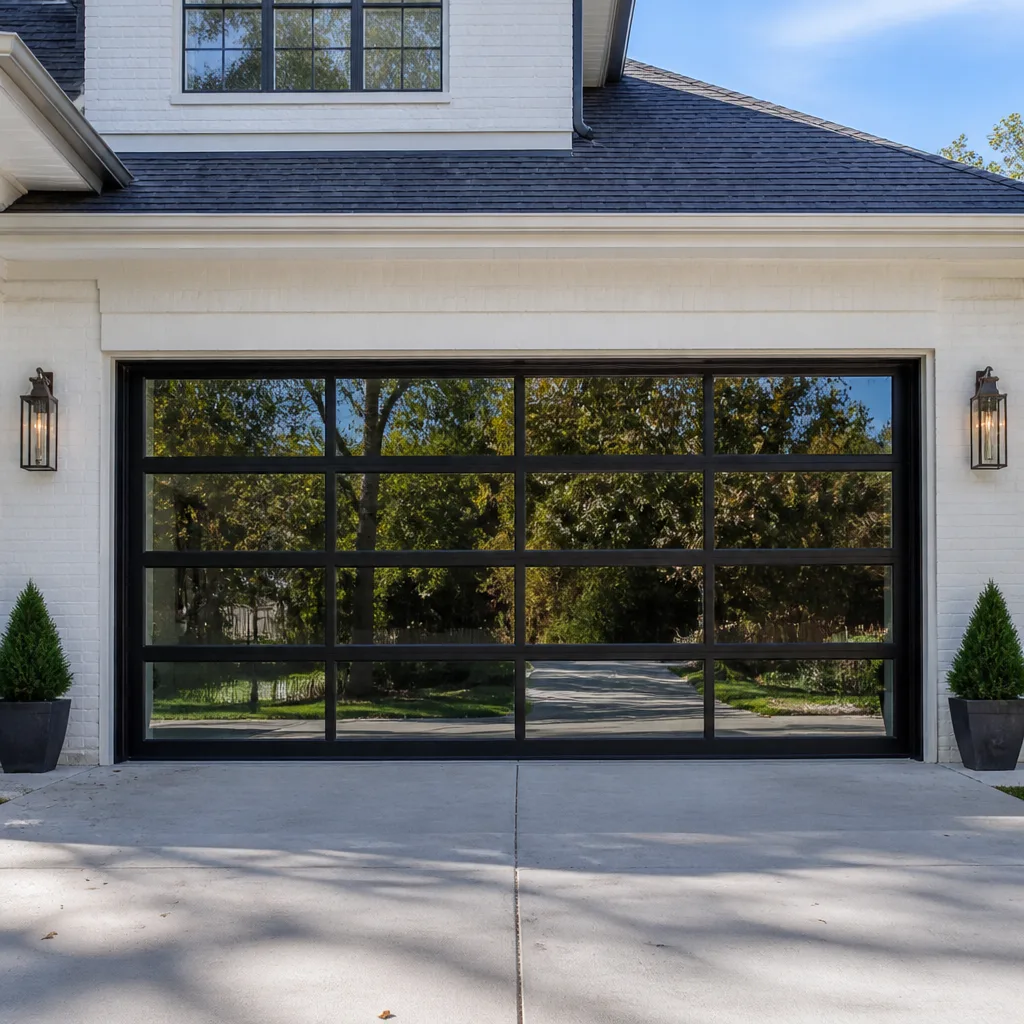 Full-view glass
 LiftMaster openers
 Chamberlain openers
Full 25-point door and opener safety check with every visit - springs, cables, rollers, tracks, and your LiftMaster or Chamberlain opener included
You get a price before we start. It does not change when the pro arrives.
Get your free estimateSeasonal Garage Door Care for Milford: Year-Round Homeowner’s Guide
The garage door problem that shows up in January usually started in September. That’s the part most homeowners miss. A door that ran smoothly all summer doesn’t fail because winter arrived – it fails because nobody adjusted it before the weather turned. Milford sits in a climate with real freeze-thaw cycles, humid summers, and road salt tracked into garages all winter, and each of those seasons puts a different kind of stress on springs, cables, tracks, and seals. This guide treats each season as its own threat profile, so you’ll know what to check, when to check it, and what a normal repair should cost in Milford.
Quick Answer
Garage door care in Milford works best on a four-season schedule: prep springs, tracks and weather seals before the first hard freeze, flush salt off bottom seals and track hardware through winter, inspect cables and alignment after the freeze-thaw cycle in spring, and address humidity-related swelling and opener travel limits in summer. A 15-minute check at each seasonal change catches most problems before they strand you, and spring repair in Milford typically runs $180 to $340 per spring when something does fail.
Styles & brands we work with
- Raised-panel steel
- Carriage house
- Modern flush
- Full-view glass
- LiftMaster openers
- Chamberlain openers
Table of Contents
- Why Milford’s Seasons Hit Garage Doors Differently
- Fall Prep: Getting Ready for Milford’s First Hard Freeze
- Winter: Road Salt and the Bottom Seal
- Spring: What the Freeze-Thaw Cycle Leaves Behind
- Summer: Humidity, Swelling, and Opener Travel Limits
- Safety: What You Should Never Adjust Yourself
- A One-Page Seasonal Log You Can Keep in the Garage
- What Garage Door Care and Repair Costs in Milford
Why Milford’s Seasons Hit Garage Doors Differently
A garage door is a mechanical system with metal under constant tension, moving parts that need lubrication, and a seal that’s supposed to keep outside air outside. All three of those respond to temperature. So the same door that behaves in October can bind and groan in February, and the door that was tight against the weather in March can drag on the floor in August. Milford’s climate gives it all of those swings in a single year.
Here’s what actually changes with the weather:
- Steel contracts in cold air. Torsion springs, tracks, and hinges all shrink slightly, which changes how the spring and the door balance each other.
- Wood swells in humid air. Wood-panel and wood-frame doors absorb moisture in Milford’s summer humidity, and the panels can bind against the frame or the sections can warp enough to affect the seal.
- Seals harden and crack. Rubber and vinyl bottom seals get stiff in freezing weather, then crack through repeated flexing.
- Road salt travels. Salt comes into the garage on tires and shoes, then sits on the floor and the bottom hardware through the whole winter.
- Frost heave moves the slab. Milford’s freeze-thaw cycle pushes and settles the concrete floor, which shifts track alignment and stresses cable paths.
The practical upshot is that each season needs a specific check, not a generic “inspect your door twice a year” reminder. If you’d rather have a trained eye confirm what you’re seeing, our Milford Garage Door Repair Co team handles the full range of door and opener problems. Our technicians have up to 8 years of experience, and they’ve worked on both older and newer systems in every kind of Connecticut weather.
Fall Prep: Getting Ready for Milford’s First Hard Freeze
Fall is the most important season for garage door maintenance in Milford, and it’s the one most people skip. The goal is to get everything into adjustment before the cold arrives, because a problem that’s minor in October gets worse quickly once the temperature drops below freezing and metal starts contracting.
Why torsion spring tension changes in cold air: a torsion spring is a wound coil of steel under load. When the temperature drops, the steel itself contracts slightly and the lubricant inside the coil gets thicker. That combination makes the spring work harder to lift the same door, which is why a door that felt fine in September can suddenly feel heavy in January – and why a spring that was near the end of its life can snap on the coldest morning of the year. This is the single most common reason garage door failures cluster in winter.
Here’s the fall prep routine, in order:
- Test the balance. Disconnect the opener, lift the door halfway by hand, and let go. A properly balanced door stays put. If it drops or rises on its own, the springs need attention before winter.
- Lubricate the moving parts. Apply a garage-door-safe lubricant to hinges, rollers, and the torsion spring coil. Don’t use WD-40 as a substitute; it’s a solvent, not a lubricant.
- Check the weather seal. Run a hand along the bottom seal for cracks, stiff spots, or gaps. Replace a worn seal before it gets brittle in the cold.
- Clear the tracks. Wipe down the tracks and look for debris, bent edges, or loose mounting bolts.
- Test the safety reverse. Place a block of wood under the closing door and confirm the opener reverses on contact. This protects both you and anyone walking under the door.
- Check the opener’s force settings. If your opener has been straining, it will strain more in the cold. That’s a sign to have the opener looked at, not to crank up the force adjustment.
If the door feels unbalanced or the springs look worn, don’t wait. A dedicated spring repair service can catch a weakening spring before it fails. Our garage door spring repair team treats spring work as its own specialty, not a generic repair call, because it’s the most dangerous component in the whole system.
Winter: Road Salt and the Bottom Seal
Winter is about what gets tracked in. Road salt comes into the garage on tires, boots, and pets, and it doesn’t just disappear. It settles on the concrete, works into the bottom seal, and creeps up onto track hardware and the bottom brackets. Over a whole winter it can leave the bottom of your door rusted and the seal brittle.
What to watch for through the winter:
- Salt residue on the bottom seal and floor. A quick rinse of the bottom seal and a mop of the garage floor after heavy salt weeks keeps it from eating into the rubber and hardware.
- Hard, cracked bottom seals. Cold makes the seal less flexible, and a seal that’s already worn will crack. A cracked seal lets cold air and moisture in, which then freezes.
- Frozen door edges. If the bottom seal freezes to the floor, the opener strains when you lift the door. That’s a sign the seal is trapping water, and it needs replacing.
- Sluggish openers. Cold thickens the lubricant in an opener’s gears. If your LiftMaster or Chamberlain opener is noticeably slower in January, that’s normal to a point – but if it hesitates or stops partway, have it checked.
- Rust on track hardware. Look at the bottom brackets and hinges; salt spray from tires lands exactly there.
One thing not to do: don’t pour hot water on a frozen bottom seal or bang on it to free the door. That can crack the seal and damage the bottom panel. Let it thaw or call a technician to adjust the seal or the door’s travel.
If a door gets stuck open or shut on a cold Sunday, we answer 24/7 at (866) 937-7098. Fast dispatch from 7am to 7pm, Sunday through Friday. Emergency garage door service is a standing part of what we do, because a door stuck open in a Milford winter is not a problem you can wait out.
Spring: What the Freeze-Thaw Cycle Leaves Behind
As Milford thaws out, the damage from winter becomes visible. Two issues show up most often in spring: cable fraying and track misalignment caused by frost heave. Both start small and both get worse if you ignore them.
Cable fraying
A garage door’s cables run from the bottom brackets up through the pulleys to the drum on the torsion shaft. Through the winter, the cables flex under load in cold weather, and the bottom brackets can get salt and moisture exposure. In spring you can often see the leading edge of a problem: a frayed spot, a kinked cable, or a cable that’s started to unwind slightly. A frayed cable is a safety issue – it can snap under load. Replace it, don’t patch it.
What to check, from a safe distance:
- Look at both cables with the door fully closed. Any visible fray, kink, or uneven wind on the drum is a call-out.
- Listen for a scraping or popping sound when the door opens. That can indicate a cable binding.
- Check that the door rises evenly. A door that goes up crooked means the cables are pulling at different tensions.
Track misalignment from frost heave
Connecticut’s freeze-thaw cycle pushes the ground and the garage slab around. The floor under your door can rise a little in a cold snap and settle when it thaws, and the concrete can shift the bottom of the tracks. That’s why spring is the season when doors start rubbing, dragging on the floor, or jumping the track. Look for a visible gap between the track and the door on one side, or the door sitting closer to the floor on one side than the other. If you see either, call for garage door repair rather than trying to force the track back into place yourself.
Spring is also the season to check your opener. A Genie or Raynor opener that made it through winter with a little effort may need adjustment or repair rather than replacement. Our garage door opener repair team works on both older units and smart-home-integrated systems, so a fix is usually the right answer instead of a whole new opener.
Summer: Humidity, Swelling, and Opener Travel Limits
Summer is the quiet season for garage doors, but not a harmless one. Milford’s summer humidity does its own work on wood doors and opener settings, and it’s the season when a small alignment problem becomes a big one.
Humidity and wood doors
Wood-panel and wood-frame doors absorb moisture from the air, and humid summer days make the panels swell. That can show up as:
- Panels binding against the frame or each other, making the door harder to lift.
- Sections that no longer sit flush, which opens gaps in the weather seal.
- Paint or finish cracking at the panel seams as the wood moves.
If the door is binding, a technician can usually adjust the springs or the hinges to compensate, and a fresh coat of exterior finish before the humidity peaks helps reduce the swelling.
Adjusting the opener travel limit
Here’s a summer detail most guides skip. Your opener has two settings that control where the door stops: the travel limit (how far it goes up and down) and the force setting (how hard it pushes). When the humidity swells the door or the tracks shift slightly, the door may not seat fully against the floor in the down position, or it may stop short of the top. That’s usually a travel limit adjustment, not a broken opener.
Check it like this:
- Watch the door close. It should meet the floor evenly across the width, with the bottom seal compressing slightly.
- Watch the door open. It should reach its full open position without straining.
- If either is off, note it and have a technician adjust the travel limit on the opener. Don’t change the force setting on your own – cranking it up to force a misaligned door can damage the opener or the door.
Safety: What You Should Never Adjust Yourself
We want to be direct about this, because it’s the part of garage door care that actually matters most. A garage door is the largest moving object in most homes, and two parts of it can seriously injure you: the torsion spring and the cables. Both are under high tension at all times, even when the door is closed. A torsion spring that’s adjusted or released incorrectly can snap with enough force to cause serious injury, and a cable under tension can do the same.
So the seasonal guide here is about checking, not adjusting. You can test the balance, lubricate hinges and rollers, clean the seal, and watch the door’s movement. You should not:
- Adjust or replace a torsion spring yourself.
- Loosen or remove a cable or the drums.
- Change the opener’s force setting to force a misaligned door closed.
- Disconnect or bypass the safety reverse feature.
- Stand under a door that’s been left open by a broken spring or cable.
Spring replacement is a safety job. Our technicians handle it as a dedicated service because it needs the right tools, the right technique, and someone who does it regularly. For a new door or a full replacement, we schedule a free measure and give you a written price – that’s not a same-day job, because a door has to be measured and ordered.
A One-Page Seasonal Log You Can Keep in the Garage
One of the simplest things you can do for a garage door in Milford is keep a log. It doesn’t need to be elaborate – a single page tacked to the wall near the door works. The point is to catch patterns: if the door starts hesitating every November, you’ll know it’s a cold-weather issue, not a random one. Here’s a template you can copy onto a sheet of paper.
Milford Garage Door Log
| Season | What to Check | Date Checked | Notes |
|---|---|---|---|
| Fall (before first freeze) | Balance test, lubricate hinges and rollers, inspect bottom seal, test safety reverse | ||
| Winter (monthly) | Salt residue on seal and floor, seal cracks, door edge freezing, opener speed | ||
| Spring (after thaw) | Cable fraying, track alignment, even door rise, opener performance | ||
| Summer (mid-season) | Wood panel swelling, door seating against floor, opener travel limit |
Two rules keep the log useful. First, write the date every time. Second, write what you actually saw, not what you think you should have seen – “door feels heavier than last month” is more useful than “checked, fine.” If a note repeats, that’s your signal to call.
You can also note what brand your door and opener are. Knowing whether your system is a LiftMaster, Chamberlain, Genie, Clopay, Amarr, Wayne Dalton, Craftsman, or Raynor makes a real difference when something needs a part, because a technician can bring the right part the first time instead of guessing.
What Garage Door Care and Repair Costs in Milford
Homeowners ask what this work costs, so here are the typical ranges we see for the most common jobs in Milford. These are estimates, and the written estimate you get before any work starts is what sets the final price. Every job is quoted and agreed before a technician touches the door.
| Job | Typical Estimated Range (Milford) |
|---|---|
| Spring replacement (one spring) | $180 – $340 |
| Spring replacement (matched pair) | About twice the single-spring price |
| Cable replacement | Quoted per job |
| Bottom seal replacement | Quoted per job |
| Track adjustment or straightening | Quoted per job |
| Opener repair | Quoted per job |
| New door installation | Free measure and written price |
A matched pair is usually replaced together, because springs of the same age tend to fail close together, and a pair costs about twice the single-spring figure. If you’re wondering “will the price change once the technician sees it?” – the answer is that the quote you agree to is the price. If the technician finds something that changes the job, they’ll tell you before doing the work, not after.
For the urgent cases, the estimate is free and the price is quoted on the job. Call (866) 937-7098 for an exact quote. We answer 24/7, fast dispatch from 7am to 7pm, Sunday through Friday.
Common Mistakes to Avoid
- Waiting until the door fails to do anything. The fall prep is the single highest-value habit in this guide. A door that’s checked before the first freeze rarely surprises you in January.
- Using WD-40 on the tracks and springs. It’s a solvent, not a lubricant, and it attracts dust. Use a garage-door-specific lubricant on the moving parts and keep the tracks clean of grease.
- Cranking up the opener’s force setting to fix a sticky door. If the door is binding, the force setting will hide the symptom and wear out the opener faster. Fix the cause instead.
- Ignoring small salt buildup through winter. In Milford the salt is real and constant, and it eats the bottom seal and hardware from the inside out. A rinse takes a minute.
- Writing off a misaligned track as “just the door rubbing.” Once frost heave shifts the track, the door can jump it. That’s a repair, not a nudge-it-back situation.
- Trying to adjust a torsion spring yourself. This is the mistake that can hurt you. Spring replacement is a safety job; call a professional.
- Replacing an opener that only needs a repair. A lot of “dead” openers are a travel limit, a sensor, or a logic board away from working fine. Have it looked at before you buy a new one.
See the difference
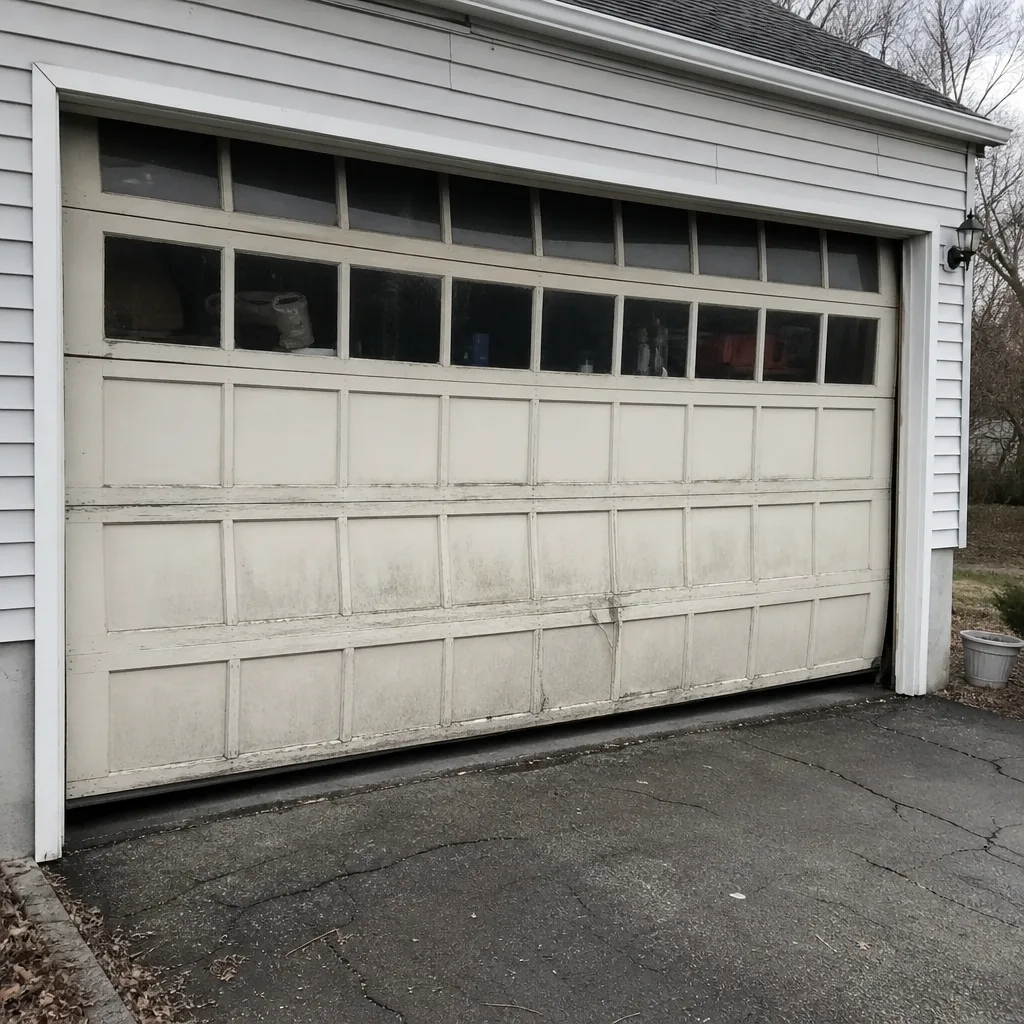 Before
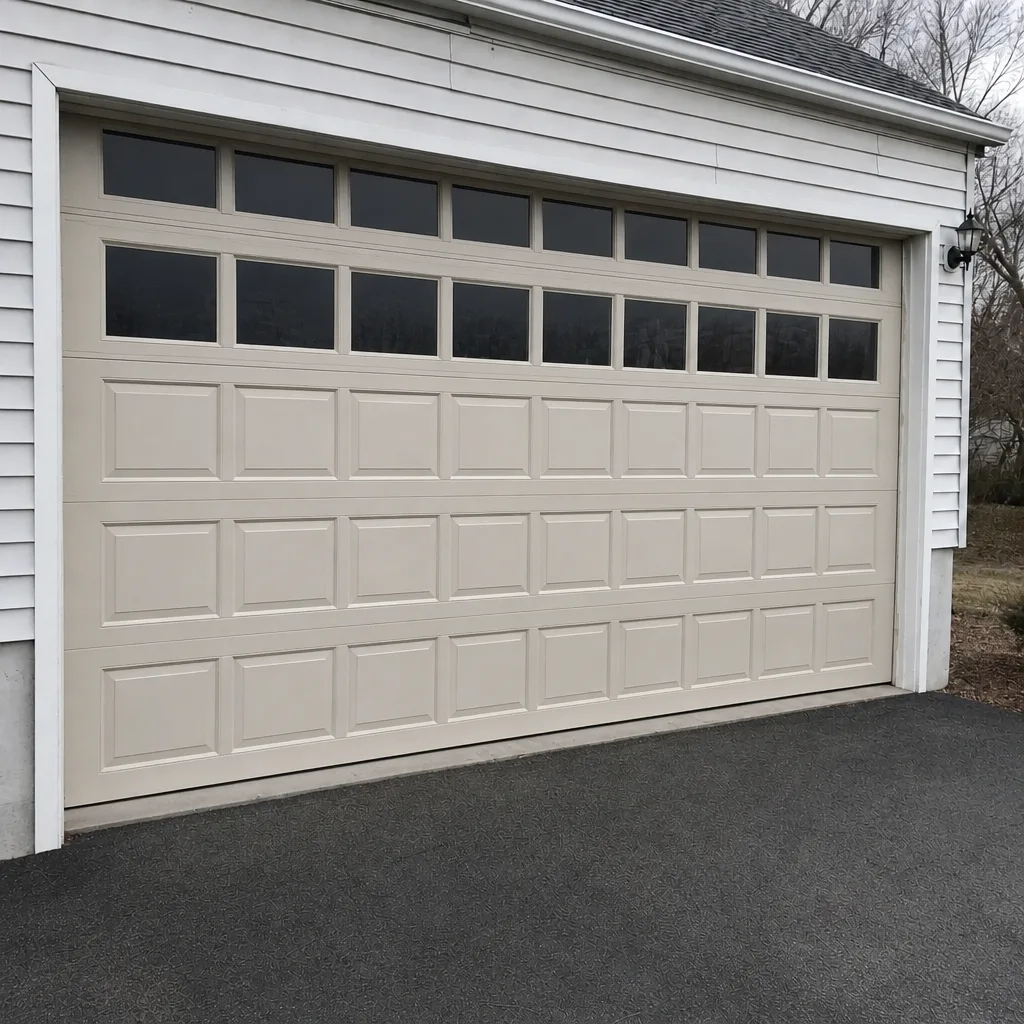 After
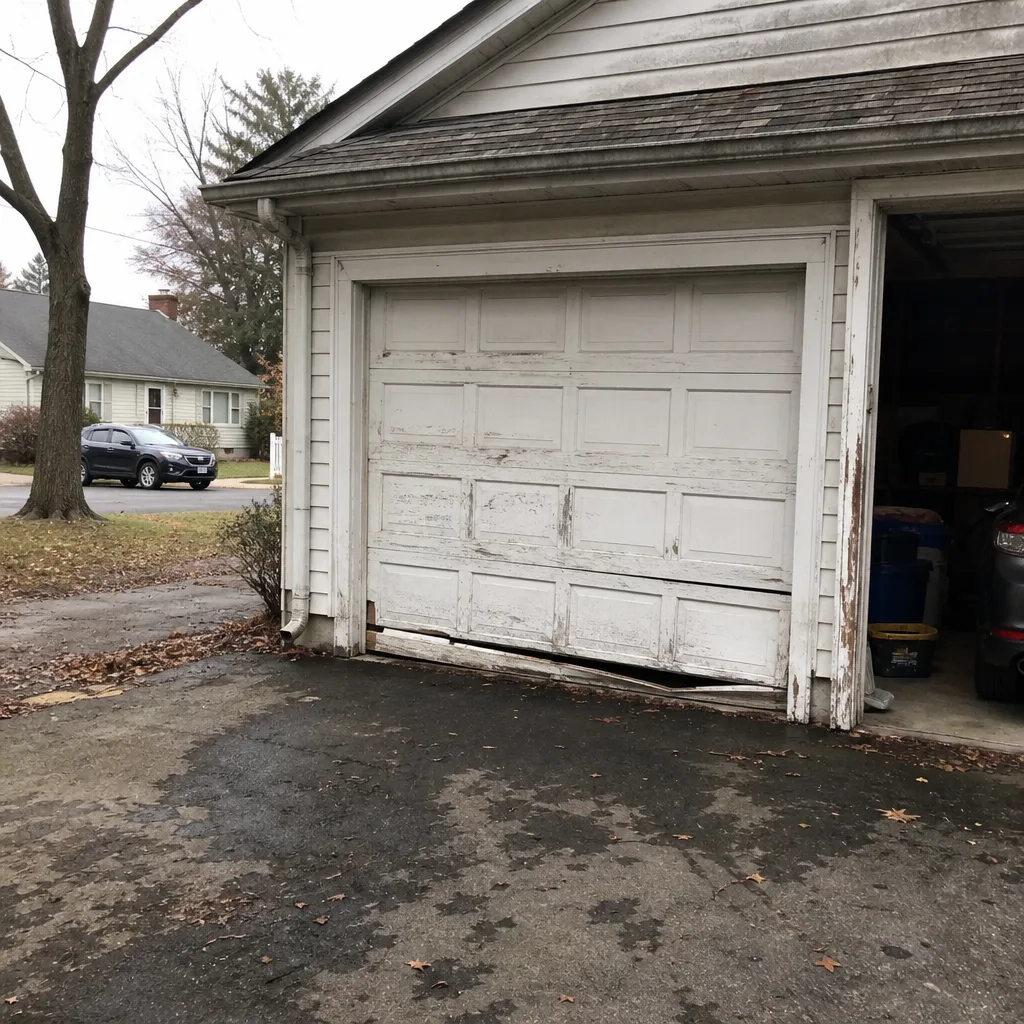 Before
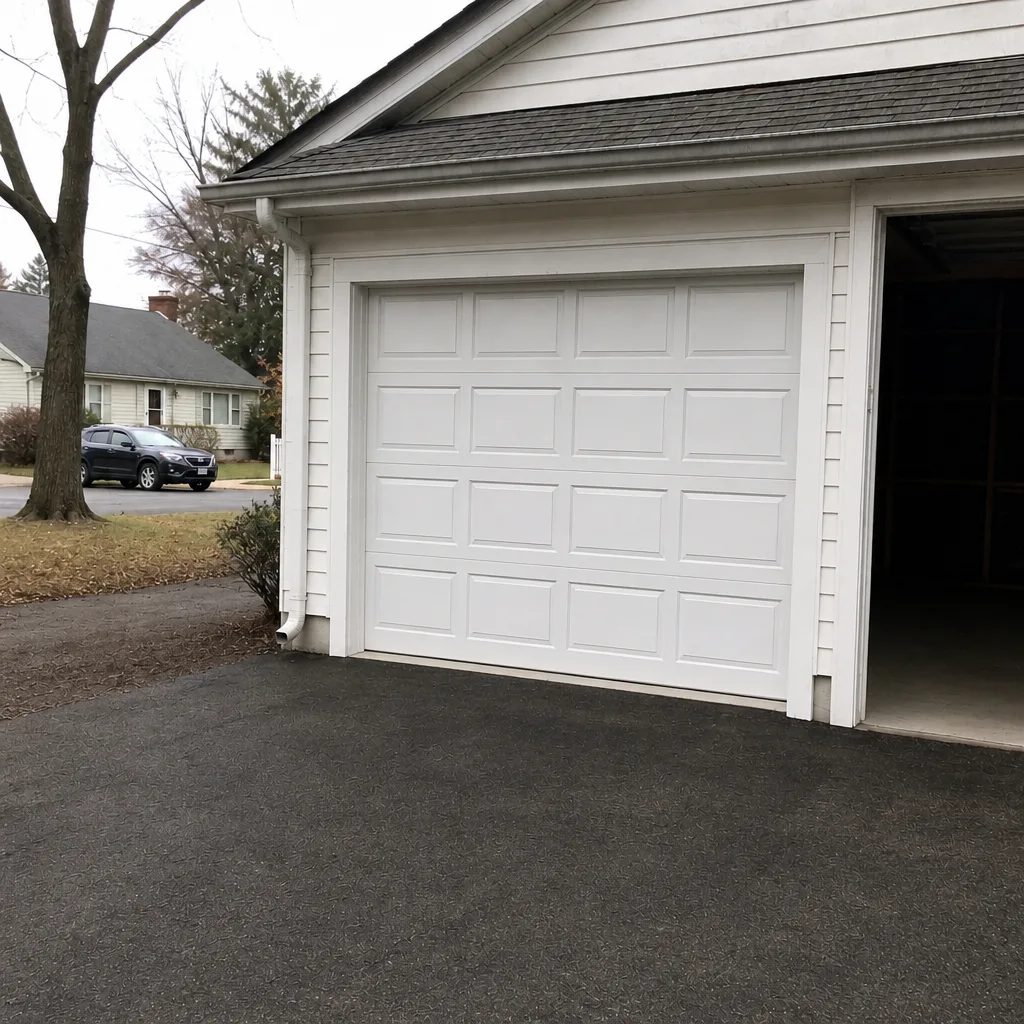 After
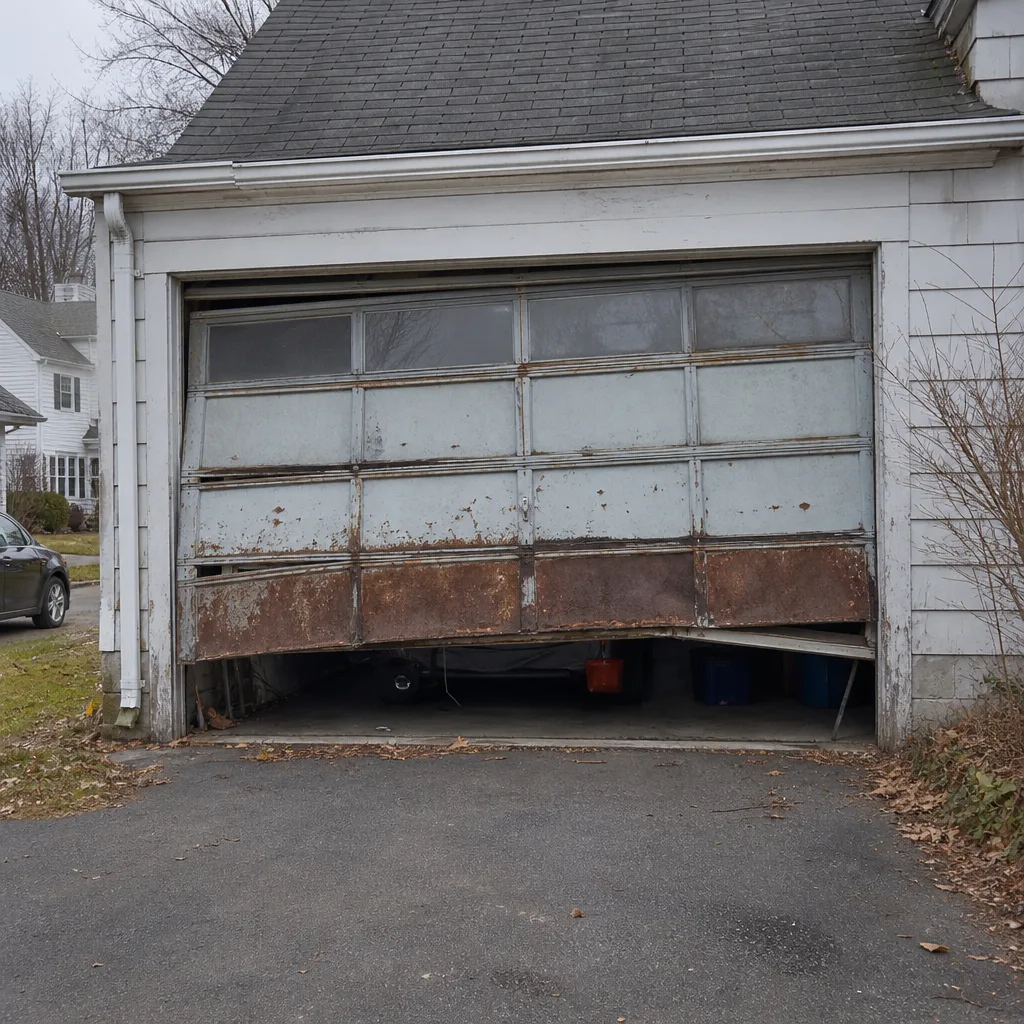 Before
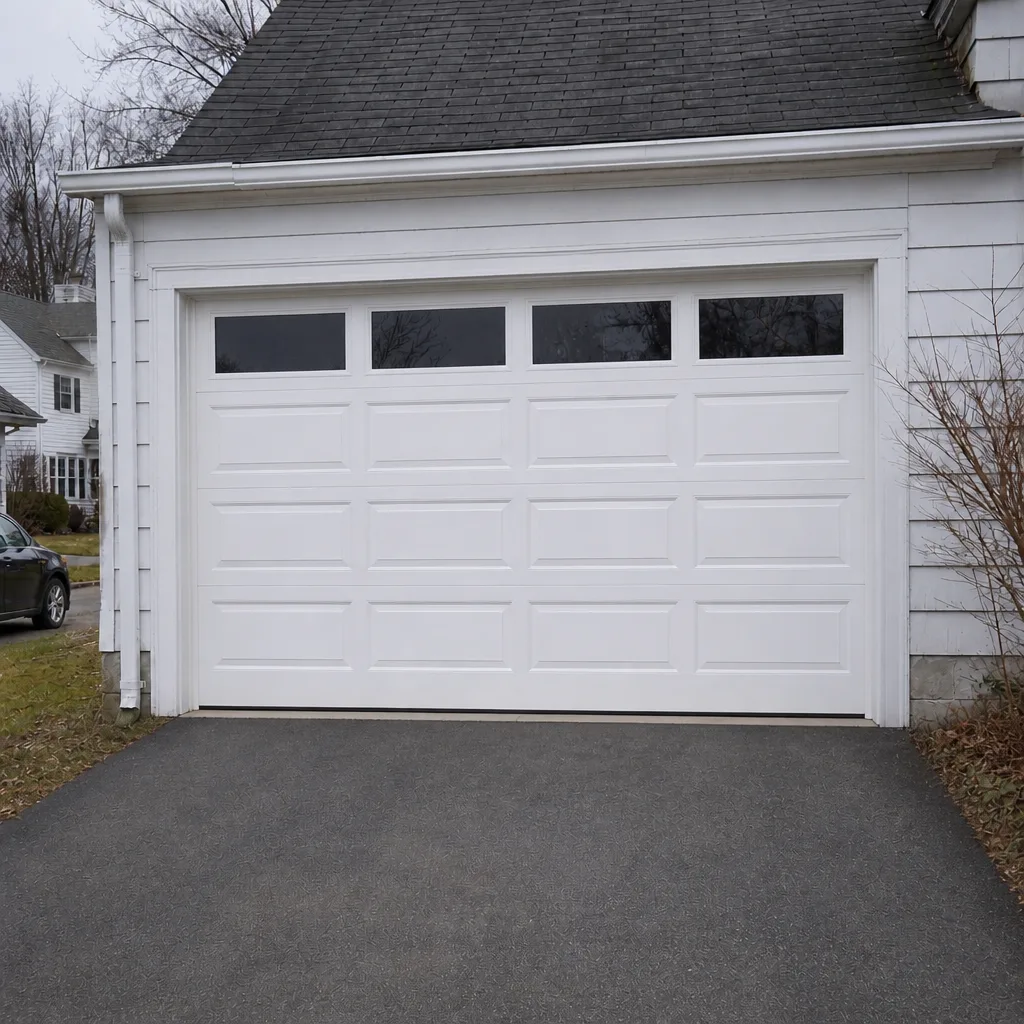 After
When to Call a Professional
Some checks you can do yourself, and some you shouldn’t. Call a professional if the door is unbalanced, a spring looks worn or broken, you see a frayed or kinked cable, the door rises crooked, the track is bent or shifted, the bottom seal is cracked or frozen to the floor, the opener strains or stops partway, or the safety reverse fails the block test. Any of those is a job for a trained technician with the right tools. Milford Garage Door Repair Co offers free estimates in Milford – call (866) 937-7098. Our technicians have up to 8 years of experience, they work on the major brands including LiftMaster, Chamberlain, Genie, and Raynor, and they quote the price before any work starts.
Frequently Asked Questions
Twice a year as a baseline: once in fall before the first hard freeze, and once in spring after the thaw. Between those, a monthly look through winter for salt buildup and seal cracks catches most issues early. If your door gets heavy use, or it’s a wood door in a humid summer, add a mid-summer check. Call (866) 937-7098 for an exact quote on any repair – estimates are free.
Cold air contracts the steel in the torsion spring and thickens the lubricant inside the coil, so the spring has to work harder to lift the same door. That’s normal up to a point, but a door that suddenly feels very heavy can be a sign of a weakening spring. Have it checked before it fails. Call (866) 937-7098 and we’ll give you a written estimate before any work starts.
Spring replacement in Milford typically runs $180 to $340 per spring, and a matched pair costs about twice that. The written estimate you receive before work starts is the final price. Call (866) 937-7098 for an exact quote – estimates are free.
Often, yes. Same-day service is available for repair calls, and emergency garage door service is a standing offering. We answer 24/7. Fast dispatch from 7am to 7pm, Sunday through Friday. A call outside those hours is booked into the next opening. Call (866) 937-7098 to get on the schedule.
Salt comes into the garage on tires and shoes and settles on the floor, the bottom seal, and the track hardware. Over a winter it can rust the bottom brackets and harden the seal. Rinse the bottom seal and mop the floor after heavy salt weeks. If the seal is cracked or the hardware is rusting, call (866) 937-7098 for a free estimate.
No – the quote you agree to before any work starts is the price. If the technician finds something that changes the job, they’ll explain it and confirm with you before doing the work. Call (866) 937-7098 for an exact quote. Estimates are free.
The Bottom Line
Seasonal garage door care in Milford comes down to treating each season as its own problem. Prepare for the freeze in fall so a spring doesn’t fail on the coldest morning. Watch for road salt through winter. Check cables and tracks after the thaw in spring. Watch for humidity swelling and opener travel in summer. Keep a simple log so you can see patterns instead of guessing. And leave the springs and cables to a professional – that’s the one shortcut you should never take. If any seasonal check turns up a problem, call Milford Garage Door Repair Co at (866) 937-7098 for a free estimate. We work on your brand, and we quote the price before any work starts.
Written by the team at Milford Garage Door Repair Co.